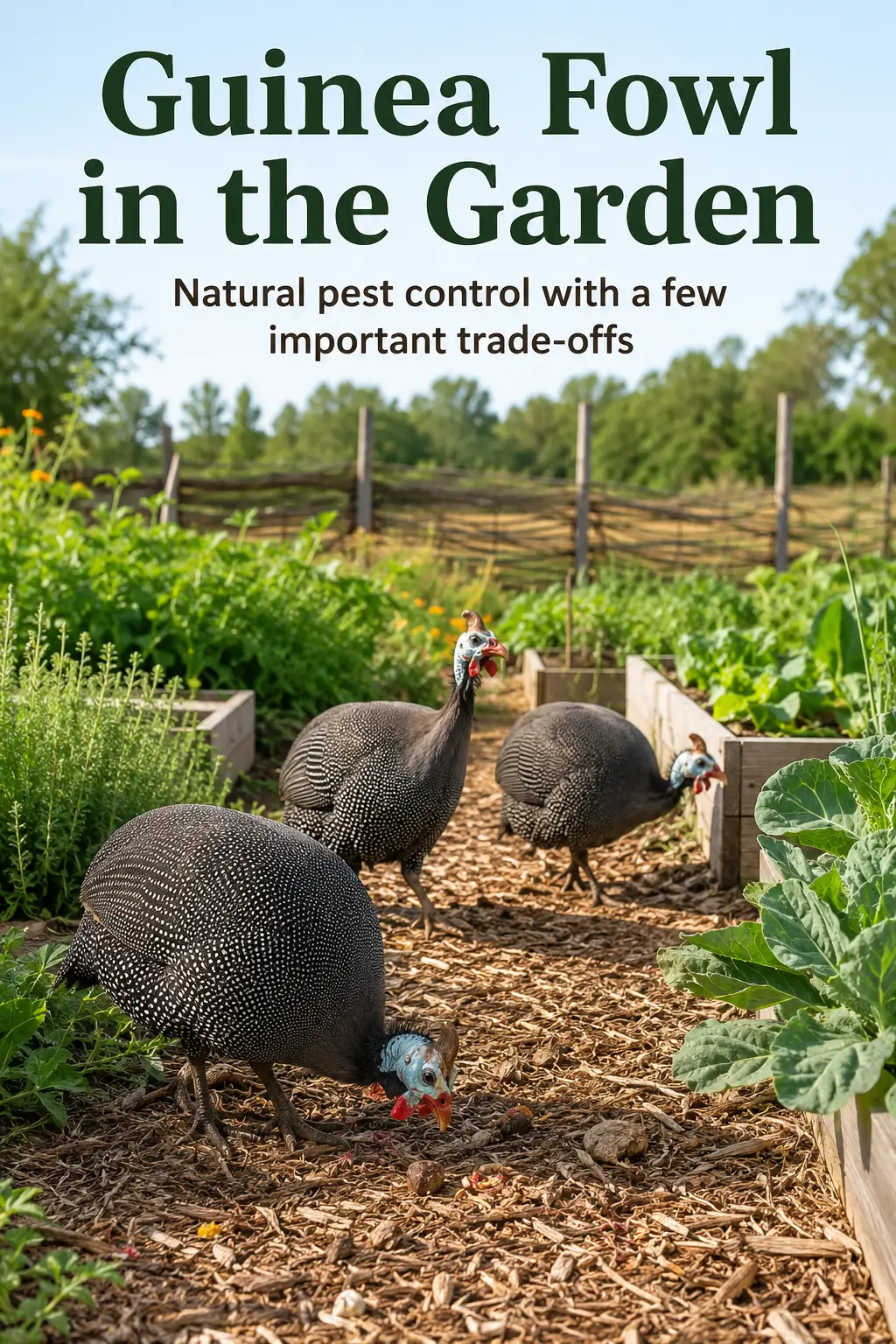
Guinea fowl are loud, funny-looking, and full of personality, but they can also be surprisingly useful on the right property. For gardeners, homesteaders, and people with larger backyards, guinea fowl are often valued because they roam widely, hunt insects, and help reduce pests like ticks, beetles, grasshoppers, and weed seeds.
They are not the right fit for every garden. Guinea fowl are noisy, independent, hard to contain, and usually need more space than a typical backyard flock. But if you have room for them to roam safely, they can become a helpful part of a natural pest-control plan.
This guide explains what guinea fowl can do in the garden, what they need, and what to consider before bringing them home.
Why Guinea Fowl Can Be Useful in the Garden
Guinea fowl are natural foragers. They spend much of the day walking, searching, pecking, and hunting for small insects. Unlike chickens, they are less likely to scratch deeply through garden beds, which can make them easier around established plants.
They may help reduce ticks, grasshoppers, beetles, flies, small larvae, and other insects in open areas. They can also eat some weed seeds while patrolling the ground.
This does not mean guinea fowl will remove every pest from your property. They are helpful foragers, not a complete pest-control solution. You may still need good garden hygiene, crop rotation, row covers, companion planting, and other pest-management methods.
The biggest benefit is that guinea fowl cover ground all day. On the right property, they can patrol lawns, orchards, field edges, vegetable garden paths, and open farm areas while adding movement and life to the landscape.
What Guinea Fowl Can Help With
Ticks
Guinea fowl are popular among homesteaders because they hunt small moving insects, including ticks. They may help reduce tick pressure around open areas, especially where they are allowed to roam regularly.
They are not a guaranteed tick solution. Tall grass, brush piles, deer traffic, rodents, and wooded borders can all continue to support ticks. Keep grass trimmed, reduce brushy hiding spots, and use other tick-control practices if ticks are a serious problem in your area.
Garden Insects
Guinea fowl may eat beetles, grasshoppers, flies, worms, larvae, and other insects they find while foraging. This can be useful around vegetable gardens, orchards, and flower beds.
However, they do not know the difference between “bad” insects and beneficial insects. They may also eat some helpful garden life, so they work best as part of a balanced system.
Weed Seeds
As they forage, guinea fowl may eat fallen seeds and small plant material. This can help reduce some weed pressure, especially in open areas or around paths.
They will not replace weeding or mulching, but they may help keep some areas cleaner over time.
Predator Alerts
Guinea fowl are famous for their alarm calls. They can be very loud when they notice unfamiliar movement, people, animals, snakes, hawks, dogs, or anything they think is suspicious.
This can be useful on rural or open properties, but it can be a problem in quiet neighborhoods. Before getting guinea fowl, think honestly about how much noise your family and neighbors can tolerate.
Seasonal Eggs
Female guinea fowl can lay eggs during the warmer season. Their eggs are smaller than chicken eggs, with hard shells and a rich flavor.
Do not get guinea fowl only for eggs if egg production is your main goal. Chickens are usually easier and more reliable for steady egg laying.
What You Need Before Getting Guinea Fowl
Before adding guinea fowl to your garden or homestead, prepare carefully.
You may need:
- A safe coop or shelter
- Predator-proof nighttime housing
- Roosting bars
- Feeders and waterers
- Starter feed for young keets
- Adult poultry feed or game bird feed
- Fenced training area
- Grit
- Bedding such as straw, pine shavings, or chopped hemp
- A brooder setup if raising keets
- Heat source for young keets
- Secure fencing for gardens or areas you want protected
- Local permission if required by your area
Guinea fowl are often more independent than chickens, but they still need safe nighttime housing. If they sleep in trees or outside, predators may eventually find them.
Best Property Setup for Guinea Fowl
Guinea fowl usually do best on properties with space. They are active birds that like to roam, patrol, and move in groups.
A good setup includes:
- Open grass areas
- Garden paths or field edges
- Shrubs or trees nearby for cover
- A secure coop for nighttime
- Room away from close neighbors
- Safe distance from busy roads
- Protection from dogs and predators
They are often not ideal for small suburban yards because of their noise and roaming behavior. If you live in a neighborhood, check local rules before buying them.
Some areas do not allow guinea fowl, or they may be included under poultry limits.
Step-by-Step Guide to Adding Guinea Fowl to a Garden Property
Step 1: Check Local Rules First
Before buying guinea fowl, check your city, county, neighborhood, or HOA rules. Some places allow chickens but not guinea fowl. Others restrict noisy poultry or limit flock size.
This step is important because guinea fowl are loud. Even if they are legal, they may cause neighbor complaints if homes are close together.
Step 2: Decide if Your Property Is a Good Fit
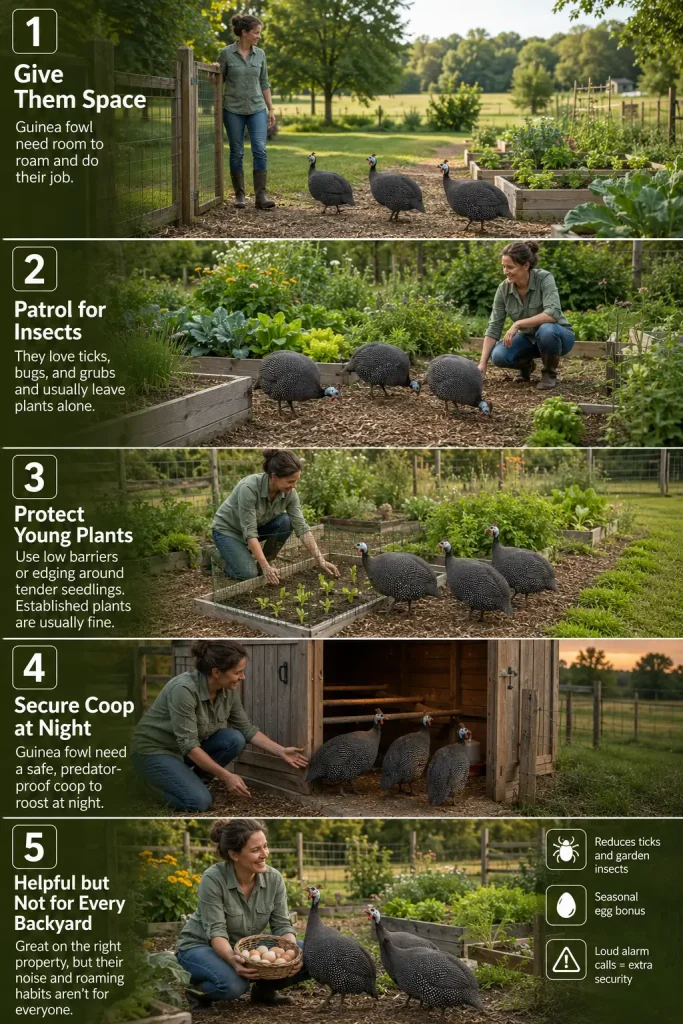
Guinea fowl need room to roam. A small backyard may feel too tight, especially if you have neighbors nearby.
They are better suited for larger yards, small farms, homesteads, orchards, and rural gardens. They are also better for people who can handle noise and independent flock behavior.
Step 3: Prepare a Secure Coop
Guinea fowl should have a safe shelter where they can sleep at night. The coop should be predator-resistant, dry, and well-ventilated.
Include roosting bars because guinea fowl prefer to sleep high. Make sure doors and windows are secure against raccoons, foxes, snakes, weasels, and other predators.
Step 4: Start With Keets or Trained Adults
Young guinea fowl are called keets. Raising keets helps them learn that your property is home, but they need careful brooder care when young.
Adult guinea fowl can be harder to train to stay because they may try to return to their previous home or wander away.
If you start with young birds, keep them confined safely until they are old enough and familiar with their shelter.
Step 5: Train Them to Return to the Coop
Guinea fowl need training if you want them to sleep inside at night. Keep them enclosed in their coop or run at first so they recognize it as home.
After the training period, let them out gradually and call them back with feed in the evening.
This takes patience. Guinea fowl are not as easy to control as chickens, so consistency matters.
Step 6: Let Them Patrol Safely
Once trained, allow them to forage during the day in safe areas. They may walk through lawns, garden edges, orchards, and open beds.
Watch them around delicate seedlings. While guinea fowl usually scratch less than chickens, they can still trample small plants or peck tender growth.
Step 7: Protect Young Plants
Guinea fowl are usually easier on mature plants than loose chickens, but they are still animals. Protect new seedlings, freshly planted beds, and delicate crops with low fencing, row covers, cloches, or temporary barriers.
Let them patrol around the garden once plants are stronger and established.
Step 8: Provide Feed and Water
Even if guinea fowl forage well, they still need clean water and proper feed. Foraging should be a supplement, not the only food source.
Provide balanced poultry or game bird feed and fresh water daily. In winter or dry seasons, natural forage may be limited, so feed becomes even more important.
Step 9: Watch for Predators
Guinea fowl are alert, but they are not predator-proof. Hawks, foxes, coyotes, raccoons, dogs, and snakes can all be threats.
Bring them into a secure coop at night. If predators are common in your area, consider covered runs or supervised free-ranging.
Step 10: Manage Noise Expectations
Guinea fowl can be extremely loud. Their alarm calls may happen when they see strangers, wild animals, pets, vehicles, shadows, or anything unusual.
This is one of the main reasons they are not right for every backyard. Think carefully before adding them if your garden is close to other homes.
Care Tips for Guinea Fowl
Give guinea fowl consistent access to clean water, especially in hot weather. They are active birds and can dehydrate if water is not available.
Keep their coop dry and clean. Damp bedding can cause health problems and odors.
Use predator-proof latches, strong wire, and secure doors. Chicken wire alone is not enough to stop many predators.
Train them with routine. Feeding them near the coop in the evening can help encourage them to return at night.
Observe their flock behavior. Guinea fowl prefer being in groups, and a lonely guinea may become stressed or noisy.
Do not expect them to behave like chickens. They are more independent, more alert, and often harder to catch.
Common Mistakes to Avoid
Getting Guinea Fowl Without Considering Noise
Noise is the biggest issue for many people. Guinea fowl are not quiet garden birds. Their alarm calls can be loud and frequent.
Letting Them Roost Outside
Guinea fowl may try to sleep in trees, but outdoor roosting is risky. Predators can take them at night.
Expecting Perfect Pest Control
They may help reduce ticks and insects, but they will not remove every pest. Use them as one part of a natural pest-control system.
Starting With Too Few Birds
Guinea fowl are flock birds. Keeping only one or two can make them stressed and noisy. A small group usually works better.
Releasing Them Too Soon
If released before they understand where home is, guinea fowl may wander away. Keep them confined long enough to learn the coop.
Ignoring Young Plants
They usually scratch less than chickens, but they can still damage tender seedlings. Protect young garden beds until plants are established.
Keeping Them Too Close to Roads
Guinea fowl roam and may not respect property lines. Busy roads can be dangerous.
Guinea Fowl vs. Chickens in the Garden
Guinea fowl and chickens behave differently in a garden.
Chickens are better for regular eggs, compost turning, and scratching through soil. However, they can quickly destroy mulch, seedlings, and soft beds if left loose.
Guinea fowl tend to roam more widely and scratch less aggressively. They are often better for patrolling open areas and hunting insects without tearing up every garden bed.
But guinea fowl are louder, harder to contain, and less friendly for many backyard setups.
If your main goal is eggs, chickens are usually better. If your main goal is insect patrol on a larger property, guinea fowl may be worth considering.
Best Garden Areas for Guinea Fowl
Guinea fowl work best in:
- Orchards
- Open lawns
- Rural gardens
- Around raised beds
- Vineyard edges
- Flower field borders
- Homesteads
- Pasture edges
- Large backyard food gardens
They are less ideal for:
- Tiny yards
- Close neighborhoods
- Formal gardens with delicate plants
- Areas near busy roads
- Gardens with many loose dogs
- Quiet spaces where noise is a concern
What to Plant Around a Guinea Fowl-Friendly Garden
If you keep guinea fowl, choose sturdy plants around their roaming areas.
Good choices include:
- Established herbs
- Mature perennials
- Fruit trees
- Berry shrubs with protection
- Ornamental grasses
- Strong vegetable plants
- Raised bed crops with edging
- Native plants
- Pollinator borders
Protect tender seedlings and newly planted flowers until they are strong enough to handle occasional pecking or foot traffic.
Are Guinea Fowl Right for Your Backyard?
Guinea fowl may be right for you if you have space, can handle noise, and want natural insect patrol across a larger property.
They may not be right if you live close to neighbors, need quiet, have a small yard, or want calm birds that stay neatly inside a small run.
Before getting them, visit someone who keeps guinea fowl if possible. Hearing them in person can help you decide if the noise is manageable.
FAQ
Do guinea fowl really eat ticks?
Yes, guinea fowl can eat ticks as part of their natural foraging. They may help reduce tick numbers in areas they patrol, but they will not completely eliminate ticks.
Are guinea fowl good for gardens?
They can be good for larger gardens because they eat insects and usually scratch less than chickens. However, they can still disturb seedlings and should be managed carefully.
Are guinea fowl noisy?
Yes, guinea fowl are very noisy. Their alarm calls are loud and can happen often. This is one of the biggest reasons they are not suitable for every backyard.
Do guinea fowl destroy plants?
They are usually less destructive than chickens, but they can still peck tender plants, step on seedlings, or disturb soft soil. Protect young plants until they are established.
How many guinea fowl should I keep?
Guinea fowl are flock birds and usually do better in groups. A small flock is better than keeping one alone. The right number depends on your space, local rules, and management setup.
Do guinea fowl lay eggs?
Yes, female guinea fowl lay eggs seasonally. Their eggs are smaller than chicken eggs and have hard shells. They are a bonus, but guinea fowl are not usually kept as the main egg-laying bird.
Will guinea fowl stay in my yard?
Not always. Guinea fowl roam and may cross property lines if not managed. Training, fencing, and routine feeding can help, but they are not as easy to contain as chickens.
Do guinea fowl need a coop?
Yes, they should have a secure coop or shelter for nighttime protection. If they sleep outside, they are more vulnerable to predators.
Can guinea fowl live with chickens?
Guinea fowl can sometimes live near chickens, but flock dynamics vary. They may bully chickens or become stressed in tight spaces. Provide enough room and watch behavior carefully.
Conclusion
Guinea fowl can be a useful and entertaining addition to the right garden or homestead. They may help reduce ticks and insects, patrol open areas, alert you to predators, and provide seasonal eggs.
But they are not quiet, simple backyard pets. They need space, training, predator protection, and realistic expectations.
If your property is large enough and you are comfortable with their loud alarm calls, guinea fowl can become a quirky, hardworking part of a natural garden pest-control system.