You walk over to your windowsill and your heart sinks. What was once a thriving, lush tropical beauty is now a crispy, withered, completely lifeless stump. You have tried watering it, moving it to better light, and begging it to survive.
Nothing worked. You are standing over a pot of dry, lifeless twigs, wondering if you just lack a green thumb entirely. But before you throw that expensive plant into the compost bin, stop right there.
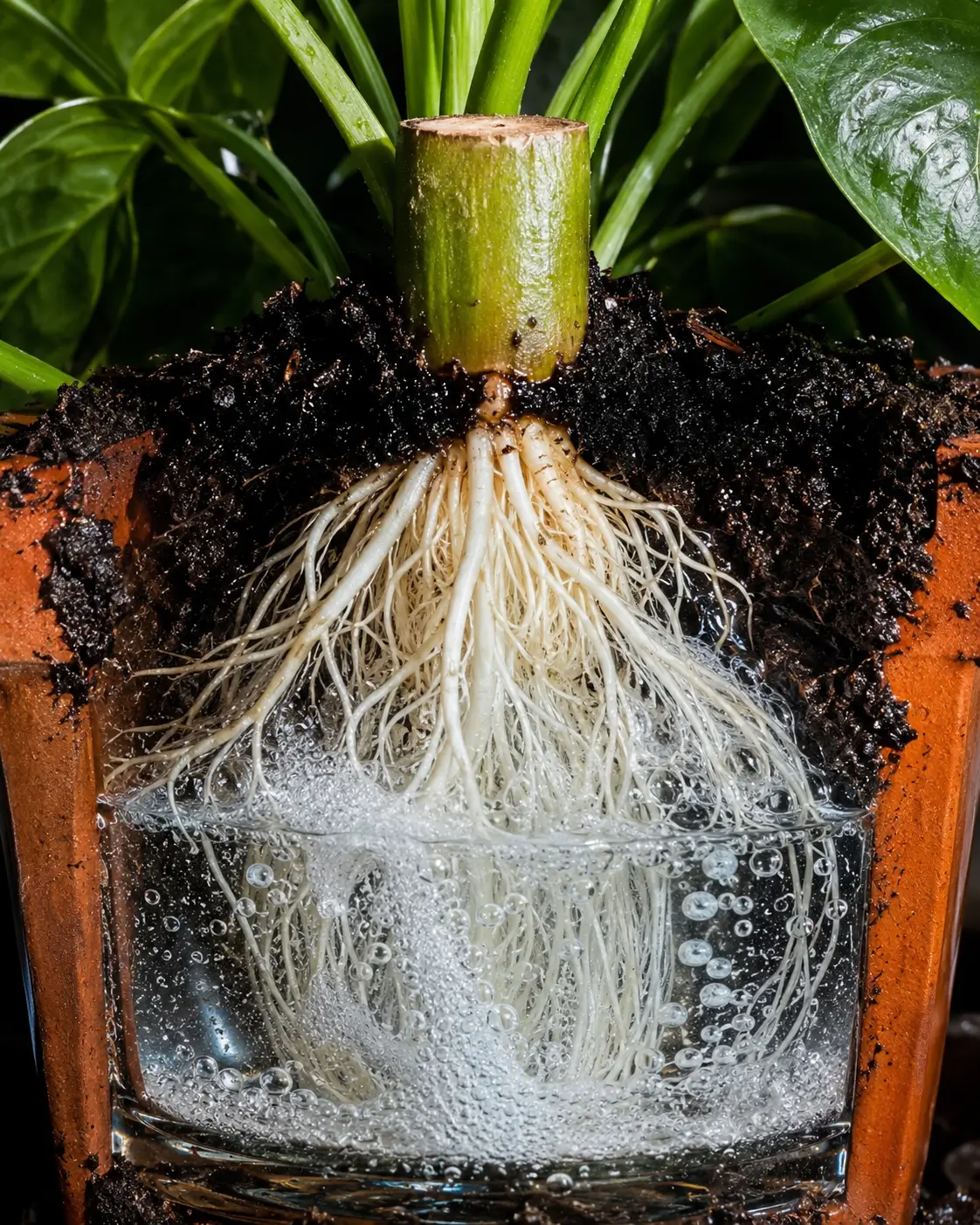
We at Plantora have a radical rescue mission for you. It turns out, that “dead” plant might just be holding its breath, and we are going to show you how to revive dead houseplant with peroxide using a mind-blowing nursery secret. Grab your lab goggles, because things are about to get fizzy.
The Problem: Why Your Plant Actually “Died”
When a houseplant completely collapses, our first instinct is usually to blame ourselves for under-watering. So, we flood the pot with more tap water, hoping to bring it back to life. In reality, this is the exact opposite of what the plant desperately needs.
The true silent killer in your home isn’t dehydration; it is suffocation. When soil becomes compacted or chronically soggy, it creates an anaerobic environment—meaning an environment completely devoid of oxygen. Without oxygen, roots begin to drown and decay.
As those roots rot away, nasty anaerobic bacteria and fungal pathogens take over the soil matrix. Your plant isn’t dead because it lacked water. It is literally dying of asphyxiation while being eaten alive by microscopic soil infections.
The Secret Solution: The Oxygen Bomb Hack
You cannot fix an oxygen crisis by drowning the plant in more water. To save this plant, we need to introduce a massive, violent surge of pure oxygen directly to the root system. Enter the ultimate biological reset button: common, household hydrogen peroxide.
Yes, the exact same brown bottle sitting in your medicine cabinet right now is a miracle cure for suffocating plants. By submerging the root ball in a precise dilution of hydrogen peroxide, you create an effervescent, bubbling chemical reaction.
This isn’t just cleaning the roots; it is forcing them to breathe again. Nurseries use this explosive oxygen hack to save thousands of dollars in lost inventory, and now you can do it right at your kitchen sink.
The Science Behind It: Why Peroxide is Pure Magic
To understand this hack, we have to look at the elegant chemistry of hydrogen peroxide. The chemical formula for water is $H_2O$. The formula for hydrogen peroxide is $H_2O_2$.
That single, extra oxygen ($O$) atom makes the molecule highly unstable. When $H_2O_2$ comes into contact with organic matter like rotting roots or soil bacteria, it rapidly breaks down. It physically violently separates back into plain water ($H_2O$) and releases that volatile extra $O$ atom as pure oxygen gas.
This creates the intense, fizzing bubbles you see during the rescue process. This massive release of pure oxygen instantly sterilizes the soil by destroying anaerobic pathogens on contact. More importantly, it forces hyper-oxygenated water into the suffocating root tissues, shocking the plant’s vascular system back into action.
The Step-by-Step Blueprint: The Peroxide Rescue Mission
Time is of the essence when dealing with a critically declining plant. Gather your supplies and follow these exact steps. Precision is mandatory to ensure your plant survives the operation.
- Amputate the Dead Weight: You cannot save the crispy leaves. Take a pair of sterilized, razor-sharp shears and chop the plant down, removing all dead top growth until you reach the bare stump. [AFFILIATE LINK: Heavy-duty garden shears]
- Expose the Root Ball: Gently remove the plant from its pot and brush away as much of the old, compacted dirt as possible. You want the root system mostly exposed so the solution can penetrate deeply.
- Mix the Rescue Serum: In a large bowl, mix exactly 1 part Hydrogen Peroxide (3%) to 3 parts room-temperature water. Do not guess the measurements; use a measuring cup! [AFFILIATE LINK: Hydrogen Peroxide (3%) on Amazon]
- The 10-Minute Soak: Submerge the entire root system into the bubbling mixture. You will hear it instantly start fizzing as the pure oxygen goes to work destroying pathogens.
- The Repotting Phase: Remove the plant, gently rinse the roots with plain water, and repot the stump into fresh, highly aerated soil. [AFFILIATE LINK: High-quality potting soil]
Crucial Mistakes to Avoid
The line between medicine and poison is simply the dosage. If you get the peroxide concentration wrong, you will instantly fry the delicate root hairs and guarantee the plant’s death.
Never, under any circumstances, use 10% or food-grade peroxide. You must only use the standard 3% concentration found in most pharmacies. Anything stronger is highly caustic and will chemically dissolve the plant tissue on contact.
Furthermore, strictly obey the 10-minute soaking limit. While that fizzing action is incredibly therapeutic initially, leaving roots submerged in a highly oxidative environment for too long will eventually degrade healthy cell walls. Set a timer on your phone and pull the plant out the second it rings!
Frequently Asked Questions
Can I just pour the peroxide solution directly over the soil without repotting?
While a lighter dilution can be used for minor pest control on top of the soil, a critically dying plant needs a total soil replacement. Pouring it into the existing compacted, rotting soil won’t fix the underlying drainage issue that suffocated the plant in the first place.
How long will it take to see new growth after the peroxide soak?
Patience is required here. The plant is going to spend its first two to three weeks pushing all of its energy into regenerating microscopic root hairs underground. You typically won’t see new green shoots pushing through the soil surface for at least 4 to 6 weeks.
Does this peroxide trick work to revive all types of dead houseplants?
This works brilliantly on aroids, tropicals, and leafy houseplants that suffered from root rot or overwatering. However, if your plant is a succulent or cactus that has completely rotted into a pile of mush, no amount of oxygen can reverse extreme cellular collapse.
Bring Them Back from the Brink!
You no longer have to toss your expensive botanical investments into the trash. By understanding the raw, bubbling power of $H_2O_2$, you can completely reverse the effects of root suffocation. You now know exactly how to revive dead houseplant with peroxide just like the master growers do.
Are you going to try this radical oxygen-bomb hack on that sad stump in your living room? We want to hear about your plant rescue missions! Leave a comment below telling us which plant you are trying to save, and don’t forget to pin this article to your favorite Pinterest board so you never lose this exact recipe.
You May Also Like
 Companion Plants That May Help Reduce Garden Pests Naturally
 8 Companion Plants That Help Roses Grow Healthier and Look More Beautiful
 Where to Place Indoor Plants for Healthy Growth
 The Truth About Epsom Salt for Peppers, Tomatoes, and Roses
 Why Master Gardeners Are Using Aspirin to Explode Root Growth
 What Can You Still Plant in July? Smart Crops for Empty Garden Beds