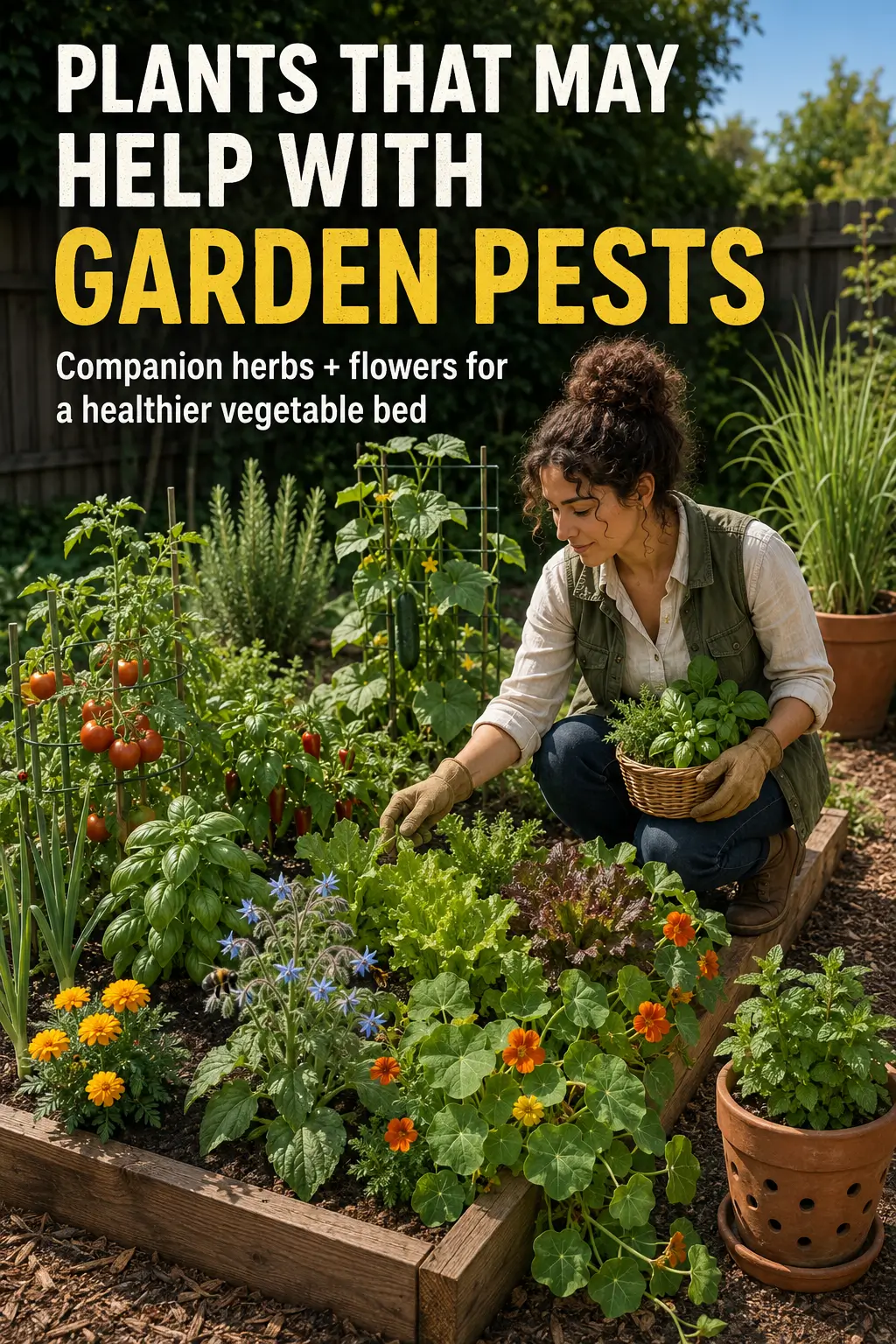
Companion planting is a simple way to make your vegetable garden more diverse, attractive, and balanced. Certain herbs and flowers may help reduce pest pressure by adding strong scents, attracting beneficial insects, or confusing pests that are searching for one specific crop.
Plants like basil, mint, garlic, rosemary, oregano, nasturtiums, borage, lemongrass, and marigolds are often used around vegetable beds for this reason. They can be useful, but they are not a magic shield. A few companion plants will not guarantee a pest-free garden, especially if plants are stressed, crowded, overwatered, or already heavily infested.
The best approach is to use pest-reducing companion plants as part of a healthy garden system: good soil, proper spacing, airflow, watering, crop rotation, and regular pest checks.
Why This Idea Works
Many garden pests find plants by smell, color, and plant stress signals. When a vegetable bed is filled with only one crop, pests may find it more easily. Adding herbs and flowers can make the area more mixed and confusing.
Some companion plants work in different ways:
Strong scent: Herbs like rosemary, oregano, basil, mint, garlic, and lemongrass have strong aromas that may help confuse certain pests.
Beneficial insects: Flowers like borage, nasturtiums, and marigolds can attract pollinators and helpful insects such as hoverflies, lacewings, parasitic wasps, and ladybugs.
Trap cropping: Nasturtiums may attract aphids away from some vegetables, making it easier to spot and manage them.
Garden diversity: A mixed planting style can support a healthier mini-ecosystem than a bare, single-crop bed.
Results can vary by climate, pest pressure, season, and garden conditions. Companion planting works best when combined with regular monitoring.
What You Need
You can use these herbs and flowers around vegetable beds, raised beds, containers, or borders:
- Basil
- Mint
- Garlic
- Rosemary
- Oregano
- Nasturtiums
- Borage
- Lemongrass
- Marigolds
- Compost
- Mulch
- Containers for aggressive spreaders
- Garden trowel
- Watering can or hose
- Plant labels, optional
Choose healthy starter plants or good-quality seeds. Avoid planting diseased nursery plants near your vegetables.
Best Placement or Setup
Place companion plants close enough to support the garden but not so close that they crowd your vegetables. Most herbs and flowers need airflow, sunlight, and room to grow.
For raised beds, plant smaller herbs near the edges. Flowers can go at corners or along borders. Taller plants like borage, rosemary, and lemongrass should be placed where they will not shade smaller crops.
For containers, group plants with similar water needs. Rosemary and oregano prefer sunnier, drier conditions. Basil, nasturtiums, and borage usually appreciate more consistent moisture. Mint should almost always stay in its own container because it spreads aggressively.
Avoid turning companion planting into overcrowding. Crowded plants often attract more pest and disease problems because leaves stay damp and airflow becomes poor.
Step-by-Step Instructions
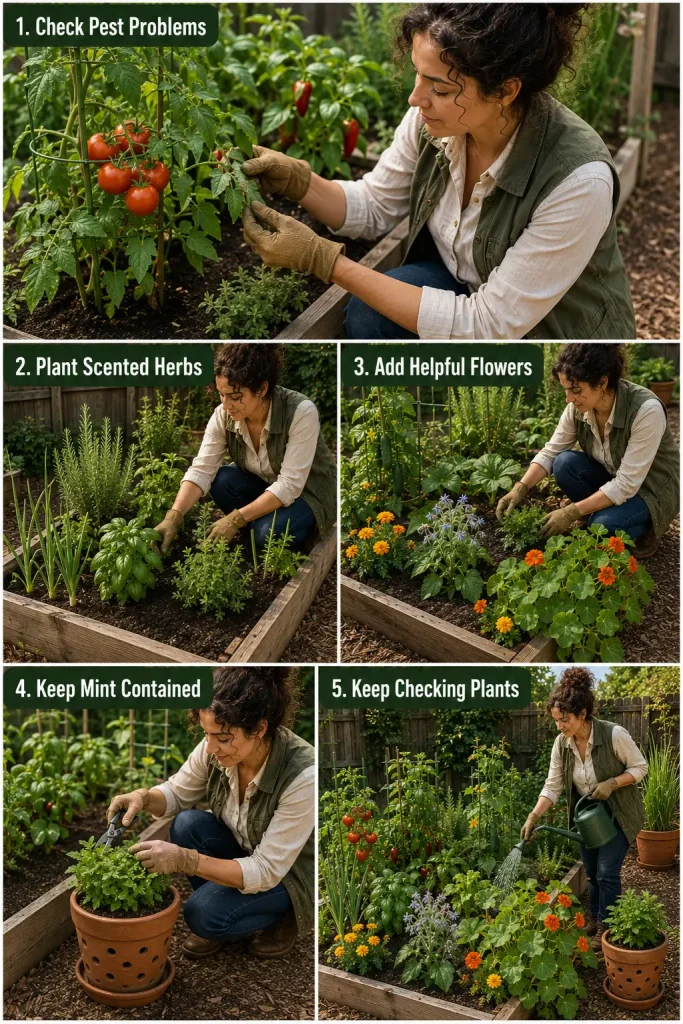
1. Identify Your Main Pest Problems
Before planting companion herbs and flowers, look at what pests you commonly see.
Aphids, whiteflies, cabbage worms, squash bugs, mosquitoes, flea beetles, tomato hornworms, and beetles all behave differently. No companion plant controls everything.
Check the underside of leaves, new growth, stems, and soil surface. Knowing the actual pest helps you choose better plant partners.
2. Plant Basil Near Tomatoes and Peppers
Basil is a popular companion plant for tomatoes and peppers. Its strong scent may help confuse some flying pests, and its flowers can attract pollinators if you allow a few stems to bloom.
Plant basil near tomatoes, peppers, eggplants, or leafy greens. Give basil about 8–12 inches of space, depending on the variety.
Keep basil watered evenly, but do not let it sit in soggy soil. Pinch it often to encourage bushy growth.
3. Keep Mint in a Container
Mint may help repel or confuse some pests with its strong scent, but it spreads quickly through underground runners. If planted directly in a garden bed, it can take over.
Keep mint in a separate pot near the garden instead of inside the raised bed. Place the pot near seating areas, doorways, or vegetable beds where you want the scent nearby.
Use a container with drainage holes. Trim mint regularly to keep it full and controlled.
4. Use Garlic Around Bed Edges
Garlic has a strong scent that may help confuse some pests. It can be planted around the edges of vegetable beds or between slower-growing crops where space allows.
Plant garlic cloves in fall in many climates, or early spring where winters are harsh. Place cloves pointed side up and space them about 4–6 inches apart.
Garlic does not replace pest control, but it can be a useful part of a mixed garden.
5. Add Rosemary and Oregano in Sunny, Dry Spots
Rosemary and oregano are Mediterranean herbs that prefer full sun and well-drained soil. Their strong fragrance may help reduce pest pressure around some vegetables.
Plant them near cabbage-family crops, carrots, beans, or garden borders, but avoid placing them where they will be watered heavily every day.
Rosemary can become woody and large in warm climates, so give it enough room. Oregano can spread, though usually less aggressively than mint, so trim it as needed.
6. Use Nasturtiums as a Trap Plant
Nasturtiums are useful because they can attract aphids and other small pests. This does not mean they repel every pest. Instead, they may act as a trap crop, drawing pests away from nearby vegetables.
Plant nasturtiums near cucumbers, squash, beans, tomatoes, or cabbage-family crops. Check them regularly. If they become heavily covered with aphids, prune off the worst stems or remove the plant before pests spread.
Nasturtiums grow well from seed and often trail beautifully over raised bed edges.
7. Plant Borage for Pollinators and Diversity
Borage produces blue star-shaped flowers that attract bees and other beneficial insects. It can support pollination and garden biodiversity.
Plant borage near tomatoes, squash, strawberries, cucumbers, or pollinator garden edges. Give it space because it can get large.
Borage may self-seed in some gardens. Remove unwanted seedlings if you do not want it spreading.
8. Use Lemongrass in Warm, Sunny Areas
Lemongrass has a strong citrus scent and is often grown near patios and garden edges. It may help reduce mosquitoes nearby, but it will not eliminate them completely.
Grow lemongrass in full sun with regular water. In colder climates, grow it in a container so it can be moved indoors or treated as an annual.
Because lemongrass grows in clumps, place it where it has enough space and will not crowd vegetables.
9. Add Marigolds Around Vegetable Beds
Marigolds are one of the easiest companion flowers to grow. They attract pollinators, add color, and may help with some soil pest issues depending on the type and conditions.
Plant marigolds around tomatoes, peppers, beans, cucumbers, squash, and cabbage-family crops. Space most marigolds about 8–12 inches apart.
French marigolds are often used in vegetable gardens because they stay compact. Keep them deadheaded for more flowers.
Helpful Companion Plant Pairings
Here are simple pairings that often work well in home gardens:
Tomatoes + basil + marigolds: A classic combination for scent, pollinators, and bed diversity.
Cabbage + rosemary + oregano + marigolds: Good for sunny beds where herbs can grow along the edge without crowding cabbage.
Squash + nasturtiums + borage: Nasturtiums can work as a trap plant, while borage helps attract pollinators.
Peppers + basil + garlic: A compact combination for raised beds or containers.
Cucumbers + nasturtiums + marigolds: Useful along a trellis or bed edge.
Patio containers + mint in its own pot + lemongrass nearby: Good for scent and container gardening, but keep mint separate.
Care Tips
Water companion plants according to their needs. Do not treat all herbs the same. Rosemary and oregano prefer drier soil once established, while basil and nasturtiums need more consistent moisture.
Keep plants pruned so they do not block airflow. Basil, mint, oregano, and rosemary all benefit from trimming.
Remove diseased leaves quickly. Companion planting will not fix powdery mildew, blight, or rot if plants are crowded and damp.
Check for pests at least once or twice a week. Look under leaves, along stems, and near new growth. Early pest problems are much easier to manage.
Use mulch to reduce soil splash, hold moisture, and protect roots. Keep mulch slightly away from plant stems.
Encourage beneficial insects by allowing some herbs and flowers to bloom. Basil, oregano, borage, nasturtiums, and marigolds can all attract helpful insects when flowering.
Common Mistakes to Avoid
Do not expect companion plants to completely repel pests. They may help reduce pressure, but they do not guarantee a pest-free garden.
Do not plant mint directly in a raised bed. It can spread aggressively and become difficult to remove.
Do not overcrowd vegetables with too many herbs and flowers. Poor airflow can lead to more disease problems.
Do not mix plants with very different water needs in the same small container. Rosemary and basil can struggle together because rosemary likes drier soil and basil prefers more consistent moisture.
Do not ignore pests just because you planted marigolds or basil. Regular checking is still important.
Do not let trap crops become pest nurseries. If nasturtiums are covered in aphids, remove the affected growth before the problem spreads.
FAQ
Do companion plants really repel pests?
They may help reduce pest pressure, but they do not guarantee a pest-free garden. Many companion plants work by adding scent, attracting beneficial insects, or increasing garden diversity.
What is the best companion plant for tomatoes?
Basil, marigolds, nasturtiums, borage, and garlic are commonly used near tomatoes. Give each plant enough space so the tomato has airflow and light.
Should I plant mint in my vegetable garden?
Mint is best kept in its own container. It spreads quickly and can take over raised beds or in-ground gardens.
Do marigolds keep all bugs away?
No. Marigolds can be helpful in a diverse garden, but they do not repel every pest. They are best used with healthy soil, spacing, airflow, and regular pest checks.
Can nasturtiums attract pests?
Yes. Nasturtiums can attract aphids, which is why they are sometimes used as trap plants. Check them often and remove heavily infested stems if needed.
Where should I plant rosemary in a vegetable garden?
Plant rosemary in a sunny, well-drained spot near bed edges or in its own container. Avoid placing it in areas that stay wet or receive heavy daily watering.
Does lemongrass stop mosquitoes completely?
No. Lemongrass may help reduce mosquitoes nearby because of its scent, but it will not eliminate them. Standing water control is still important.
What else helps reduce pests naturally?
Healthy soil, proper spacing, crop rotation, mulch, watering at soil level, removing diseased leaves, attracting beneficial insects, and checking plants regularly are all important.
Conclusion
Herbs and flowers can be useful companion plants in a vegetable garden, especially when they add scent, attract beneficial insects, and make the garden more diverse. Basil, mint, garlic, rosemary, oregano, nasturtiums, borage, lemongrass, and marigolds can all play helpful roles when planted in the right places.
The most important thing to remember is that companion planting is not a guaranteed pest solution. It works best as part of a complete garden care routine that includes healthy soil, proper spacing, airflow, watering, and regular pest checks.
Use these plants wisely, keep mint contained, watch for early pest signs, and your garden will have a better chance of staying balanced and productive.
You May Also Like
 Flowering Trees That Beautify Your Yard: How to Choose the Right One for Your Space
 Why Master Gardeners Are Using Aspirin to Explode Root Growth
 What Can You Still Plant in July? Smart Crops for Empty Garden Beds
 How Nurseries Revive Dead Houseplants in 10 Minutes (The Bubbling Secret)
 Why Master Gardeners Are Using Milk and Iodine to Resurrect Dead Houseplants
 Why Master Gardeners Are Using Vinegar to Unlock Eggshell Fertilizer