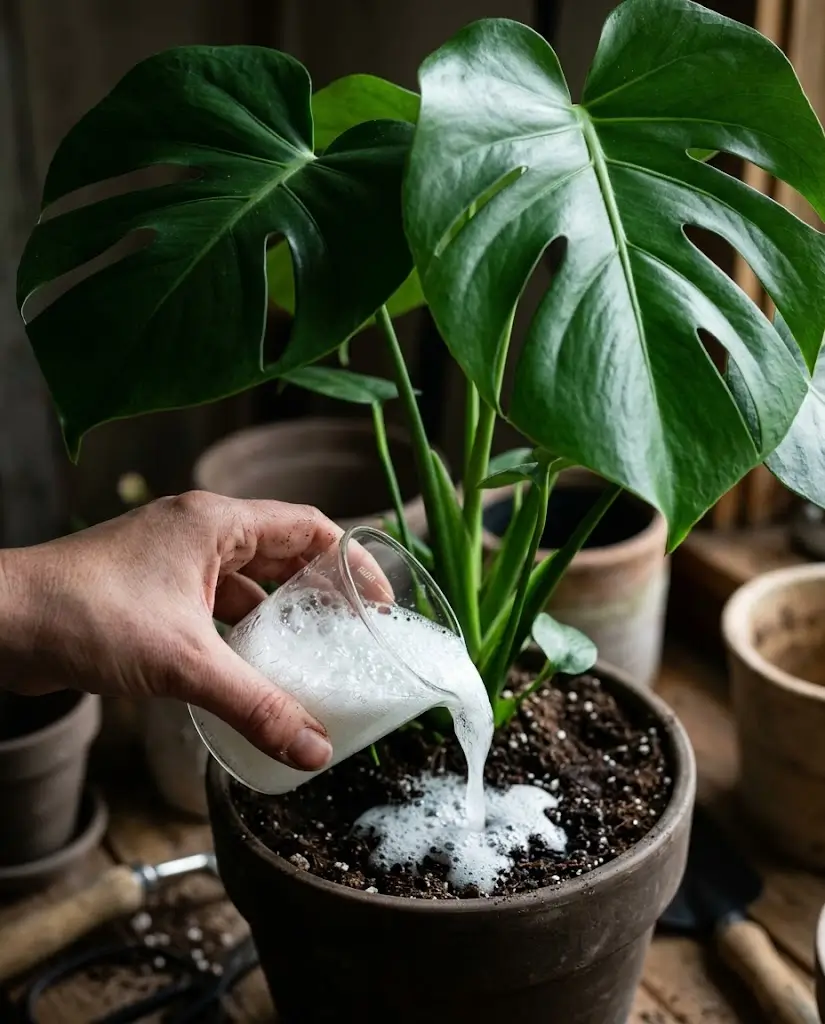
Have you ever watched your favorite plant push out a brand-new leaf, only for it to curl, deform, or turn a crispy black? It is absolutely heartbreaking. You water it perfectly, give it plenty of bright indirect light, but the new growth still looks crippled.
We at Plantora understand the deep frustration of watching a prized houseplant or expensive vegetable crop fail right before your eyes. You feel like you are doing everything right, yet the plant looks like it is actively dying.
Don’t throw in the towel just yet. The culprit behind these deformed, blackened leaves isn’t a mysterious disease or a watering issue. Your plant is simply starving for a specific, structural nutrient: calcium.
The Problem: Why Traditional Eggshell Hacks Fail Miserably
When a plant’s new leaves look deformed, it is screaming for a massive influx of calcium. Calcium acts as the biological “glue” that holds plant cell walls together. Without it, the new cellular structures simply collapse, resulting in those tragic black, curled tips.
So, you do exactly what every gardening blog on the internet tells you to do. You dutifully crush up your leftover breakfast eggshells and sprinkle them over your topsoil.
But weeks and even months pass, and your plant is still suffering from the exact same deformity. Why does this happen? Because raw eggshells take years to decompose and become bio-available to your plant’s root system.
You are essentially serving a raw, bone-in steak to a newborn baby. Your plant simply cannot digest solid calcium carbonate without a little help from the microbial life in the soil, which works incredibly slow.
The Secret Solution: The Bubbling Liquid Calcium Hack
We at Plantora absolutely love a good botanical shortcut. The secret to curing a calcium deficiency overnight isn’t grinding your shells into a finer powder; it is dissolving them completely.
By combining your everyday kitchen eggshells with standard white vinegar, you trigger a massive, bubbling chemical reaction. This “weird science” trick instantly transforms solid waste into a highly potent, bio-available Eggshell and Vinegar Plant Fertilizer.
Think of this solution as an emergency IV drip for your struggling garden. Instead of waiting three years for nature to break down those shells, you are creating a supercharged liquid nutrient that your roots can drink up immediately.
The Science Behind It: Botany Meets Chemistry
Let’s get a little nerdy for a second and look under the biological hood. Eggshells are composed almost entirely of calcium carbonate, a hard mineral structure that aggressively refuses to dissolve in plain tap water.
White household vinegar is made of acetic acid, a highly reactive liquid. When you pour this acid directly over the crushed shells, it chemically attacks the calcium, stripping it right out of the dense carbonate structure.
This violent, bubbling reaction releases carbon dioxide gas into the air and leaves behind a brand-new compound called calcium acetate. This newly formed liquid compound is 100% water-soluble. Because it is totally dissolved, your plant’s roots can absorb it seamlessly through osmosis, delivering structural repair to those deformed leaves in record time.
The Step-by-Step Blueprint: Brewing Your Fertilizer
Are you ready to play mad scientist in your kitchen? Here is the exact, fail-proof blueprint to create your own liquid calcium extract.
- Step 1: Clean and Prep. Rinse 4 to 5 empty eggshells under warm water to remove any sticky organic membrane left inside. Let them dry completely on a paper towel.
- Step 2: The Crush. Crush the dried shells into small, fingernail-sized pieces to maximize their surface area. Place these crushed shells into the bottom of a large, sturdy glass jar. [AFFILIATE LINK: Buy Heavy-Duty Glass Mason Jars on Amazon].
- Step 3: The Acid Bath. Pour enough plain white vinegar over the shells to completely submerge them. You will immediately see a vigorous, bubbling reaction as the acid begins to eat away at the calcium. [AFFILIATE LINK: Get Distilled White Vinegar in Bulk on Amazon].
- Step 4: The 24-Hour Wait. Do not cap the jar tightly, or the intense gas buildup could actually shatter the glass! Let the mixture sit open and bubble for at least 24 hours until all the fizzing completely stops.
- Step 5: Strain the Extract. Once the liquid is entirely calm and flat, strain out any leftover shell fragments using a fine mesh sieve. What you have left in the jar is pure, concentrated liquid calcium acetate.
- Step 6: Dilute and Feed. Mix exactly 1 tablespoon of your calcium extract into 1 gallon of fresh water. Water your plants with this diluted mixture directly at the soil level.
Crucial Mistakes to Avoid: Do Not Fry Your Roots!
Listen to us very carefully before you rush out to your garden. Never pour this raw extract directly onto your plants.
The raw, undiluted mixture in your jar is still incredibly acidic and carries a very low pH. If you skip the dilution step and pour concentrated vinegar extract into your soil, it will instantly shock and burn the root system.
This catastrophic chemical burn will cause your plant to drop its leaves and fail dramatically. Always respect the strict 1-tablespoon-per-gallon ratio. Dilution is the absolute key to safe, rapid nutrient delivery without altering your soil’s natural chemistry.
Frequently Asked Questions
How often should I use this Eggshell and Vinegar Plant Fertilizer? We recommend using this liquid calcium treatment once every 3 to 4 weeks during the active spring and summer growing seasons. If your plant is actively showing severe signs of calcium deficiency, you can use it for two consecutive waterings to jumpstart the healing process.
Can I use apple cider vinegar instead of white vinegar? Yes, apple cider vinegar contains the necessary acetic acid and will work just fine for the chemical reaction. However, plain white vinegar is significantly cheaper and lacks the extra fruit sugars. Those residual sugars in apple cider vinegar can sometimes attract unwanted fungus gnats to your indoor potting soil.
What specific plants benefit most from liquid calcium? Tomatoes, peppers, and heavy-feeding tropical houseplants (like Monsteras and Philodendrons) absolutely thrive on this hack. For outdoor vegetable gardeners, this fertilizer is the ultimate preventative measure against the dreaded “blossom end rot” that ruins tomato harvests.
Will this mixture make my house smell like a pickle factory? During the 24-hour fermentation process, you will definitely smell the sharp tang of vinegar in your kitchen. However, once you dilute the extract into a full gallon of water, the smell dissipates entirely. Your plants and soil will not smell like vinegar after you water them!
The Final Verdict
Stop waiting years for those chunky, ugly eggshells to break down in your beautiful potting soil. By using this simple chemistry hack, you can bypass the slow decomposition process and cure calcium deficiencies in a matter of days.
Your plants will reward your scientific efforts with massive, perfectly formed leaves, robust stems, and bountiful fruit. It is the cheapest, fastest way to elevate your gardening game to an elite level.
Did this Weird Science botanical hack blow your mind? Leave a comment below and tell us which struggling plant you are going to treat first! Be sure to pin this article on Pinterest so you never lose this master gardening recipe.
You May Also Like
 9 Herbs to Grow in Buckets This July for a Small-Space Summer Garden
 8 Companion Plants That Help Roses Grow Healthier and Look More Beautiful
 Where to Place Indoor Plants for Healthy Growth
 How Nurseries Revive Dead Houseplants in 10 Minutes (The Bubbling Secret)
 Why Master Gardeners Are Using Aspirin to Explode Root Growth
 Companion Plants That May Help Reduce Garden Pests Naturally