A flowering tree can completely change the look of a yard. It adds color, shade, structure, seasonal beauty, and often pollinator value. Some flowering trees create a soft spring display, while others bring summer color, fall interest, berries, fragrance, or beautiful branching even after the blooms fade.
But choosing a flowering tree is not only about picking the prettiest flowers.
The right tree should fit your yard for many years. Before planting, you need to think about mature size, sunlight, root space, bloom season, maintenance needs, and whether the tree still looks attractive after flowering ends.
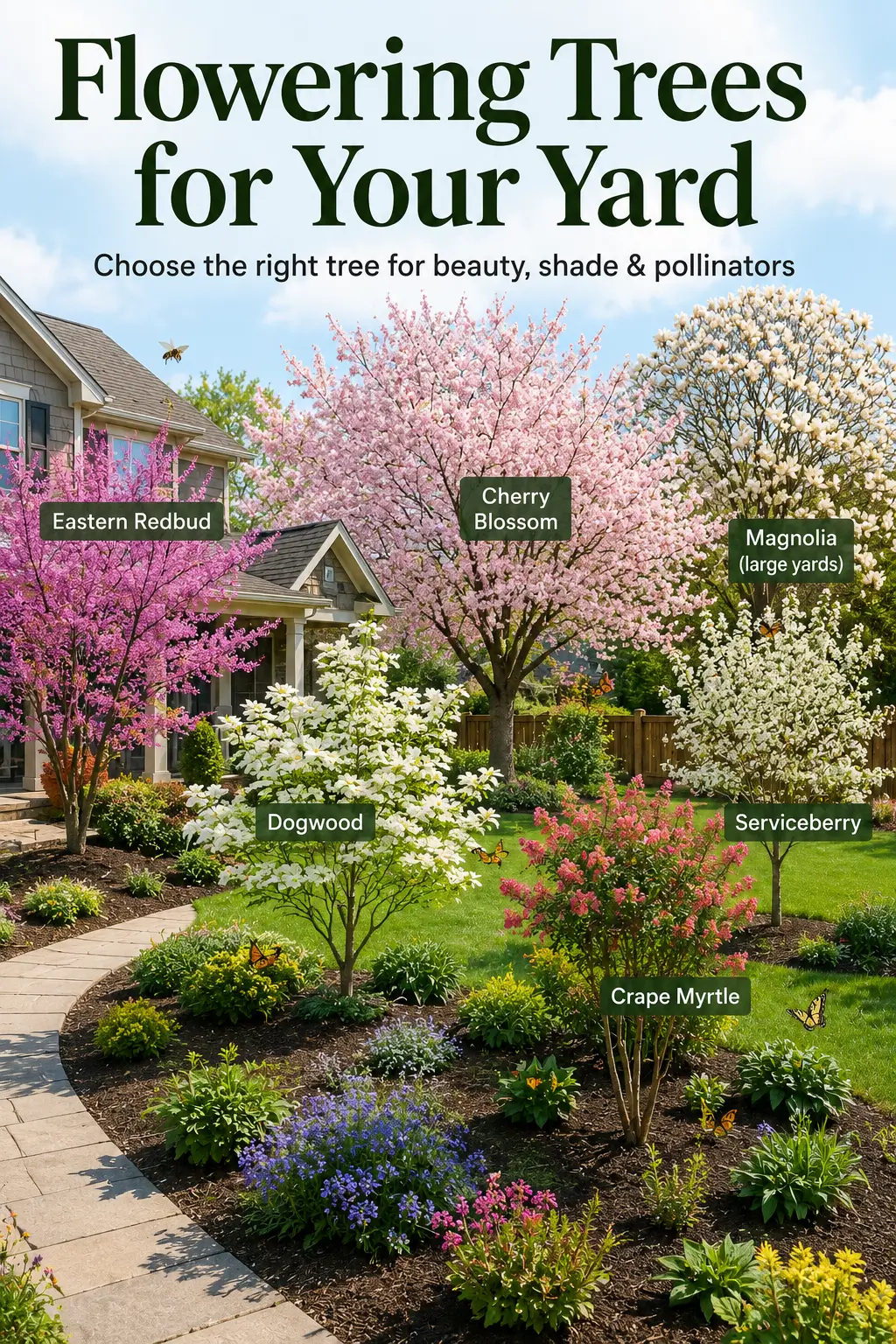
A small yard may need a compact tree like eastern redbud, dogwood, serviceberry, or a smaller crape myrtle. A larger yard can handle bigger trees like magnolia, tulip tree, jacaranda in warm climates, or golden rain tree where it is appropriate to grow.
This guide will help you choose a flowering tree that looks beautiful now and still works well in your landscape years later.
Why Flowering Trees Are Worth Planting
Flowering trees give a yard more than just a few weeks of blooms. A well-chosen tree can become the main focal point of a front yard, backyard, patio edge, or garden border.
They add height and structure, which makes a landscape feel more complete. Flower beds and shrubs often stay low, but a small or medium flowering tree creates a vertical layer that draws the eye upward.
Many flowering trees also support pollinators. Bees, butterflies, and other beneficial insects often visit spring and summer blooms. Some trees, such as serviceberry and dogwood, can also provide berries for birds later in the season.
A flowering tree can also provide filtered shade, help frame a walkway, soften a fence line, or make a plain lawn feel more designed.
The most important part is choosing a tree that fits your conditions instead of forcing the wrong tree into the wrong space.
What to Consider Before Choosing a Flowering Tree
Mature Size
This is the first thing to check. Many trees look small at the garden center but become much wider and taller with age.
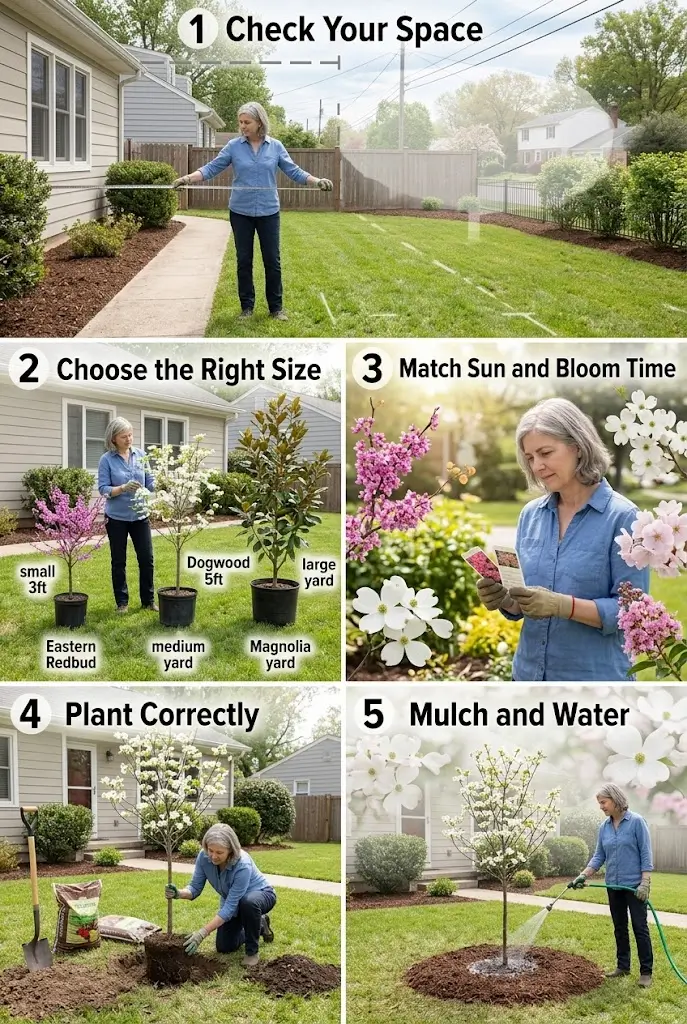
Before planting, check the mature height and spread of the exact variety you want. A tree that grows 25 feet wide should not be planted 3 feet from a house, driveway, or fence.
For small yards, choose compact trees or dwarf varieties. For larger properties, bigger flowering trees can become beautiful shade and statement trees.
Sun Needs
Most flowering trees bloom best with enough sun. Many need full sun, which usually means at least 6 hours of direct sunlight per day.
Some trees, such as dogwood and redbud, can tolerate part shade, especially in hotter climates. However, too much shade can reduce flowering.
Watch your yard throughout the day before choosing a planting spot.
Bloom Season
Different trees bloom at different times.
Some flower in early spring before many other plants wake up. Others bloom in late spring or summer. Choosing trees with different bloom seasons can give your yard color for a longer period.
For example, redbud and cherry blossom are known for spring blooms. Crape myrtle brings color in summer. Serviceberry offers spring flowers followed by berries and fall color.
Root Space
Trees need room underground as well as above ground. Avoid planting flowering trees too close to foundations, sidewalks, septic systems, underground utilities, or narrow planting strips.
Even smaller trees need enough soil space to develop healthy roots. Poor root space can lead to stress, weak growth, and hardscape damage.
After-Bloom Interest
A flowering tree should not look good for only one week and then become boring or messy.
Consider what the tree offers after flowering. Does it have attractive leaves? Interesting bark? Fall color? Berries? A graceful shape? Shade value?
The best flowering trees earn their place through more than one season.
Maintenance Needs
Some flowering trees need more pruning, cleanup, or disease monitoring than others. Crape myrtle may need careful pruning. Roses and fruiting trees may need more regular maintenance. Some magnolias drop large leaves or petals.
Choose a tree that fits the amount of care you are willing to provide.
Best Flowering Trees for Home Landscapes
Eastern Redbud
Eastern redbud is a beautiful small flowering tree known for its pinkish-purple spring blooms. The flowers appear along the branches before the leaves fully emerge, creating a soft cloud of color early in the season.
It is a great choice for small to medium yards because it usually stays manageable compared with large shade trees. The heart-shaped leaves add beauty after the flowers fade.
Eastern redbud works well near woodland edges, front yards, mixed borders, and pollinator gardens. It can grow in full sun to part shade, but flowering is usually stronger with more sun.
Give it enough room to spread naturally. It looks best when allowed to keep its graceful branching shape.
Magnolia
Magnolia trees are loved for their large, elegant flowers. Depending on the type, blooms may be white, pink, purple, cream, or yellow. Some magnolias bloom in early spring, while others bloom later.
Magnolia can be a stunning focal point, but size matters. Some magnolias become very large, while others stay smaller and fit better in home yards.
Before planting, check the exact variety. A small star magnolia fits a very different space than a large southern magnolia.
Magnolias generally prefer rich, well-drained soil and a spot where their roots are not disturbed. Plant them where they have room to mature.
Serviceberry
Serviceberry is one of the most useful small flowering trees for home landscapes. It offers white spring flowers, edible berries, attractive leaves, and often good fall color.
It is a strong choice for gardeners who want beauty and wildlife value. Birds love the berries, and pollinators visit the spring flowers.
Serviceberry works well in small yards, woodland-style gardens, mixed borders, and naturalized landscapes. It can grow as a small tree or multi-stemmed shrub, depending on the variety and pruning.
It is especially valuable because it looks attractive beyond the bloom period.
Crape Myrtle
Crape myrtle is known for its long-lasting summer flowers in shades of pink, red, purple, lavender, and white. It also has attractive bark and can bring strong color when many spring trees are finished blooming.
It is best suited to warmer regions. In colder climates, crape myrtle may die back or perform more like a shrub.
Choose the right mature size because crape myrtles range from compact shrubs to small trees. Avoid planting a large variety in a tiny space.
Do not severely top or butcher crape myrtles. Light, selective pruning is much better than cutting them back hard every year.
Tulip Tree
Tulip tree is a large, fast-growing tree with unique tulip-shaped yellow-green flowers. It can be beautiful, but it is not a small-yard tree.
This tree needs a large space, deep soil, and plenty of room to grow. It can become very tall and wide, making it better for large yards, parks, or open landscapes.
Because the flowers can appear high in the canopy, they may not be as visible up close as smaller flowering trees. Still, the tree has a grand shape and beautiful leaves.
Choose tulip tree only if your yard can handle its mature size.
Cherry Blossom
Cherry blossom trees are famous for their soft pink or white spring flowers. They create one of the most beautiful seasonal displays in a home landscape.
They work well as front yard focal points, walkway trees, patio accents, or lawn specimens. Many ornamental cherries stay small to medium in size, but variety still matters.
Cherry trees need good sunlight and well-drained soil. They can be somewhat short-lived compared with some other landscape trees, and they may need monitoring for pests or disease.
Even so, their spring beauty makes them a favorite choice for many homeowners.
Golden Rain Tree
Golden rain tree produces yellow flower clusters in summer followed by decorative seed pods. It can bring color after many spring-blooming trees are finished.
However, this tree should be chosen carefully. In some regions, golden rain tree can self-seed or behave aggressively. Before planting, check whether it is recommended or restricted in your area.
It grows best in full sun and can tolerate some urban conditions, but it still needs enough space to mature.
If it is not a good choice for your region, consider another summer-blooming tree instead.
Jacaranda
Jacaranda is known for its stunning purple-blue blooms and fern-like leaves. In the right climate, it can become one of the most dramatic flowering trees in a landscape.
Jacaranda is best for warm climates and is not suitable for cold winter areas. It needs full sun and room to grow.
It can create flower and leaf litter, so avoid planting it where fallen blooms will become a problem on patios, pools, or driveways.
For warm-region gardeners with enough space, jacaranda can be a breathtaking yard tree.
Dogwood
Dogwood is a classic flowering tree for spring beauty. It is loved for white, pink, or red bracts, graceful branching, and attractive seasonal interest.
Dogwoods often work well in small to medium yards. Many prefer part shade, especially in hot climates, although they still need enough light to bloom well.
They like well-drained soil and do not do well in compacted, dry, or extremely hot planting spots.
Dogwood can be beautiful near patios, woodland edges, front yards, and mixed garden borders.
Best Flowering Trees for Small Yards
Small yards need trees that offer beauty without overwhelming the space.
Good choices for small yards include:
- Eastern redbud
- Serviceberry
- Dogwood
- Smaller magnolia varieties
- Dwarf or compact crape myrtle
- Smaller ornamental cherry varieties
These trees can add spring color, wildlife value, and structure without becoming too large when chosen carefully.
For small spaces, avoid large trees like tulip tree unless you have a very open yard. Also be cautious with trees that drop heavy fruit, large leaves, or aggressive seedlings.
In small yards, mature width matters as much as height. A tree that spreads too wide can block windows, crowd walkways, or shade garden beds.
Best Flowering Trees for Large Yards
Large yards can handle bigger flowering trees and wider canopies.
Good choices for large yards include:
- Magnolia
- Tulip tree
- Jacaranda in warm climates
- Larger crape myrtle varieties
- Large ornamental cherry trees
- Serviceberry groups or multi-stem plantings
Large flowering trees can become shade trees, statement trees, or background trees for layered landscaping.
Plant them far enough from structures so they have room to develop naturally.
Best Flowering Trees for Pollinators and Birds
If wildlife value matters to you, choose trees that provide more than just ornamental flowers.
Serviceberry is excellent because it offers flowers for pollinators and berries for birds. Eastern redbud provides early flowers that can support pollinators. Dogwood can offer flowers, berries, and seasonal habitat value.
Crape myrtle can attract pollinators during its bloom season, and magnolia flowers can support certain pollinating insects.
For the strongest wildlife value, native or regionally appropriate trees are often better choices than purely ornamental imports.
Where to Plant a Flowering Tree
The right planting location is one of the most important decisions.
Plant flowering trees where they have enough sun, root space, and room to spread. Avoid squeezing them too close to buildings, power lines, fences, sidewalks, or driveways.
A flowering tree can look beautiful:
- In a front yard as a focal point
- Near a patio for filtered shade
- At the corner of a house to soften the structure
- Along a walkway
- In a mixed border
- Near a seating area
- At the edge of a woodland garden
- In the center of a lawn
Before planting, imagine the tree at full size. Make sure it will still fit 10, 20, or 30 years later.
How to Plant a Flowering Tree Correctly
Start by digging a planting hole about two to three times wider than the root ball, but no deeper than the root ball itself.
The top of the root flare should sit at or slightly above the surrounding soil level. Planting too deep is a common mistake that can stress or even kill trees over time.
Gently loosen circling roots if needed. Place the tree straight in the hole, backfill with native soil, and water deeply.
Add mulch around the tree in a wide ring, but keep mulch away from the trunk. Do not pile mulch into a volcano shape against the bark.
Water regularly during the first few years while the tree becomes established.
Care Tips for Flowering Trees
Water young trees deeply and consistently during dry periods. Newly planted trees need extra attention while their roots establish.
Mulch helps conserve moisture, regulate soil temperature, and reduce competition from grass. Keep mulch a few inches away from the trunk.
Prune only when needed. Remove dead, damaged, crossing, or poorly placed branches. Avoid heavy pruning during the wrong season, especially on spring-blooming trees that set flower buds the previous year.
Fertilize only if needed. Too much fertilizer can encourage weak leafy growth instead of strong flowering.
Watch for pests, disease, drought stress, and trunk damage from mowers or string trimmers.
Common Mistakes to Avoid
Choosing a Tree Only for Its Flowers
Flowers are important, but the tree also needs to look good after blooming. Consider leaves, shape, bark, fall color, berries, and overall structure.
Ignoring Mature Size
A small nursery tree can become much larger than expected. Always check mature height and spread.
Planting Too Close to the House
Trees need root space and canopy space. Planting too close can create future problems with branches, roots, gutters, windows, or foundations.
Choosing the Wrong Tree for Your Climate
Jacaranda, crape myrtle, magnolia, and other flowering trees vary widely in cold tolerance. Choose trees suited to your growing zone and local conditions.
Planting in Too Much Shade
Many flowering trees need sun to bloom well. Too much shade can lead to fewer flowers and weaker growth.
Over-Pruning
Severe pruning can ruin the natural shape of flowering trees and reduce blooms. Prune lightly and correctly.
Forgetting About Cleanup
Some trees drop petals, pods, berries, or large leaves. Plant them where seasonal cleanup will not become a major problem.
FAQ
What is the best flowering tree for a small yard?
Eastern redbud, serviceberry, dogwood, smaller magnolia varieties, and compact crape myrtles are good choices for many small yards.
What flowering tree blooms in spring?
Eastern redbud, dogwood, cherry blossom, serviceberry, and many magnolias are known for spring blooms.
What flowering tree blooms in summer?
Crape myrtle, golden rain tree, and some magnolias can provide summer blooms, depending on the variety and climate.
Which flowering trees attract birds?
Serviceberry and dogwood are especially useful because they can provide berries for birds. Many flowering trees also support insects that birds feed on.
Which flowering tree is best for pollinators?
Eastern redbud, serviceberry, dogwood, magnolia, and crape myrtle can all support pollinators when planted in the right conditions.
Can I plant a flowering tree near my house?
Yes, but choose a tree with a mature size that fits the space. Plant it far enough away from the foundation, roofline, windows, and utilities.
Are flowering trees high maintenance?
Some are low maintenance once established, while others need more pruning, cleanup, or disease monitoring. Choose a tree that matches your time and skill level.
What should I check before buying a flowering tree?
Check mature size, sun needs, soil needs, hardiness, bloom season, root space, maintenance needs, and whether it is recommended for your region.
Conclusion
Flowering trees can make a yard feel more beautiful, welcoming, and complete. They add seasonal color, structure, shade, pollinator value, and long-term character to the landscape.
The best tree is not always the one with the showiest flowers. It is the one that fits your yard, climate, space, and care level.
For small yards, consider trees like eastern redbud, serviceberry, dogwood, compact crape myrtle, smaller magnolia, or ornamental cherry. For larger yards, magnolia, tulip tree, jacaranda in warm climates, and larger flowering trees may be better choices.
Plant the right tree in the right place, care for it well during establishment, and it can become one of the most beautiful features in your yard for years to come.
You May Also Like
 How Nurseries Revive Dead Houseplants in 10 Minutes (The Bubbling Secret)
 The Truth About Epsom Salt for Peppers, Tomatoes, and Roses
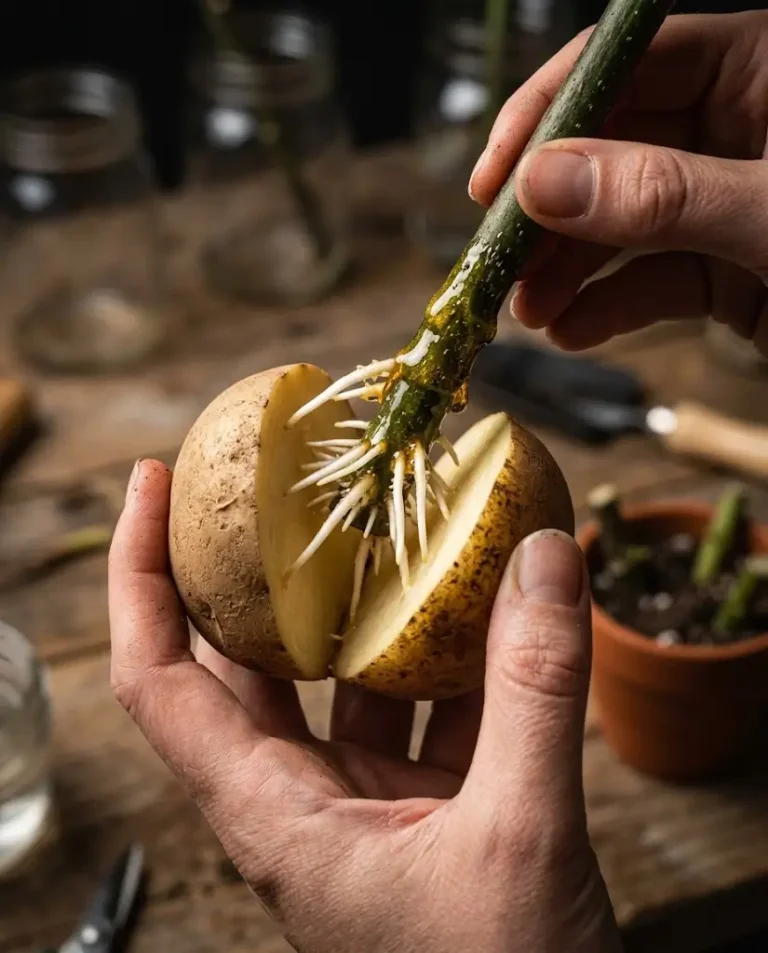 Why Master Gardeners Are Propagating Cuttings in a Raw Potato and Honey
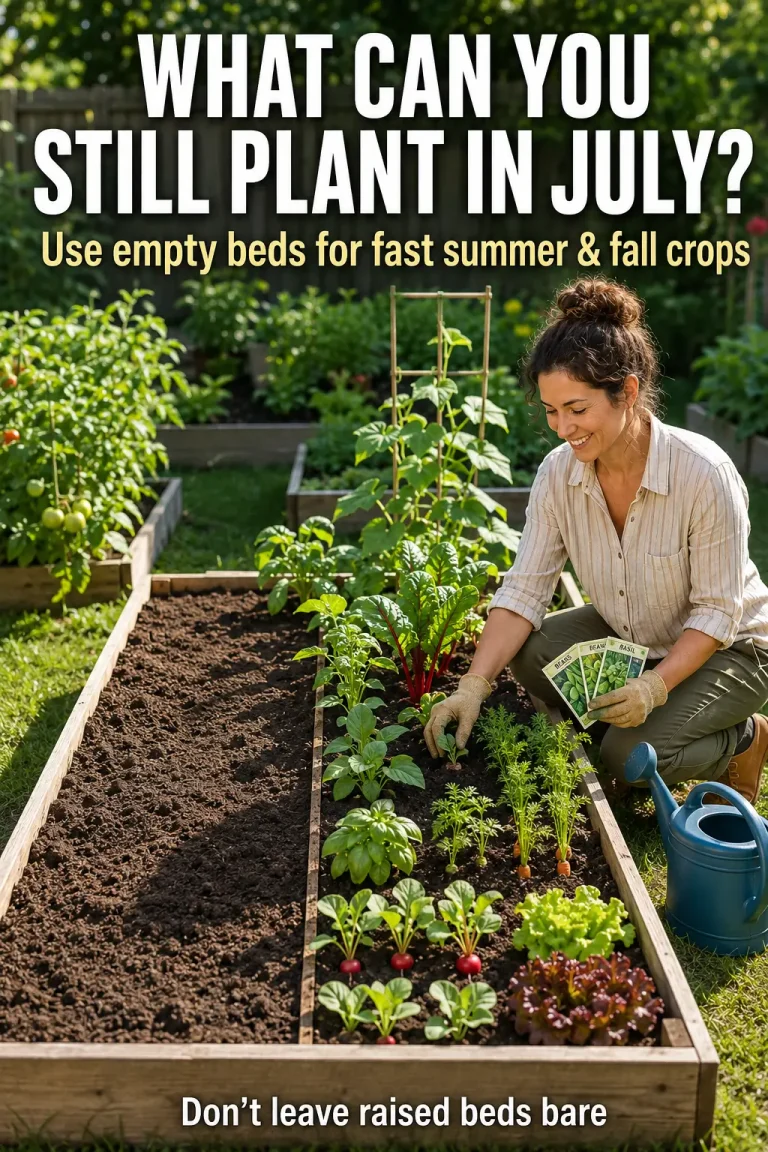 What Can You Still Plant in July? Smart Crops for Empty Garden Beds
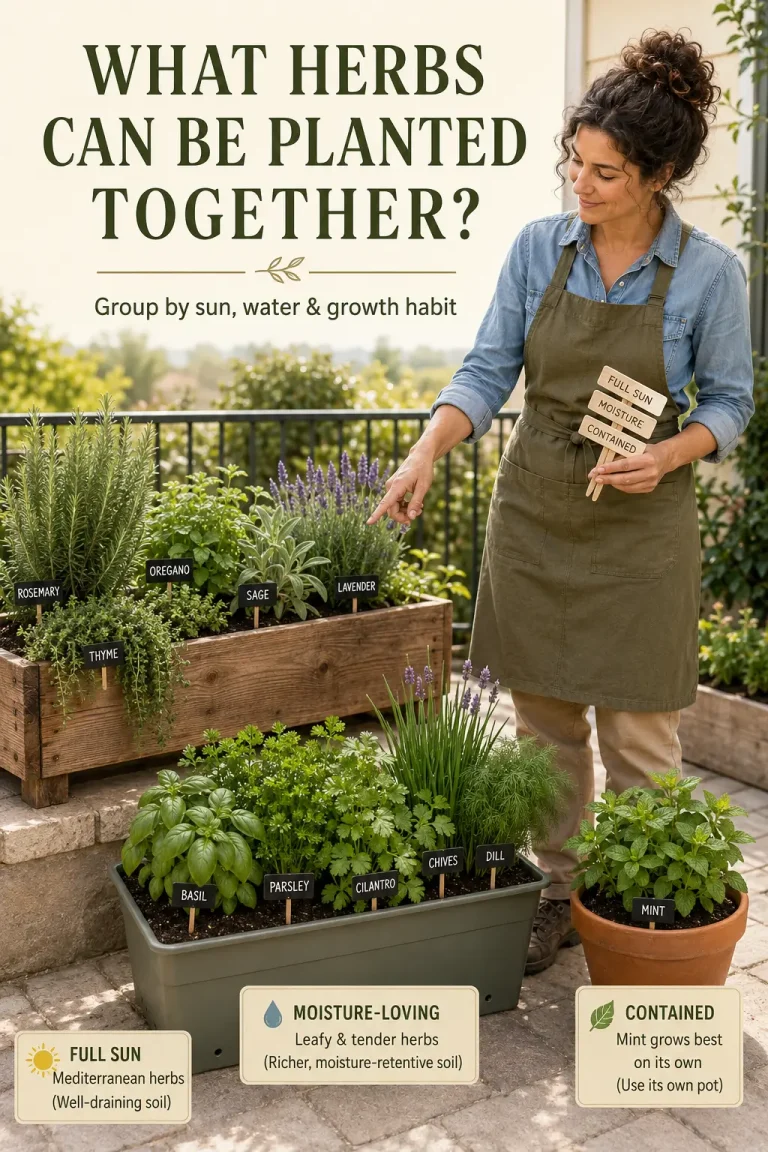 What Herbs Can Be Planted Together? A Practical Companion Planting Guide
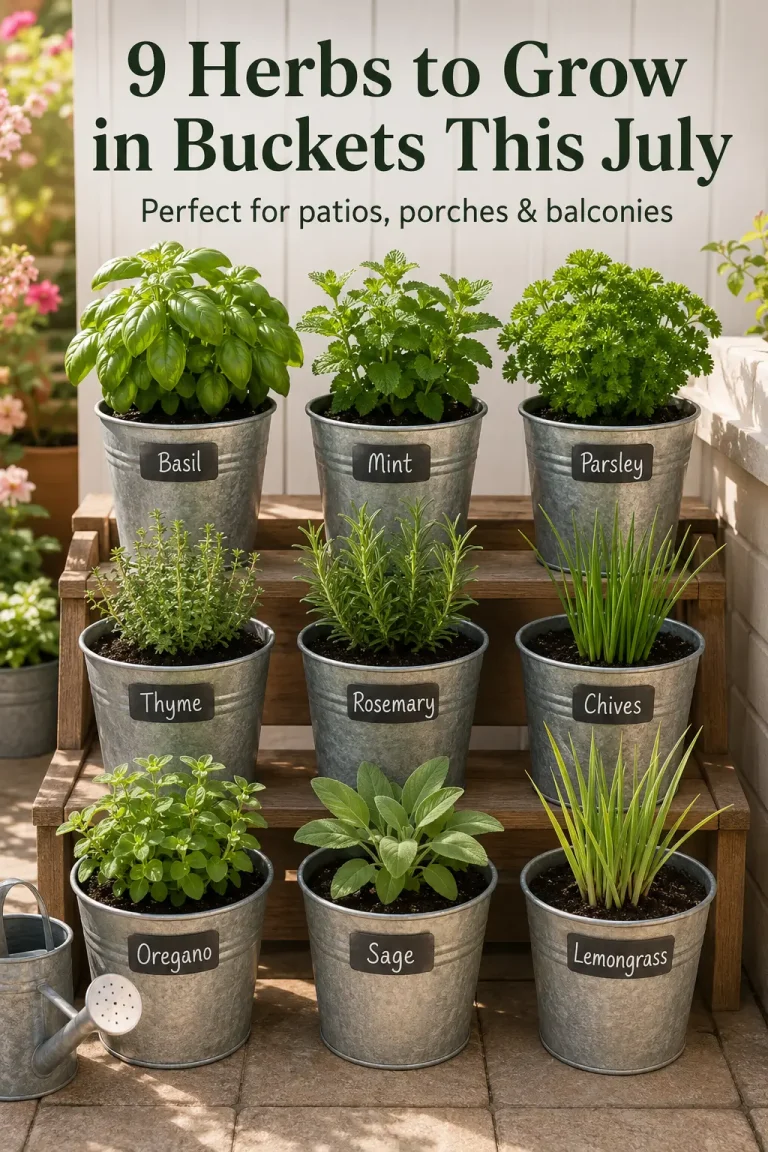 9 Herbs to Grow in Buckets This July for a Small-Space Summer Garden