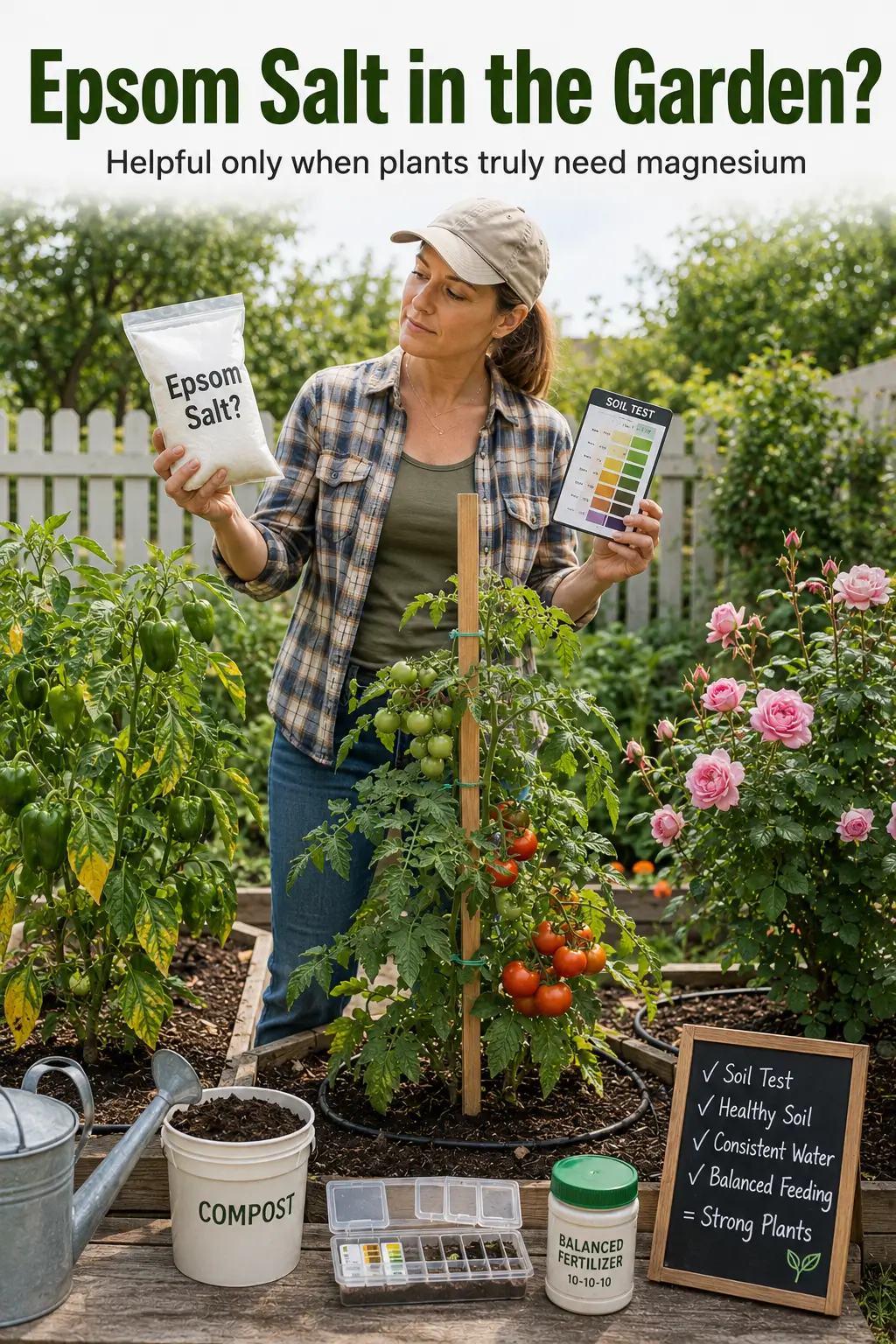
Epsom salt is one of the most repeated garden “hacks” online. You may have seen advice saying to mix Epsom salt with water, spray it on peppers, tomatoes, or roses, and expect more flowers, more fruit, greener leaves, or healthier plants.
The truth is more careful than that.
Epsom salt is magnesium sulfate. It contains magnesium and sulfur, two nutrients plants can use. But it only helps when a plant is actually low in magnesium or when the soil cannot provide enough available magnesium.
It is not a guaranteed fruit booster. It is not a cure-all spray. And using it when your plants do not need it can create problems in the soil over time.
For peppers, tomatoes, and roses, the best approach is to understand what Epsom salt can and cannot do, recognize possible magnesium deficiency, and focus on healthy soil, steady watering, compost, and fertilizer based on real plant needs.
Why This Garden Claim Became Popular
The Epsom salt claim became popular because it sounds simple. Mix a small amount into water, spray the plant, and get more fruit or flowers. For gardeners struggling with peppers that will not set fruit, tomatoes with yellow leaves, or roses that look weak, it feels like an easy fix.
The problem is that plant growth is rarely controlled by just one nutrient.
Peppers may fail to fruit because of heat stress, poor pollination, too much nitrogen, inconsistent watering, low light, or immature plants. Tomatoes may yellow because of watering problems, disease, root stress, nitrogen deficiency, pest damage, or normal aging leaves. Roses may struggle because of poor pruning, compacted soil, disease pressure, not enough sun, or lack of balanced feeding.
If the real problem is not magnesium deficiency, Epsom salt will not solve it.
What Epsom Salt Actually Is
Epsom salt is magnesium sulfate. It provides:
Magnesium
Magnesium helps plants make chlorophyll, which is important for photosynthesis and green leaf color.
Sulfur
Sulfur is involved in plant growth and protein formation, though most garden soils already contain enough sulfur from organic matter, rainfall, compost, and fertilizers.
Because magnesium is important, Epsom salt can be useful in certain situations. But plants only need a small amount of magnesium compared with major nutrients like nitrogen, phosphorus, and potassium.
Adding magnesium when the soil already has enough does not automatically make plants stronger or more productive.
Can Epsom Salt Help Peppers?
Epsom salt may help pepper plants only if they are truly low in magnesium.
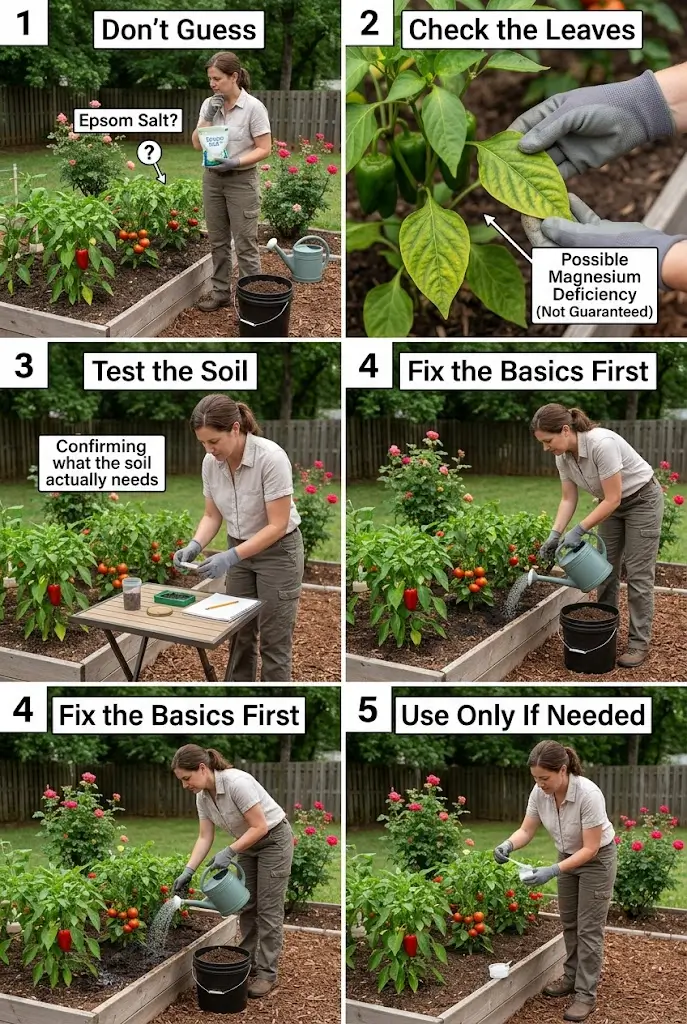
A magnesium-deficient pepper plant may show yellowing between the veins on older leaves while the veins stay greener. This is called interveinal chlorosis. The older leaves usually show symptoms first because magnesium can move from older leaves to newer growth.
However, peppers can also struggle for many other reasons. If a pepper plant has flowers but no fruit, the cause is often heat stress, poor pollination, irregular watering, or too much nitrogen fertilizer. Epsom salt will not fix those problems.
If your pepper plants are healthy and green, adding Epsom salt is usually unnecessary.
Can Epsom Salt Help Tomatoes?
Tomatoes also need magnesium, but they do not need random Epsom salt sprays to produce fruit.
If a tomato plant has true magnesium deficiency, older leaves may turn yellow between the veins. In that case, magnesium may help if soil testing or plant symptoms support the need.
But many tomato problems are not magnesium-related. Yellow leaves can come from overwatering, underwatering, early blight, nitrogen deficiency, root damage, transplant stress, or natural lower-leaf aging.
Epsom salt is also sometimes promoted for blossom-end rot, but blossom-end rot is mainly related to calcium movement in the plant and inconsistent watering. Adding Epsom salt does not fix blossom-end rot and may make nutrient balance worse if overused.
Can Epsom Salt Help Roses?
Roses use magnesium like other plants, and magnesium deficiency can affect leaf color. In some cases, magnesium sulfate may help roses if a deficiency is confirmed.
But roses need balanced care. They need sun, airflow, pruning, steady water, mulch, good soil, and a proper rose fertilizer or compost-based feeding plan.
If a rose is not blooming well, Epsom salt is not automatically the answer. Poor blooming can be caused by too much shade, incorrect pruning, immature plants, disease, poor watering, or lack of balanced nutrients.
For roses, Epsom salt should be treated as a targeted supplement, not a routine magic bloom booster.
What Magnesium Deficiency Can Look Like
Magnesium deficiency often appears first on older leaves.
Possible signs include:
- Yellowing between leaf veins
- Veins staying greener than the leaf tissue
- Older leaves affected before new leaves
- Pale or mottled lower leaves
- Leaf edges sometimes turning brown in severe cases
- Reduced plant vigor if the deficiency is serious
These symptoms can look similar to other problems, so do not rely on appearance alone. Nutrient issues can overlap with watering stress, pH problems, root damage, disease, or other deficiencies.
That is why soil testing matters.
Why Soil Testing Matters
A soil test is the best way to know whether your garden soil is actually low in magnesium.
Without a soil test, adding Epsom salt is a guess. Sometimes the soil already has enough magnesium, but the plant cannot use it properly because of pH imbalance, poor roots, too much potassium, or inconsistent moisture.
A soil test can help show:
- Magnesium levels
- Soil pH
- Organic matter level
- Potassium, phosphorus, and other nutrients
- Whether lime or fertilizer is needed
For vegetable gardens and rose beds, testing soil every few years is a smart habit. It helps you fertilize based on real needs instead of online shortcuts.
Why Too Much Epsom Salt Can Be a Problem
More magnesium is not always better.
Using Epsom salt too often can create nutrient imbalance. Too much magnesium in the soil can interfere with how plants take up other nutrients, including calcium and potassium.
It can also add unnecessary salts to the soil. In containers, raised beds, and dry climates, salts can build up more easily if they are not washed through the soil properly.
Possible problems from overuse include:
- Nutrient imbalance
- Salt buildup
- Reduced calcium availability
- Poorer soil balance over time
- Wasted effort and money
- Ignoring the real plant problem
This is why Epsom salt should not be used as a regular spray or automatic garden treatment.
Should You Spray Epsom Salt on Leaves?
Foliar sprays are often recommended online, but they should be used carefully.
Leaves can absorb some nutrients through sprays, but foliar feeding is not a replacement for healthy soil. Spraying too strong a mix or spraying during hot sun can damage leaves.
If magnesium deficiency is suspected and you choose to use a foliar spray, use a mild solution, spray in the early morning or evening, and test on a small part of the plant first.
Do not spray stressed plants in the heat of the day. Do not spray diseased leaves and expect the disease to disappear. And do not keep spraying every 10 days unless you know the plant actually needs magnesium.
What Gardeners Should Do Instead
For most gardeners, the better solution is not a random Epsom salt spray. It is better plant care and better soil management.
Improve Soil Health
Healthy soil supports healthier plants. Add compost or aged organic matter to garden beds each season. Compost helps soil structure, moisture balance, and microbial activity.
For peppers and tomatoes, rich but well-draining soil is important. For roses, soil should hold moisture but not stay soggy.
Water Consistently
Many fruiting problems come from inconsistent watering. Tomatoes, peppers, and roses all perform better when they are not swinging between too dry and too wet.
Water deeply at the soil level. Mulch can help keep moisture more even and reduce soil splash on leaves.
Use Balanced Fertilizer
Peppers and tomatoes need balanced nutrition. Too much nitrogen can create big leafy plants with fewer fruits.
Roses also benefit from balanced feeding during active growth, but fertilizer should match the season and the plant’s needs.
Choose a fertilizer based on your soil test, plant type, and growth stage.
Check Sunlight
Peppers and tomatoes usually need at least 6 to 8 hours of direct sun for good production. Roses also need strong sun to bloom well.
If the plant is in too much shade, Epsom salt will not fix the problem.
Watch for Pests and Disease
Yellowing or weak plants may be dealing with pests or diseases, not nutrient deficiency.
Check leaves, stems, undersides of leaves, and soil moisture before assuming a plant needs magnesium.
Use Mulch
Mulch helps keep soil moisture steady, reduces weeds, and limits soil splash. This is especially helpful for tomatoes and roses, where leaf disease can spread from soil splash.
Keep mulch slightly away from plant stems.
When Epsom Salt Might Be Useful
Epsom salt may be useful when:
- A soil test shows low magnesium
- Symptoms strongly match magnesium deficiency
- Soil pH is in a good range but magnesium is lacking
- A plant is known to be growing in magnesium-poor soil
- A trusted local extension recommendation supports its use
In these cases, magnesium sulfate can be used as a targeted correction. But it should be measured, limited, and not treated as a routine miracle treatment.
When You Should Avoid Epsom Salt
Avoid using Epsom salt if:
- Your plants look healthy
- You have not confirmed a magnesium problem
- The plant is failing because of heat, drought, disease, or pests
- You are trying to fix blossom-end rot
- You are already using a balanced fertilizer with magnesium
- Your soil test shows enough or high magnesium
- You grow in containers and already struggle with salt buildup
Using it “just in case” is not a good garden strategy.
The Truth About More Fruit
The claim that Epsom salt automatically produces more fruit is misleading.
Fruit production depends on many factors:
- Sunlight
- Pollination
- Temperature
- Water consistency
- Plant variety
- Root health
- Soil fertility
- Balanced nutrients
- Disease control
- Proper pruning or support
Magnesium is only one small part of plant nutrition. If magnesium is not the limiting factor, adding it will not increase fruit.
For peppers and tomatoes, better fruiting often comes from steady watering, enough sun, good pollination, and avoiding excess nitrogen.
For roses, better blooming often comes from sunlight, proper pruning, healthy soil, and balanced feeding.
Common Mistakes to Avoid
Using Epsom Salt as a Cure-All
Epsom salt does not fix every plant problem. Always identify the likely cause before treating.
Spraying Too Often
Repeated spraying can waste nutrients and may stress plants. Do not spray every 10 days unless there is a confirmed reason.
Confusing Yellow Leaves With Magnesium Deficiency
Yellow leaves can mean many things. Watering problems, disease, nitrogen deficiency, aging leaves, and root stress can all cause yellowing.
Using It for Blossom-End Rot
Blossom-end rot is not fixed by Epsom salt. Focus on consistent watering, proper calcium availability, and avoiding root stress.
Ignoring Soil pH
If soil pH is too high or too low, plants may struggle to access nutrients even if those nutrients are present.
Adding Magnesium Without Testing
Too much magnesium can throw off nutrient balance. A soil test is the best way to avoid guessing.
Better Natural Practices for Peppers, Tomatoes, and Roses
For peppers, focus on warm soil, full sun, steady watering, and balanced feeding. Avoid overfertilizing with nitrogen.
For tomatoes, plant deeply, mulch well, water consistently, support the vines, and prune lower leaves for airflow.
For roses, give them full sun, prune correctly, mulch, water deeply, and feed with compost or a balanced rose fertilizer when needed.
These habits are more reliable than a one-size-fits-all spray.
FAQ
Is Epsom salt good for peppers?
Epsom salt may help peppers only if they are truly low in magnesium. It is not a guaranteed way to increase fruit.
Is Epsom salt good for tomatoes?
It can help tomatoes with confirmed magnesium deficiency, but it does not fix most tomato problems. It should not be used as a cure-all.
Does Epsom salt help roses bloom?
Only if magnesium deficiency is part of the problem. Roses usually bloom better with enough sun, proper pruning, steady water, and balanced nutrition.
What does magnesium deficiency look like?
Magnesium deficiency often causes yellowing between the veins on older leaves while the veins stay greener.
Can too much Epsom salt hurt plants?
Yes. Too much magnesium can create nutrient imbalance and may contribute to salt buildup in soil, especially in containers.
Does Epsom salt fix blossom-end rot?
No. Blossom-end rot is mostly related to calcium movement and inconsistent watering. Epsom salt does not solve it.
Should I spray Epsom salt every 10 days?
Not unless you have a confirmed magnesium need. Routine spraying is usually unnecessary and may cause problems over time.
What should I do before using Epsom salt?
Check plant symptoms, review watering and fertilizing habits, and consider a soil test to confirm whether magnesium is actually low.
Conclusion
Epsom salt is not a magic garden spray. It is magnesium sulfate, and it can help only when plants truly need magnesium.
For peppers, tomatoes, and roses, random spraying is not the best path to more fruit or better blooms. Healthy plants depend on sunlight, water, soil, balanced nutrients, airflow, and proper care.
If you suspect magnesium deficiency, test your soil or look carefully at the symptoms before treating. If your plants are not deficient, skip the Epsom salt and focus on the basics that actually build a stronger garden.
You May Also Like
 Do Matchsticks Kill Fungus Gnats? What Actually Works for Houseplants
 Flowering Trees That Beautify Your Yard: How to Choose the Right One for Your Space
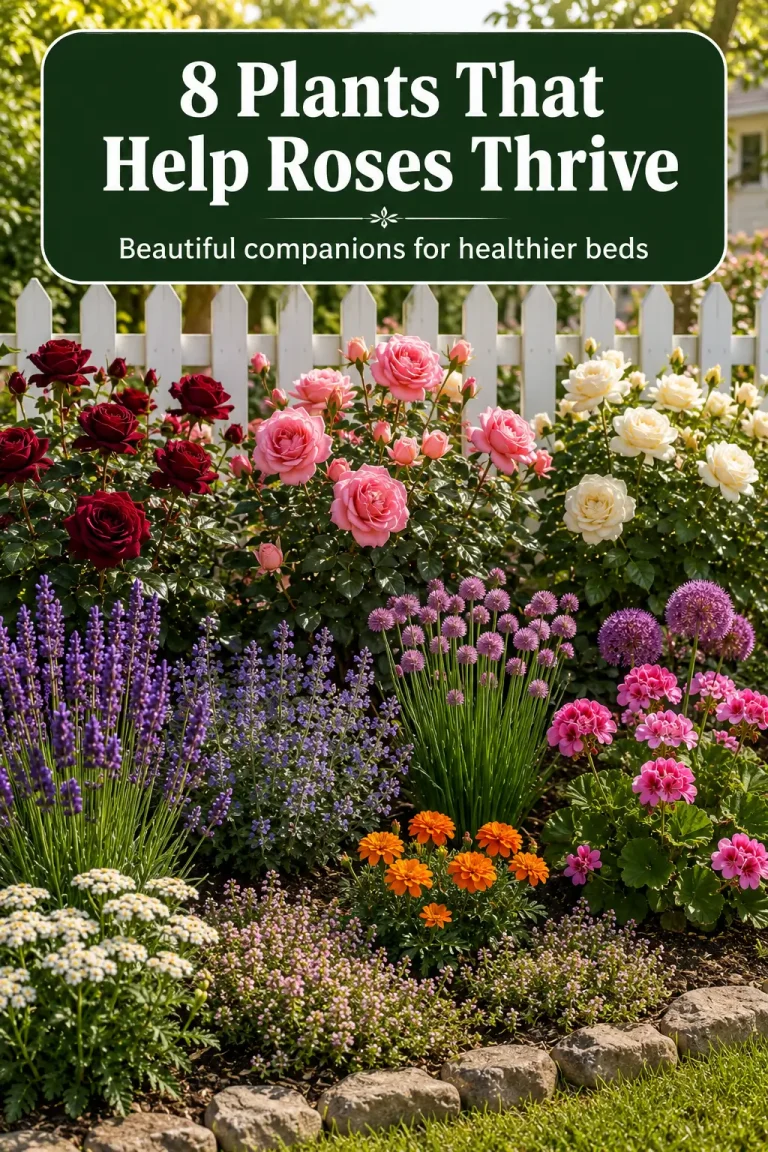 8 Companion Plants That Help Roses Grow Healthier and Look More Beautiful
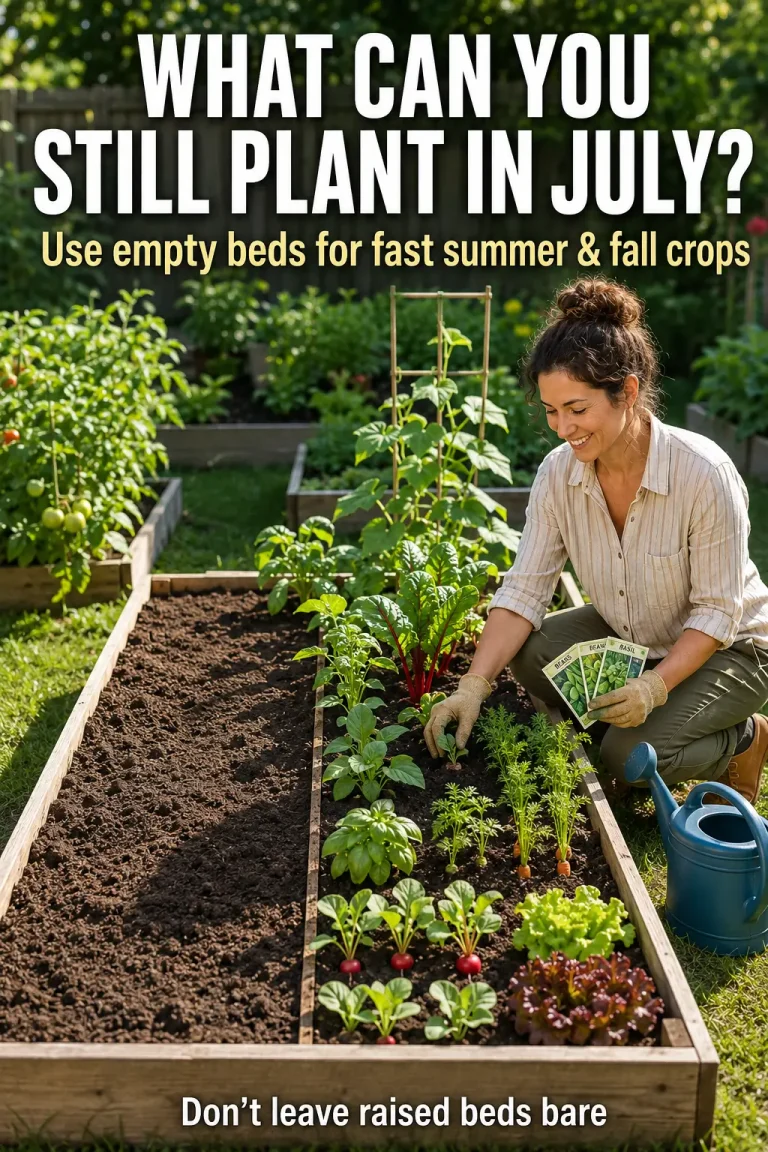 What Can You Still Plant in July? Smart Crops for Empty Garden Beds
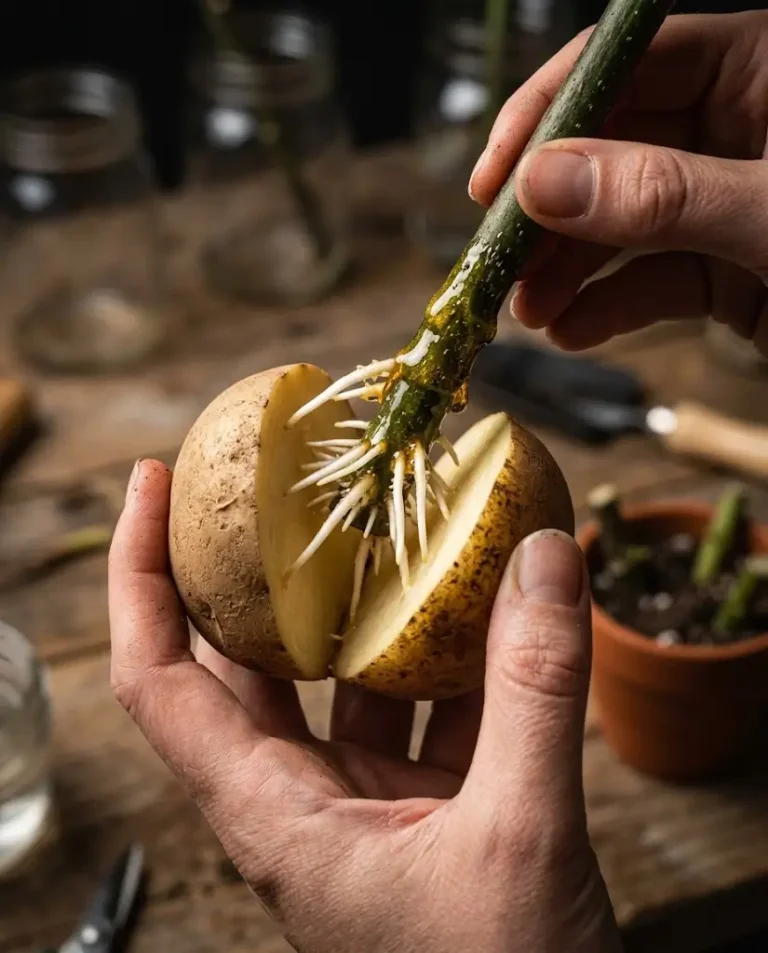 Why Master Gardeners Are Propagating Cuttings in a Raw Potato and Honey
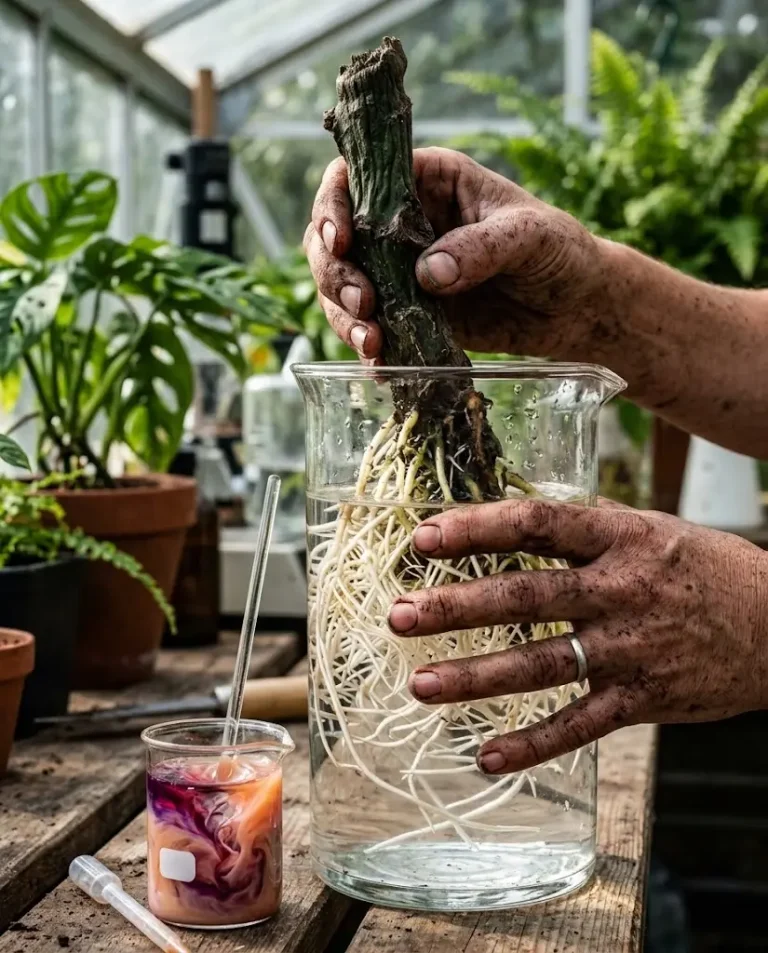 Why Master Gardeners Are Using Milk and Iodine to Resurrect Dead Houseplants