Zucchini plants are productive, fast-growing, and easy to love, but they can quickly take over a garden bed. One plant can sprawl across the soil, cover nearby crops, hide fruit under big leaves, and make harvesting harder than it needs to be.
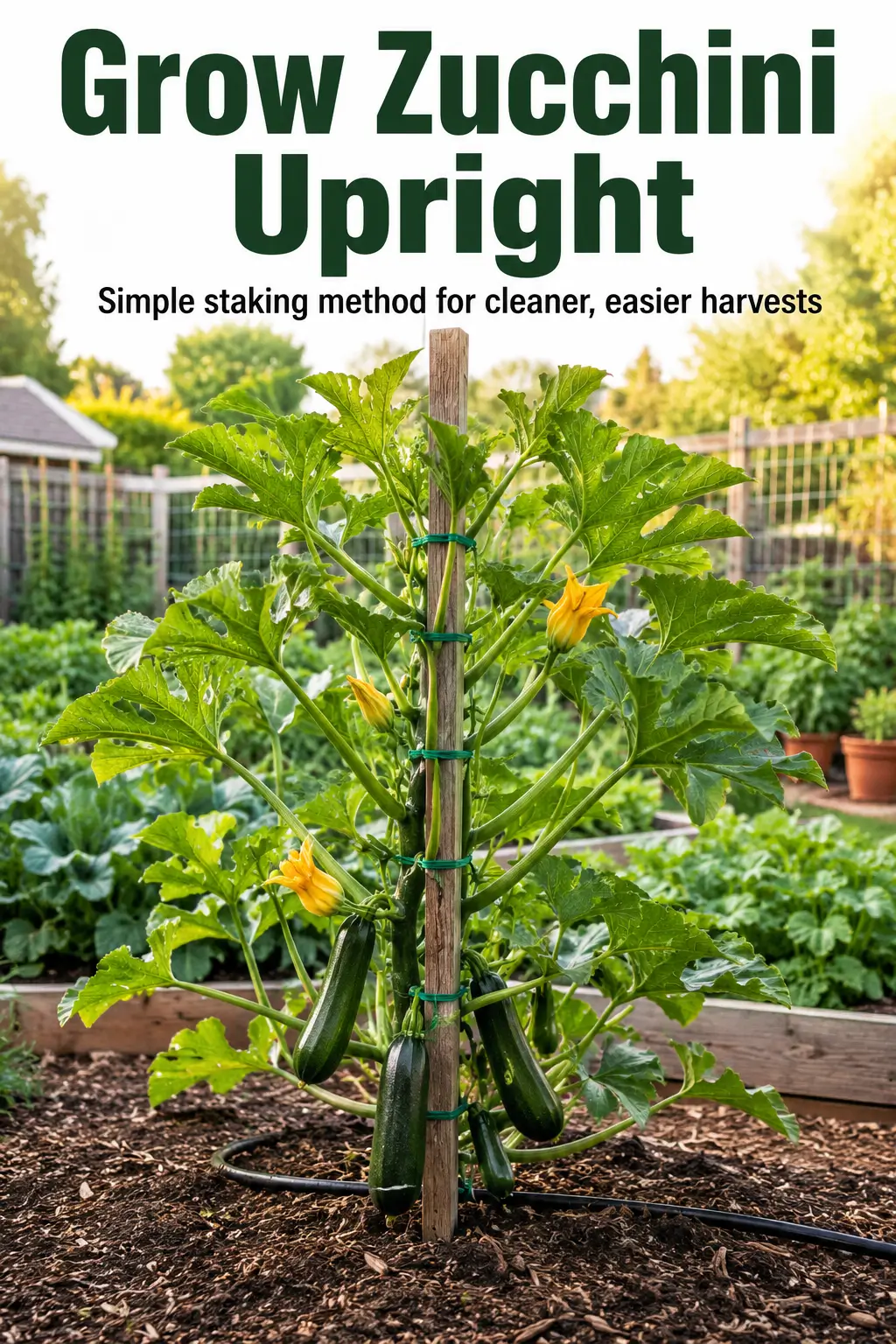
A simple way to keep zucchini more organized is to grow it upright. Instead of letting the plant flop across the ground, you place a sturdy stake beside the main stem and tie the plant loosely as it grows taller.
This method can save space, improve airflow, keep leaves and fruit off the soil, and make it easier to spot zucchini before they become oversized. It does not make zucchini completely disease-proof, but it can help you manage the plant more easily through the growing season.
Why Growing Zucchini Upright Works
Zucchini is usually grown as a bush plant, but many varieties form a thick central stem as they mature. If that stem is supported early, the plant can be trained upward instead of spreading flat across the bed.
Growing zucchini upright helps keep the center of the plant more open. This can improve airflow around the leaves, which is useful because zucchini is often prone to powdery mildew, especially in humid weather or crowded beds.
It also makes the plant easier to care for. When the main stem is lifted, you can see the base of the plant, remove damaged lower leaves, check for pests, and harvest fruit before it gets too large.
Upright growing is especially helpful in small gardens, raised beds, and tight vegetable rows where every foot of space matters.
Best Zucchini Types for Upright Growing
This method works best with compact and bush zucchini varieties that produce a strong central stem.
Good options include:
- Bush zucchini
- Compact zucchini
- Container zucchini varieties
- Patio zucchini
- Green zucchini
- Yellow zucchini
- Cocozelle-type zucchini
- Smaller summer squash varieties
Very sprawling squash varieties may be harder to train upright. Some summer squash plants grow wide no matter what, so choose compact types if your goal is a neat vertical plant.
Look for seed packets or plant tags that say “bush,” “compact,” or “good for containers.”
What You Need
To stake one zucchini plant, you will need:
- 1 sturdy wooden stake, bamboo stake, metal garden stake, or T-post
- Stake height: about 4 to 6 feet tall
- Soft garden ties, jute twine, tomato clips, or strips of fabric
- Garden gloves
- Pruners
- Mulch
- Compost or balanced vegetable fertilizer
- Watering can or hose
For most zucchini plants, a stake that is at least 5 feet tall is useful because part of the stake will be pushed into the soil.
Avoid thin, weak stakes. A mature zucchini plant has large leaves, heavy stems, and fruit, so the support needs to be strong.
Best Placement or Setup
Place zucchini in a sunny garden bed with at least 6 to 8 hours of direct sun per day. Zucchini also needs rich soil, steady moisture, and enough room for airflow.
Even when grown upright, zucchini still needs space. Plant each zucchini about 24 to 36 inches apart, depending on the variety. Upright staking saves room, but the leaves can still become large.
Install the stake when the plant is young. It is much easier to add support early than to push a stake into the soil later when roots have spread.
Place the stake about 2 to 4 inches away from the main stem. Keep it close enough for tying, but not so close that it crushes the stem or damages the root crown.
Step-by-Step Instructions
Step 1: Choose a Strong Stake
Choose a sturdy stake that can handle the weight of a mature zucchini plant. A wooden stake, bamboo pole, metal stake, or T-post can all work.
The stake should be about 4 to 6 feet tall, with at least 12 inches pushed into the soil. In windy areas, use a stronger stake and set it deeper.
If using wood, choose a smooth stake without sharp splinters that could damage the plant.
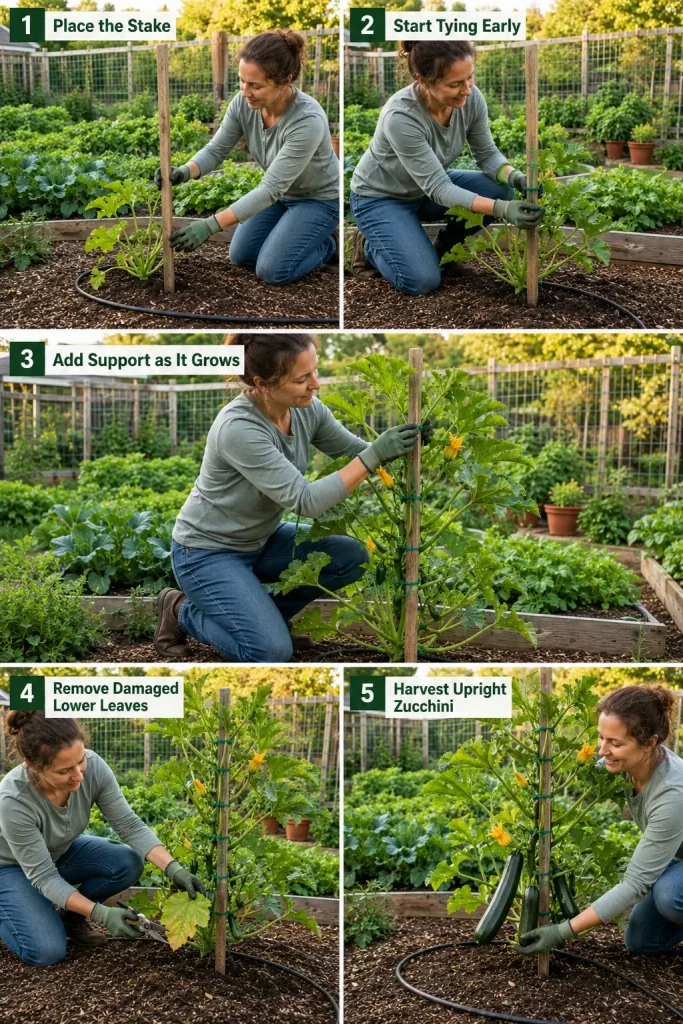
Step 2: Install the Stake Early
Add the stake when the zucchini plant is still young, ideally when it has several true leaves but before it becomes heavy and sprawling.
Push the stake into the soil about 2 to 4 inches from the base of the plant. Set it deep enough that it does not wobble.
Be careful not to stab through the root ball. If you are adding the stake to an older plant, push it in slowly and gently.
Step 3: Find the Main Stem
Look at the base of the zucchini plant and find the thick central stem. This is the part you will support as the plant grows upward.
Zucchini leaves grow from this central stem. As older lower leaves are removed later, the stem becomes easier to see.
Do not tie individual leaf stems as the main support. The main stem is the strongest part of the plant.
Step 4: Tie the Stem Loosely
Use soft ties to attach the main stem to the stake. Make a loose figure-eight tie, with one loop around the stake and one loop around the stem.
The tie should support the plant without squeezing it. Zucchini stems thicken as they grow, so tight ties can cut into the plant.
Good tie materials include:
- Soft garden tape
- Jute twine tied loosely
- Tomato clips
- Strips of old cotton fabric
- Soft plant Velcro
Avoid wire, fishing line, or thin plastic string because these can damage the stem.
Step 5: Add More Ties as the Plant Grows
As the zucchini plant grows taller, continue adding ties every 8 to 12 inches along the main stem.
Check the plant every few days during warm weather. Zucchini grows quickly, and waiting too long can allow the plant to bend or lean.
Do not force the plant straight if it has already curved. Gently guide it upward over time.
Step 6: Remove Damaged Lower Leaves
Once the plant is established and growing well, remove lower leaves that are yellowing, broken, diseased, or touching the soil.
Use clean pruners and cut the leaf stem close to the main stem without cutting into the central stalk.
Removing lower damaged leaves can improve airflow and reduce leaf contact with wet soil. Do not remove too many healthy leaves at once because the plant needs leaves to make energy and shade developing fruit.
A good rule is to remove only a few problem leaves at a time.
Step 7: Keep Fruit Supported and Visible
As zucchini fruit forms, check that it is not trapped against the stake or pressed into the soil.
Growing upright often makes fruit easier to see. This is helpful because zucchini can grow from small to oversized very quickly.
Harvest fruit when it is still tender, usually around 6 to 8 inches long for many varieties, unless your seed packet recommends a different size.
Step 8: Water at Soil Level
Water zucchini deeply and consistently at the base of the plant. Avoid spraying the leaves whenever possible.
Wet leaves, crowded growth, and poor airflow can all make powdery mildew and other leaf issues worse.
Mulch around the plant to help keep soil moisture steady, but keep mulch slightly away from the stem crown.
Step 9: Watch for Powdery Mildew
Powdery mildew is common on zucchini, especially late in the season. Upright growing can help improve airflow, but it does not prevent mildew completely.
Watch for white powdery patches on leaves. Remove badly affected leaves if needed, but do not strip the plant bare.
Keep plants spaced properly, water at soil level, and avoid overcrowding the bed.
Step 10: Keep Harvesting Often
Harvest zucchini regularly to keep the plant productive and reduce weight on the stems.
Check the plant every day or two during peak season. Upright plants are easier to inspect, so you are less likely to miss hidden fruit.
Oversized zucchini can slow production and put extra stress on the plant.
Care Tips
Zucchini needs consistent watering, especially during flowering and fruiting. Dry stress can lead to poor fruit development.
Feed the plant with compost or a balanced vegetable fertilizer as needed. Avoid too much nitrogen, which can create huge leaves but fewer fruits.
Check ties often and loosen them if they become tight. The stem will thicken through the season.
Remove only damaged, diseased, or soil-touching lower leaves. Healthy leaves are important for strong production.
Watch for squash bugs, vine borers, cucumber beetles, and powdery mildew. Staking helps you inspect the plant more easily, but regular checks are still important.
Common Mistakes to Avoid
Waiting Too Long to Stake
It is much harder to stake zucchini after it has already sprawled. Start when the plant is young.
Using a Weak Stake
A thin stake may bend or snap under the weight of a mature zucchini plant. Use sturdy support from the beginning.
Tying the Stem Too Tightly
Tight ties can cut into the plant as it grows. Always tie loosely and check ties often.
Removing Too Many Leaves
Pruning can help airflow, but removing too many healthy leaves can weaken the plant and expose fruit to sunscald.
Planting Too Close Together
Upright zucchini still needs space. Crowded plants have poor airflow and are harder to manage.
Expecting No Powdery Mildew
Staking can help with airflow, but zucchini can still get powdery mildew. Keep monitoring the plant.
Letting Fruit Get Too Big
Large zucchini can stress the plant and reduce production. Harvest regularly.
FAQ
Can zucchini really grow upright?
Yes. Many bush zucchini plants can be trained upright by tying the main stem to a sturdy stake as it grows.
When should I start staking zucchini?
Start when the plant is young, before it begins sprawling. This usually works best once the plant has several true leaves and a visible main stem.
How tall should the stake be for zucchini?
Use a stake about 4 to 6 feet tall. Push at least 12 inches into the soil so it stays stable.
What should I use to tie zucchini to a stake?
Use soft garden ties, fabric strips, jute twine, tomato clips, or plant Velcro. Avoid wire or tight string.
Does growing zucchini upright prevent powdery mildew?
It can help improve airflow, which may make powdery mildew easier to manage, but it does not guarantee mildew-free plants.
Should I remove zucchini leaves?
Remove damaged, yellowing, diseased, or soil-touching lower leaves. Do not remove too many healthy leaves at once.
How much space does upright zucchini need?
Most zucchini plants still need about 24 to 36 inches of spacing, depending on the variety. Upright growing saves space, but the leaves can still spread.
Does this work for all squash plants?
It works best for compact bush zucchini and some summer squash. Large sprawling winter squash usually need a different support system.
Conclusion
Growing zucchini upright is a simple way to keep your vegetable garden cleaner, more organized, and easier to harvest. With one sturdy stake and a few soft ties, you can guide the main stem upward instead of letting the plant sprawl across the bed.
This method saves space, improves airflow, keeps fruit easier to see, and helps you manage lower leaves and powdery mildew more easily.
Start early, tie gently, prune carefully, and harvest often. With the right support, one zucchini plant can become a productive upright feature instead of a tangled garden mess.