Tomato plants can become messy fast. One week they look small and manageable, and a few weeks later the vines are leaning, sprawling across the mulch, hiding fruit, and crowding nearby plants.
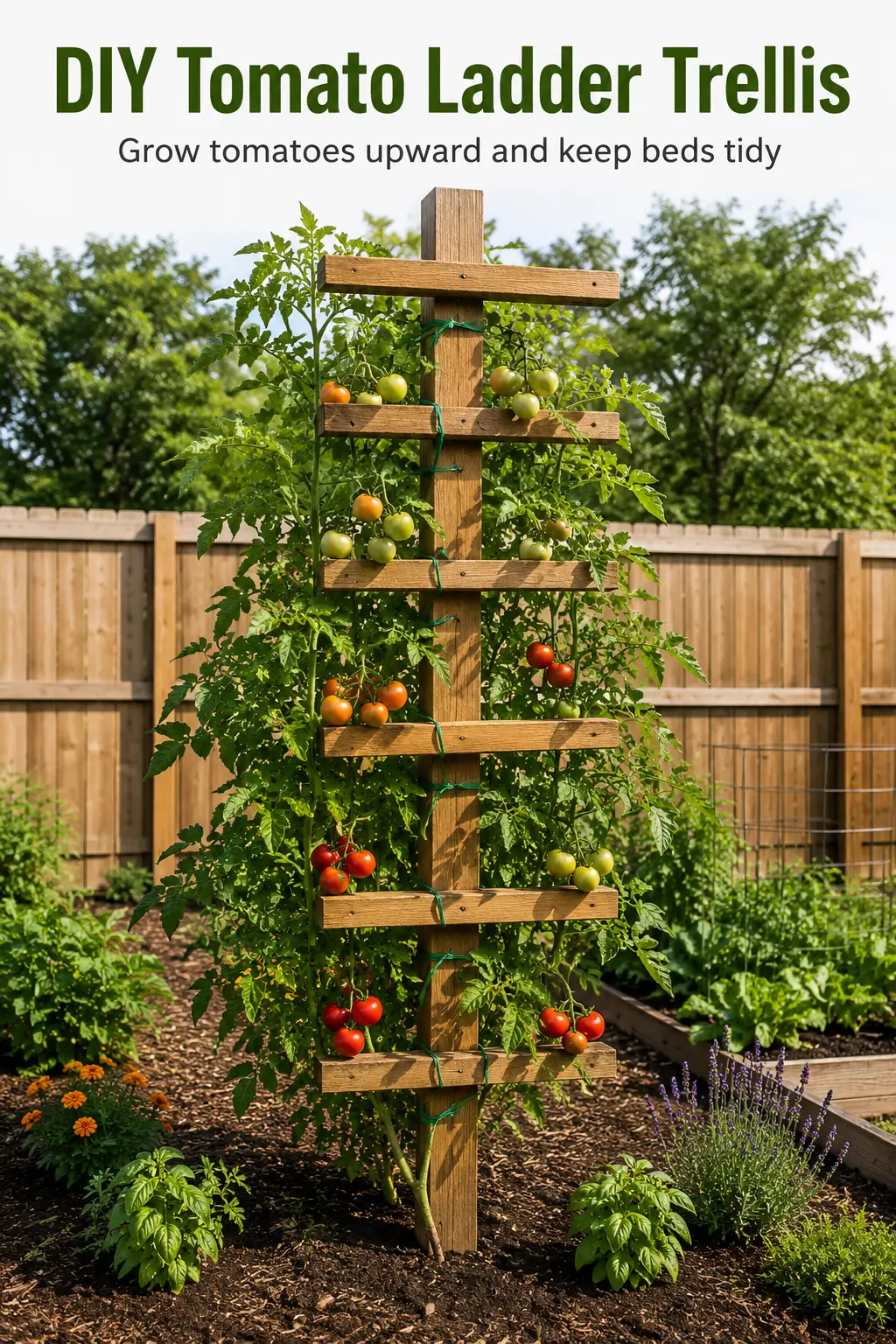
A simple vertical tomato ladder trellis helps solve that problem. This design uses one tall wooden center post with short horizontal wooden rungs attached like a ladder. As the tomato plant grows, you gently tie the main stems to each rung, helping the plant grow upward instead of spreading across the bed.
It is a practical project for small vegetable gardens, raised beds, backyard tomato rows, and gardeners who want a cleaner alternative to bulky tomato cages.
Why This Tomato Ladder Trellis Works
A tomato ladder trellis works because it gives the plant strong vertical support at several levels. Instead of relying on one thin stake or a round cage, the plant has multiple wooden rungs where stems can be tied as they grow.
This helps keep the tomato plant upright, which can make the garden bed easier to manage. Fruit is easier to see, watering is simpler, and the plant is less likely to sprawl across the soil.
Growing tomatoes upward can also improve airflow around the leaves. Better airflow may help reduce some disease pressure, especially when lower leaves are pruned and the plant is not overcrowded.
This trellis also looks attractive. The simple ladder shape gives the garden a clean, organized look, and once the tomato vine fills in, it becomes a productive vertical column of leaves, flowers, and fruit.
Best Tomatoes for This Trellis
This trellis works best for tomatoes that naturally keep growing upward through the season.
Good choices include:
- Cherry tomatoes
- Grape tomatoes
- Indeterminate slicing tomatoes
- Roma tomatoes if they are tall-growing varieties
- Smaller-fruited heirloom tomatoes
- Patio tomatoes if they need extra support
This design is especially useful for indeterminate tomatoes, which continue growing and producing until frost or the end of the season.
It can also work for determinate tomatoes, but they may not need such a tall trellis because they usually grow to a more limited height.
For very large beefsteak tomatoes, use extra ties and strong wood. Heavy fruit may need additional support so branches do not snap.
What You Need
To build one vertical tomato ladder trellis, you will need:
- 1 sturdy wooden post, about 6 to 7 feet tall
- 5 to 7 short wooden rungs or slats
- Exterior wood screws
- Drill
- Measuring tape
- Pencil
- Level
- Saw, if cutting wood yourself
- Sandpaper
- Outdoor wood stain or sealer, optional
- Post hole digger or shovel
- Gravel, optional for drainage
- Soft garden ties, jute twine, or tomato clips
- Pruners
- One tomato plant per trellis, or two small tomato plants if the trellis is wide enough
A good center post size is a 2×4 or 4×4 wooden post. A 4×4 is stronger and better for large indeterminate tomatoes. A 2×4 can work for smaller tomato plants if it is set firmly.
For the horizontal rungs, use short boards about 18 to 24 inches long. The boards should be strong enough to hold tied stems and fruit weight without bending.
Best Measurements
A practical tomato ladder trellis can be built with these measurements:
- Total post height: 6 to 7 feet
- Buried depth: 18 to 24 inches
- Above-ground height: 5 to 6 feet
- Rung length: 18 to 24 inches
- Rung spacing: 10 to 12 inches apart
- Distance from soil to first rung: about 12 to 18 inches
- Tomato spacing: 1 tomato plant per trellis
If you are growing a very vigorous cherry tomato, make the trellis taller and use a strong post. Cherry tomatoes can become heavy by late summer.
Best Placement or Setup
Place the trellis in a sunny vegetable garden bed where tomatoes will receive at least 6 to 8 hours of direct sun per day.
The trellis should be installed before the tomato plant gets large. It is much easier to set the post and train a young plant than to force a mature tomato onto support later.
Place the trellis slightly behind or directly beside the tomato plant. The plant should be close enough that stems can be tied to the rungs, but not so close that the post damages the roots.
If planting in a raised bed, place the trellis near the back or center of the bed so it does not shade smaller plants too much. In hot climates, a little afternoon shade may be helpful, but tomatoes still need strong light to produce well.
Avoid placing the trellis where it will lean into a path or block access to watering and harvesting.
Step-by-Step Instructions
Step 1: Choose Strong Wood
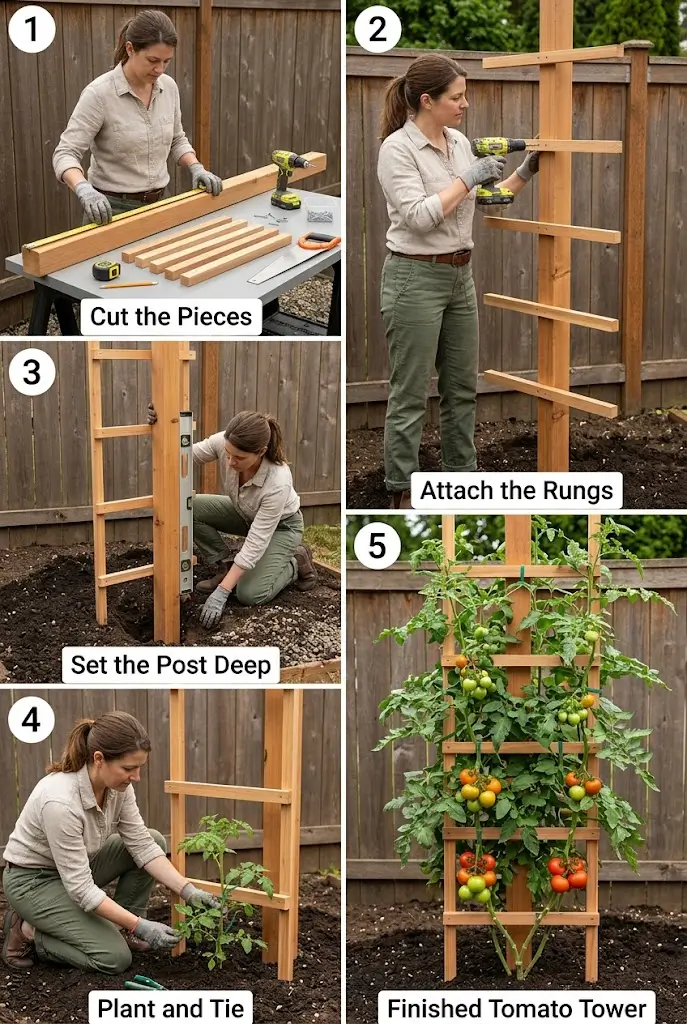
Start with a sturdy center post. A 4×4 post is the strongest option for large tomato plants. A 2×4 post can work for smaller varieties, but it must be anchored well.
Choose wood that can handle outdoor weather. Cedar, redwood, or pressure-treated lumber can last longer outside. If using pressure-treated wood, avoid using it in direct contact with edible plant parts and follow local gardening preferences for safe use.
Sand rough edges so the wood is easier to handle and less likely to damage stems.
Step 2: Cut the Horizontal Rungs
Cut 5 to 7 short wooden rungs. Each rung should be about 18 to 24 inches long.
For a narrow single-plant trellis, 18 inches is enough. For a fuller cherry tomato plant, 24 inches gives more tying space.
The rungs should be long enough to support stems on both sides of the post but not so long that they become awkward or unstable.
Step 3: Mark the Rung Spacing
Lay the post flat on the ground. Use a measuring tape and pencil to mark where each rung will go.
Start the first rung about 12 to 18 inches above soil level. Then space the rest of the rungs about 10 to 12 inches apart.
This gives the tomato plant several support levels as it grows.
Keep the rungs straight and evenly spaced for a clean ladder look.
Step 4: Attach the Rungs
Place each rung across the front of the post and attach it with exterior screws.
Use at least two screws per rung so the board does not twist. If your rungs are thick or heavy, pre-drill holes to prevent splitting.
Make sure every rung is firmly attached. Tomato vines may not seem heavy at first, but a mature plant with fruit can put real weight on the trellis.
Step 5: Seal or Stain the Wood
This step is optional, but it can help the trellis last longer.
Use an outdoor wood stain or sealer and let it dry fully before placing the trellis in the garden. Choose a natural or food-garden-safe finish when possible.
Avoid using peeling paint or treated coatings that could flake into the soil.
A natural wood finish looks especially nice in vegetable gardens.
Step 6: Set the Post Deeply
Dig a hole about 18 to 24 inches deep where the trellis will stand.
Place a few inches of gravel in the bottom if your soil drains poorly. Set the post in the hole and use a level to make sure it is straight.
Backfill firmly with soil, packed gravel, or concrete. For most garden beds, tightly packed soil or gravel may be enough, but in windy areas or for very tall tomatoes, concrete gives extra stability.
The trellis should not wobble when pushed gently.
Step 7: Plant the Tomato
Plant one tomato at the base of the trellis, about 4 to 6 inches away from the post.
Plant the tomato deeply, burying part of the stem if needed. Tomatoes can form roots along buried stems, which helps create a stronger plant.
Water well after planting and add mulch around the base, keeping mulch slightly away from the stem.
Step 8: Tie the Main Stem Early
When the tomato plant reaches the first rung, gently tie the main stem to the wood.
Use soft garden ties, strips of fabric, jute twine, or tomato clips. Tie loosely so the stem has room to thicken.
Do not use thin wire or tight plastic ties because they can cut into the stem as the plant grows.
Step 9: Keep Training the Plant Upward
As the tomato grows, continue tying the main stem and strong side stems to higher rungs.
Check the plant every few days during fast growth. Tomatoes can grow quickly in warm weather, and unsupported stems may bend or snap.
Tie stems before they become too heavy. This keeps the plant neat and prevents sudden breakage.
Step 10: Prune for Airflow
Remove low leaves that touch the soil. This can help improve airflow and reduce soil splash on the leaves.
For indeterminate tomatoes, you can also remove some suckers if the plant becomes too dense. Do not remove too many leaves at once, because leaves help feed the plant and protect fruit from sunscald.
The goal is not to strip the plant bare. The goal is to keep it open enough for air movement and easy harvesting.
Step 11: Support Heavy Fruit Clusters
If the tomato plant produces heavy clusters, add extra ties near those branches.
Large tomatoes may need individual branch support. Cherry tomatoes usually hang well, but heavy clusters can still pull stems downward.
If a branch looks like it is bending too much, tie it gently to the closest rung.
Step 12: Harvest Regularly
Check the plant often and harvest ripe tomatoes regularly. Frequent harvesting reduces weight on the trellis and encourages continued production.
Look behind leaves and along the lower rungs, where fruit can hide.
A ladder trellis makes harvesting easier because the fruit hangs at different visible levels instead of being tangled on the ground.
How Many Tomato Plants Per Trellis?
For best results, grow one tomato plant per ladder trellis.
One strong indeterminate tomato can fill the entire structure by mid or late season. Planting too many tomatoes at the base can create a crowded mess with poor airflow.
If the trellis is very wide and sturdy, you may be able to grow two smaller tomato plants, one on each side. But for beginners, one plant is easier to train, prune, water, and harvest.
Care Tips
Water consistently, especially when tomatoes are flowering and setting fruit. Uneven watering can contribute to cracking and blossom-end rot.
Water at soil level instead of spraying the leaves. This helps keep foliage drier.
Mulch around the plant with straw, shredded leaves, compost, or untreated grass clippings to help hold moisture and reduce weeds.
Feed tomatoes according to your soil needs. Too much nitrogen can create lots of leaves but fewer fruits, so use balanced feeding and avoid overdoing it.
Check ties often. As stems grow thicker, loosen or replace ties so they do not cut into the plant.
Inspect the plant regularly for pests, yellowing leaves, disease spots, and broken stems.
Common Mistakes to Avoid
Using Weak Wood
Tomato plants become heavier than they look. Thin, weak wood may bend, crack, or loosen by late summer.
Setting the Post Too Shallow
If the post is not deep enough, the trellis may lean or fall when the plant becomes heavy. Bury the post at least 18 inches deep.
Tying Stems Too Tight
Tomato stems thicken as they grow. Tight ties can cut into the plant and restrict growth.
Waiting Too Long to Train the Plant
Young stems are easier to guide. If you wait until the tomato is already sprawling, it may be harder to tie without breaking branches.
Planting Too Many Tomatoes
Crowded plants reduce airflow and make harvesting harder. One tomato per trellis is usually best.
Not Pruning the Lower Growth
Leaves touching the soil can increase disease problems. Keep the lower part of the plant cleaner and more open.
Ignoring Heavy Fruit
Large tomato clusters need support. If a branch is bending, tie it to a rung before it snaps.
Best Design Tips
For a clean garden look, build several matching tomato ladder trellises in a row. Space them evenly and plant one tomato at the base of each trellis.
Natural wood gives a rustic vegetable garden style. Dark stain can look modern, while light cedar gives a warm cottage-garden feel.
You can also make the trellis wider by placing rungs on both sides of the center post. This gives the plant more tying points and helps balance growth.
For raised beds, install the trellis before planting so you do not damage roots later.
For in-ground gardens, set the post deep and firm, especially if your area gets wind or summer storms.
FAQ
What is a tomato ladder trellis?
A tomato ladder trellis is a vertical support made from one center post and several horizontal wooden rungs. Tomato stems are tied to the rungs as they grow upward.
Is a tomato ladder better than a tomato cage?
It depends on the plant and garden style. A ladder trellis can be stronger, neater, and easier to tie to than a small cage. However, large tomato plants still need regular pruning and tying.
What tomatoes grow best on a ladder trellis?
Indeterminate tomatoes, cherry tomatoes, grape tomatoes, and smaller-fruited varieties work very well. Large beefsteak tomatoes can also grow on it, but they may need extra support.
How tall should a tomato ladder trellis be?
A good height is 5 to 6 feet above ground, with 18 to 24 inches buried in the soil. Tall indeterminate tomatoes may need a 6 to 7 foot total post.
How far apart should the rungs be?
Space the horizontal rungs about 10 to 12 inches apart. This gives the plant regular support points as it grows.
How many tomato plants can grow on one trellis?
One tomato plant per trellis is best. Two small plants may work on a wider trellis, but they can become crowded.
What should I use to tie tomatoes?
Use soft garden ties, jute twine, tomato clips, or strips of fabric. Avoid wire or tight ties that can cut into stems.
Do I still need to prune tomatoes on a ladder trellis?
Yes. Pruning lower leaves and some extra suckers can improve airflow and make the plant easier to manage. Do not remove too many leaves at once.
Can I use this trellis in a raised bed?
Yes. This trellis works very well in raised beds. Install it securely before the tomato plant gets large.
Conclusion
A vertical tomato ladder trellis is a simple, practical way to support tomato plants without using bulky cages. With one sturdy post and several wooden rungs, you can train tomato vines upward, save garden space, improve airflow, and make harvesting easier.
The key is building the trellis strong enough, setting it deep enough, and tying the plant gently as it grows. Regular pruning and support are still important, especially for large indeterminate tomatoes.
If your tomato plants usually sprawl across the garden bed, this simple wooden ladder design can help keep them upright, organized, and easier to care for all season.