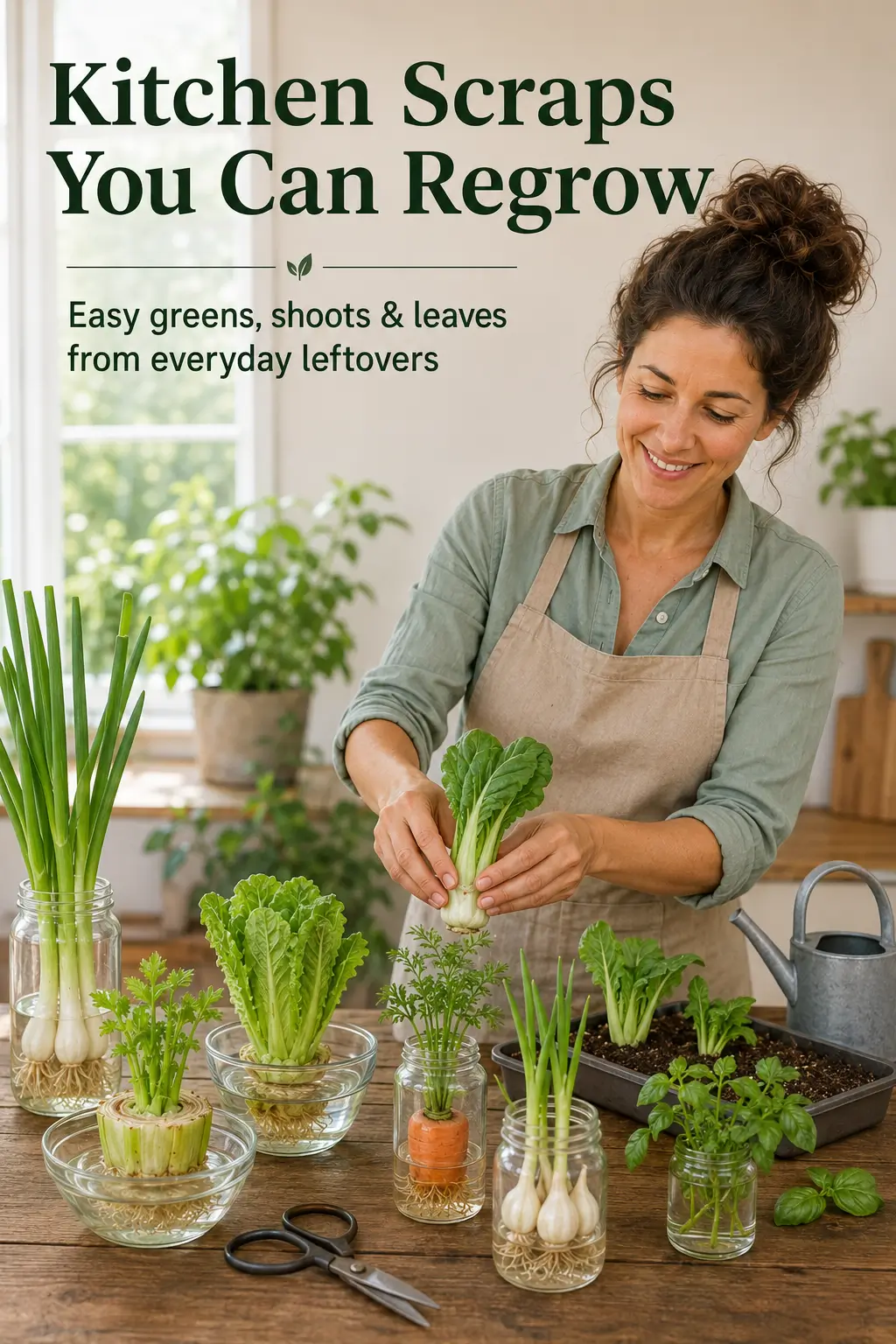
Before you throw away vegetable ends, herb stems, or garlic cloves, it is worth knowing that some kitchen scraps can grow back again. Regrowing food scraps is a simple way to get extra greens, shoots, and leaves from things you may already have in your kitchen.
This does not mean every scrap will turn into a full new vegetable. A romaine lettuce base may give you fresh inner leaves, but it usually will not become a huge new head of lettuce. A carrot top can regrow leafy greens, but it will not regrow a new carrot root. Garlic cloves can sprout green shoots, and green onions can regrow useful tops again and again for a while.
The goal is to reuse healthy scraps in a realistic way. With shallow water, bright indirect light, regular water changes, and a move to soil for some plants, you can enjoy fresh regrowth from common leftovers instead of throwing them away immediately.
Why Regrowing Kitchen Scraps Works
Many vegetable scraps still have living growing points. When the base, crown, root end, or stem node is kept moist and given light, it may push out new roots, leaves, or shoots.
This works especially well with vegetables that have a strong base or root end, such as green onions, celery, romaine lettuce, bok choy, and garlic. Some herbs can also regrow from cut stems if they root in water.
Regrowing scraps is useful for small-space gardeners because it does not require a large garden bed. You can start many scraps on a sunny kitchen windowsill using jars, bowls, and clean water.
It is also a good beginner gardening project. You can watch roots form, see new leaves appear, and learn how plants respond to light and moisture.
The important thing is to keep expectations realistic. Most scraps produce small harvests, not endless full-size vegetables. Think of this as a way to get extra greens and reduce waste, not a complete replacement for planting seeds or buying fresh produce.
What You Need
To regrow kitchen scraps, you only need a few simple supplies:
- Fresh healthy vegetable scraps
- Clear jars, small bowls, or shallow dishes
- Clean water
- Bright windowsill or grow light
- Scissors or a clean knife
- Small pots or seed trays
- Potting mix
- Plant labels, optional
- Small watering can
- Compost bin for scraps that do not regrow well
Use clean containers so the water stays fresher. Clear jars are helpful because you can see root growth, but any clean container can work.
Avoid using scraps that are slimy, moldy, rotten, or badly damaged. Healthy scraps give you the best chance of clean regrowth.
Best Kitchen Scraps to Regrow
Green Onions
Green onions are one of the easiest scraps to regrow. They are fast, reliable, and useful in many meals.
Save the white root ends with about 1 to 2 inches of the green stem still attached. Place them upright in a jar with enough water to cover the roots, but do not submerge the entire stem.
Put the jar in bright indirect light and change the water every 1 to 2 days. New green shoots usually begin growing quickly.
You can snip the green tops as they regrow. After several rounds, the plants may weaken, so moving them into soil can help them last longer.
Celery Base
Celery can regrow fresh leaves and small inner stalks from the base. It usually does not regrow into a full grocery-store-sized bunch indoors, but the leaves are useful for soups, stocks, salads, and garnish.
Cut the celery base about 2 inches above the root end. Place it in a shallow bowl with water covering only the bottom.
Keep it in bright indirect light and change the water often. New leaves may appear from the center.
Once roots begin forming and the center growth looks strong, you can move the celery base into a pot with soil. Keep the soil lightly moist.
Romaine Lettuce Base
Romaine lettuce bases can regrow tender inner leaves. This is one of the most popular kitchen scrap projects because it is easy to see results.
Save the bottom 1 to 2 inches of the lettuce head. Place it in a shallow bowl with a small amount of water at the base.
Set it near bright indirect light. Do not cover the whole base with water because too much water can cause rot.
Change the water every 1 to 2 days. Harvest the small new leaves while they are fresh and tender.
Romaine regrowth is usually short-term. It is best for a small extra harvest, not a full new head.
Bok Choy Base
Bok choy regrows in a similar way to romaine. The base can produce new leaves from the center.
Cut the base about 1 to 2 inches tall and place it in shallow water. Keep the bottom moist, but avoid submerging the whole base.
Place it in bright indirect light and refresh the water often. Once roots appear, you can move it into soil for stronger growth.
Bok choy regrowth can be useful for small leaves and shoots. It may not become a large full-size plant unless conditions are very good.
Carrot Tops
Carrot tops are often misunderstood. A carrot top will not regrow a new carrot root. The orange root has already been harvested.
However, carrot tops can regrow leafy green growth. These greens can be used in small amounts for garnish, pesto, or flavoring if you enjoy their taste.
Cut the top half inch to one inch from a healthy carrot. Place it cut-side down in a shallow dish with a small amount of water.
Keep it in bright indirect light and change the water often. New feathery greens may begin growing from the top.
If it roots well, you can move it to soil, but remember that it is for greens, not a new carrot.
Garlic Cloves
Garlic cloves can sprout green shoots when placed in water or planted in soil. These shoots have a mild garlic flavor and can be snipped for cooking.
Choose firm garlic cloves that are already starting to sprout or look healthy. Place the root end down in a small jar with just enough water to touch the bottom, or plant cloves directly in soil.
Keep them in bright light. The green shoots can be harvested once they are several inches tall.
If your goal is full garlic bulbs, planting outdoors at the right season is better. Indoors, garlic scraps are mainly useful for shoots.
Herbs
Some herbs can regrow from cuttings, especially if the stems are fresh and not woody.
Good herbs to try include:
- Basil
- Mint
- Parsley stems with growing nodes
- Cilantro stems with nodes
- Rosemary cuttings, though slower
- Thyme cuttings, though slower
For basil and mint, cut a healthy stem below a node. Remove the lower leaves and place the stem in a jar of water. Keep leaves above the water so they do not rot.
Place the jar in bright indirect light and change the water often. When roots form, move the cutting into soil.
Herbs from cuttings often do better than vegetable bases if moved into soil after roots develop.
How to Regrow Kitchen Scraps Step by Step
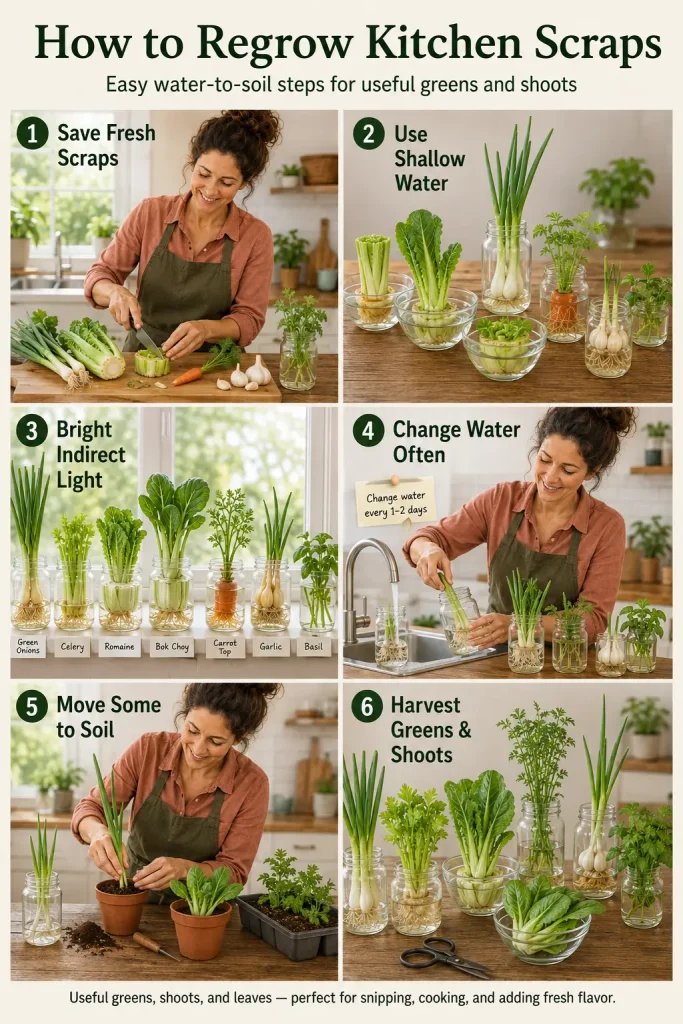
Step 1: Choose Fresh Healthy Scraps
Start with scraps that are fresh, firm, and clean. Avoid anything moldy, slimy, or rotten.
Good scraps should still have a base, root end, crown, or stem node. If a vegetable is too old or damaged, compost it instead.
Step 2: Trim the Scrap Correctly
Leave enough of the base for the plant to regrow.
For green onions, keep the white root end and a little green stem.
For celery, romaine, and bok choy, keep the bottom 1 to 2 inches.
For carrot tops, keep the top portion of the carrot.
For garlic, use firm cloves with the root end intact.
For herbs, keep a healthy stem with nodes.
Clean cuts help reduce rotting.
Step 3: Use Shallow Water
Place the scraps in shallow water so only the bottom or root end touches the water.
This is important. If you submerge too much of the scrap, it may rot before it regrows.
Green onions and garlic can stand in jars. Celery, romaine, and bok choy usually do better in shallow bowls. Herb cuttings can stand in small jars with the lower stem in water.
Step 4: Give Bright Indirect Light
Place the containers near a bright window with indirect light. A windowsill with soft morning light can work well.
Avoid harsh hot sun through glass, especially for lettuce and celery bases. Too much heat can cause the water to warm up and the scraps to rot.
If your kitchen is dark, use a small grow light.
Step 5: Change the Water Often
Fresh water is one of the biggest keys to success.
Change the water every 1 to 2 days. Rinse the container if it feels slippery. Remove any soft, dark, or smelly parts from the scrap.
If the water smells bad, the scrap may be rotting. Compost it and start again with a fresher piece.
Step 6: Watch for Roots and New Growth
Some scraps regrow quickly, especially green onions. Others take longer.
Look for:
- New green shoots
- Fresh center leaves
- Small white roots
- Firm healthy bases
- Clear water with no bad smell
Do not expect every scrap to grow at the same speed.
Step 7: Move Some Plants Into Soil
Some scraps can stay in water for a short time, but many grow stronger when moved into soil.
Move green onions, bok choy, celery, rooted herbs, and garlic into pots once they have roots and healthy top growth.
Use a small pot with drainage holes and quality potting mix. Keep the soil lightly moist while the plant adjusts.
Romaine can also be moved to soil, but it is often more of a short-term regrowth project.
Step 8: Harvest Realistically
Harvest small amounts as the greens grow.
Snip green onion tops, garlic shoots, herb leaves, celery leaves, romaine leaves, bok choy leaves, and carrot greens.
Do not cut everything off at once if you want the plant to keep growing. Leave some green growth so the plant can continue making energy.
Water or Soil: Which Is Better?
Water is great for starting scraps because it lets you see roots and new growth. It is easy, clean, and beginner-friendly.
However, water alone does not provide long-term nutrients. Many scraps eventually weaken if kept in water too long.
Soil is better for longer growth because it supports roots and provides more stability. Once scraps have roots, moving them into soil can help them last longer.
A simple rule is:
Use water to start regrowth.
Use soil for stronger longer growth.
What Kitchen Scraps Should Not Be Regrown?
Not every scrap is worth regrowing.
Avoid:
- Moldy scraps
- Rotten scraps
- Slimy vegetable bases
- Scraps with bad odor
- Diseased plant material
- Very old dried-out scraps
- Scraps treated with heavy wax or damage
- Anything that looks unsafe to keep near food prep areas
Also avoid expecting root vegetables to regrow their original edible root. Carrot tops and beet tops can regrow greens, but they will not regrow a full new carrot or beet root from the trimmed top.
Common Mistakes to Avoid
Submerging the Whole Scrap
Too much water can cause rot. Keep only the bottom or root end in water.
Not Changing the Water
Dirty water leads to slime, odor, and rot. Change it every 1 to 2 days.
Using Rotten Scraps
A rotten scrap will not become a healthy plant. Start with fresh pieces.
Expecting Full Vegetables Every Time
Many scraps regrow greens, shoots, or leaves, not a full new vegetable.
Keeping Everything in Water Forever
Water works for starting, but some plants grow better in soil after roots form.
Placing Scraps in Harsh Hot Sun
Bright light is good, but hot direct sun can cook the water and stress the scraps.
Crowding Too Many Scraps Together
Give each scrap enough space and air. Crowded jars and bowls can get messy quickly.
Care Tips for Regrown Scraps
Keep containers clean. Rinse jars and bowls regularly to prevent slime.
Use filtered or room-temperature water if your tap water is heavily treated or very cold.
Trim off any soft or dark pieces as soon as you notice them.
Move rooted plants to soil before they weaken.
Place the setup where you will remember to check it daily.
Harvest small amounts often instead of waiting too long.
If a scrap starts smelling bad, compost it and start over.
Best Places to Regrow Kitchen Scraps
A bright kitchen windowsill is usually the easiest place. It keeps the scraps close to water and easy to monitor.
Other good spots include:
- Sunny kitchen counter near a window
- Bright dining room window
- Sunroom shelf
- Indoor plant stand
- Covered porch in mild weather
- Under a grow light
Avoid dark corners, cold windowsills in winter, and hot windows where water heats up too much.
Are Regrown Kitchen Scraps Safe to Eat?
Regrown greens and shoots can be used if the scraps were fresh, clean, and kept in clean water or soil.
Always wash the regrown leaves or shoots before eating. Do not eat anything from a scrap that smells bad, looks moldy, or has been sitting in dirty water.
For food safety, keep regrowing containers away from raw meat areas, dirty sinks, and contaminated surfaces.
When in doubt, compost the scrap and start fresh.
Best Scraps for Beginners
If you are new to regrowing scraps, start with the easiest ones:
- Green onions
- Romaine lettuce base
- Celery base
- Garlic cloves
- Basil cuttings
- Mint cuttings
These usually show visible results quickly and are simple to manage.
Carrot tops and bok choy are also fun to try, but results can vary.
FAQ
Can kitchen scraps really grow back?
Yes, some kitchen scraps can regrow leaves, shoots, roots, or greens. However, not every scrap becomes a full new vegetable.
What vegetables regrow easiest from scraps?
Green onions, celery bases, romaine lettuce bases, bok choy bases, garlic cloves, carrot tops, and some herb cuttings are good options to try.
Can you regrow green onions in water?
Yes. Place the white root ends in a jar with shallow water and bright indirect light. Change the water every 1 to 2 days.
Will carrot tops regrow carrots?
No. Carrot tops can regrow leafy greens, but they will not regrow a new orange carrot root.
Can romaine lettuce regrow from the base?
Yes, romaine can regrow small tender leaves from the base. It usually gives a small harvest, not a full large head.
Should I regrow scraps in water or soil?
Start scraps in water, then move some into soil once roots form. Soil is better for longer-term growth.
How often should I change the water?
Change the water every 1 to 2 days to prevent odor, slime, and rot.
Why are my kitchen scraps rotting?
Scraps may rot if they are too old, submerged too deeply, kept in dirty water, placed in hot direct sun, or not changed often enough.
Can I regrow herbs from store-bought stems?
Sometimes. Basil and mint are usually the easiest. Place fresh cut stems with nodes in water, remove lower leaves, and move them to soil after roots form.
Conclusion
Regrowing kitchen scraps is a simple, useful way to get more from everyday vegetables and herbs. Green onions, celery, romaine, bok choy, carrot tops, garlic cloves, and some herb cuttings can all produce fresh greens, shoots, or leaves with the right care.
The key is to start with fresh scraps, use shallow clean water, change the water often, provide bright indirect light, and move stronger plants into soil when needed.
Just keep expectations realistic. Most scraps will not become full grocery-store vegetables again, but they can still give you extra flavor, fresh greens, and a fun small-space gardening project right from your kitchen.