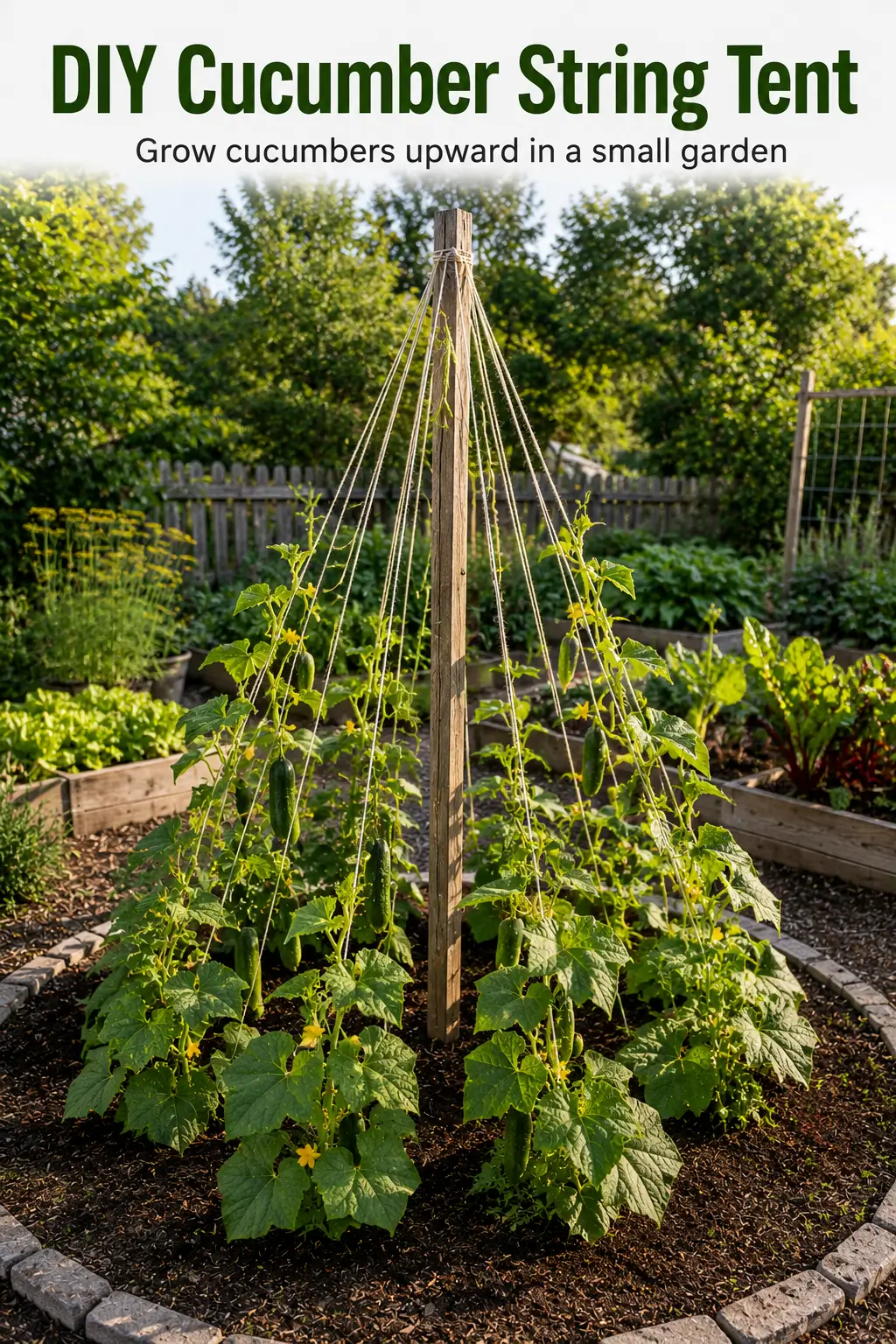
If cucumber vines usually end up sprawling across your garden bed, a simple string tent trellis can make the space much easier to manage. This idea uses one tall wooden center stake with garden string running from the top of the stake down to the soil around the plants, creating a neat teepee or tent shape.
Cucumber seedlings are planted in a circle around the center post, and each vine is trained up its own string as it grows. The result is a compact vertical growing system that saves space, improves airflow, keeps fruit off the soil, and makes cucumbers easier to spot and harvest.
This is a great project for small backyard gardens, in-ground vegetable patches, and larger raised beds where you want a simple trellis without building a wide panel or arch.
Why This Cucumber Trellis Works
Cucumbers are natural climbers. Many vining varieties grow best when they have something to grab onto, and a string tent gives each plant its own climbing path.
Instead of letting vines spread across the ground, this design lifts them upward. That can help keep fruit cleaner, reduce crowding around the base, and make the whole bed look more organized.
It can also help with airflow. When vines are growing upward instead of laying in a thick mat on damp soil, leaves often dry faster after watering or rain. Better airflow may help reduce some disease pressure, though it does not prevent disease completely.
Another big benefit is visibility. Cucumbers are easier to find when they are hanging or growing through a vertical structure instead of hiding under a pile of leaves on the ground.
Best Cucumbers for a String Tent Trellis
This setup works best for vining cucumber varieties, not bush cucumbers.
Good choices include:
- Pickling cucumbers
- English cucumbers
- Slicing cucumbers
- Small Asian cucumber varieties
- Lemon cucumbers
- Other climbing heirloom cucumber types
Bush cucumbers usually stay more compact and do not take full advantage of this vertical design.
If you are growing a very vigorous cucumber variety, use strong string and a sturdy center post because mature vines can become surprisingly heavy.
What You Need
To build one cucumber string tent trellis, you will need:
- 1 sturdy wooden post or stake, about 6 to 8 feet long
- Strong garden twine, jute twine, nylon garden string, or trellis string
- Hammer or mallet
- Shovel or post hole digger
- Measuring tape
- Scissors or pruners
- Ground staples, landscape staples, small tent pegs, or short stakes to anchor the strings
- Compost or aged organic matter
- Mulch, optional
- Soft plant ties, optional
- 6 to 8 cucumber seedlings or seeds
A wooden post around 2×2, 2×3, or 2×4 size usually works well. The center post needs to be strong enough to stay upright all season, especially once the vines fill in.
Use string that can handle outdoor weather. Thin weak twine may snap once the vines become heavy with leaves and fruit.
Best Measurements
A practical cucumber string tent can use these general measurements:
- Center post total length: 6 to 8 feet
- Buried depth: 12 to 18 inches
- Above-ground height: 5 to 6.5 feet
- Circle width: about 3 to 4 feet across
- Plant spacing: about 12 to 18 inches apart around the circle
- Number of strings: usually 6 to 8, sometimes 10 for a larger setup
Do not make the circle too small. If the plants are packed too tightly, airflow can become poor and harvesting can get messy.
Best Placement or Setup
Place the trellis in a sunny vegetable garden bed where cucumbers will receive at least 6 to 8 hours of direct sun per day.
Choose a spot with good drainage and enough space to walk around the structure for watering, pruning, and harvesting.
This idea works well:
- in an in-ground vegetable patch
- in the center of a larger raised bed
- in a backyard garden corner
- in a compact kitchen garden
Avoid placing it where nearby tall crops will shade it too much. Cucumbers need warmth and strong light to stay productive.
It is also helpful to place the trellis where you can easily harvest from all sides. Once the vines fill in, reaching into a tight corner can be harder.
Step-by-Step Instructions
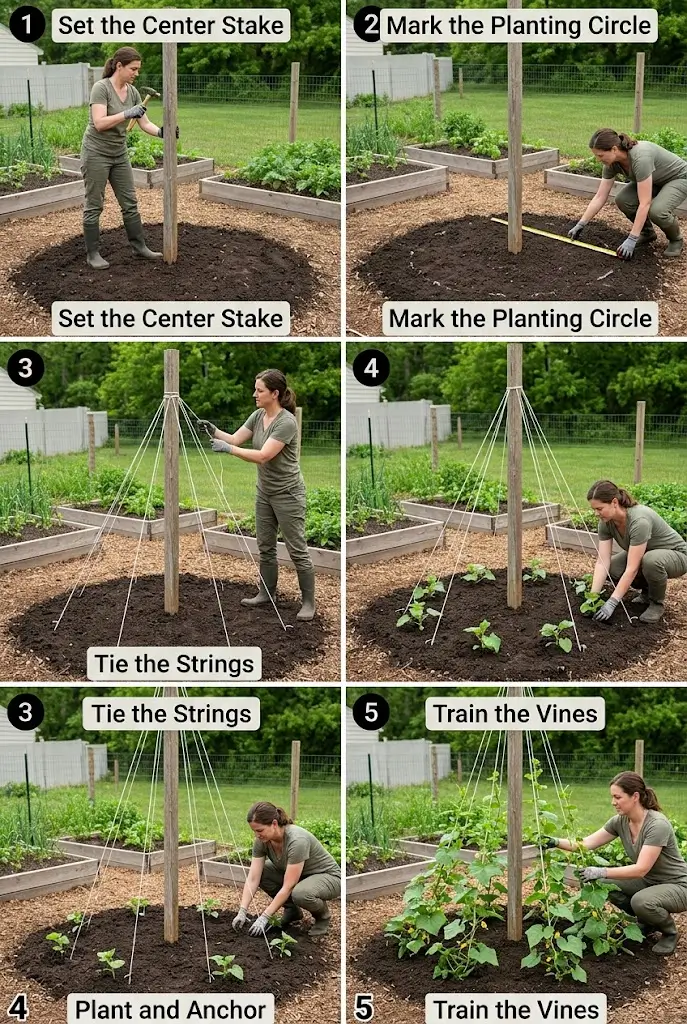
Step 1: Choose a Strong Center Stake
Start with a sturdy wooden post that can handle the weight of multiple cucumber vines. A flimsy stake may lean or loosen by midseason.
A post about 6 to 8 feet long is a good size. After burying part of it, you still want enough height left above the soil for the vines to climb.
If the wood is rough, sand sharp splinters that could snag string or scrape your hands.
Step 2: Mark the Planting Circle
Choose the center of your bed and mark a circular planting area around the future post.
A circle about 3 to 4 feet wide works well for most home gardens. This gives enough room for several cucumber plants without crowding them too tightly.
Mark the spots where the cucumber seedlings will go. A typical setup uses 6 to 8 plants spaced evenly around the circle.
Step 3: Set the Center Post Firmly
Dig a hole about 12 to 18 inches deep in the center of the circle.
Place the post into the hole and pack the soil firmly around it. In loose soil, you can add gravel at the bottom or around the base for extra stability.
Use a level if needed to make sure the post is standing straight. The structure should feel solid when pushed lightly.
This is important because the post will carry the pull of the strings and the weight of the vines all season.
Step 4: Prepare the Soil
Before planting, improve the soil with compost or aged organic matter.
Cucumbers grow best in rich, well-draining soil with consistent moisture. Mix compost into the top few inches of the planting area and remove weeds or clumps.
If your soil is very dry or sandy, organic matter helps it hold moisture better. If your soil is heavy clay, compost can help improve structure.
Step 5: Plant the Cucumbers in a Circle
Plant cucumber seedlings evenly around the center post.
Leave about 12 to 18 inches between plants, depending on the variety. Smaller pickling cucumbers can often be planted a bit closer than large vigorous slicers.
Plant each seedling at the same depth it was growing in its container. If sowing directly from seed, place seeds near the spots where the strings will hang.
Water well after planting.
Step 6: Attach the Strings
Tie one end of each string securely near the top of the center post.
Spread the strings outward evenly in a circle so each cucumber plant gets its own climbing line. Pull the lower end of each string down to the soil near a plant.
Anchor each string at the bottom using:
- landscape staples
- tent pegs
- short stakes
- a heavy anchor buried into the soil
The string should be taut but not so tight that it pulls the post sideways.
This is one of the most important parts of the build. Loose string will sag as the vines get heavier.
Step 7: Match Each Plant to One String
Make sure each cucumber plant has one main string to climb.
If you have extra vigorous plants, two strings per plant can sometimes help, but for most setups one string is enough.
Arrange the strings evenly around the tent so the structure stays balanced.
Step 8: Train the Young Vines Early
As the cucumber vines begin growing, gently guide them toward the strings.
Some cucumber varieties will grab on quickly with tendrils. Others may need a little help at first. You can loosely wrap the vine once around the string or use a soft tie if needed.
Do not force stiff stems. Young vines are easier to train than older ones.
Check every few days in fast-growing weather so the plants stay on the structure instead of falling outward.
Step 9: Mulch Around the Base
Add a light mulch layer around the base of the plants if desired.
Straw, shredded leaves, or another clean mulch can help hold moisture and reduce weeds. Keep mulch slightly away from the cucumber stems so the crowns are not buried or kept too wet.
Mulch also helps keep the base of the trellis neater.
Step 10: Keep Training and Thin if Needed
As the plants grow, continue guiding vines upward.
If the center of the structure becomes too crowded, remove a few damaged leaves or extra tangled side shoots to improve airflow. Do not over-prune. Cucumbers need their leaves to produce energy and shade fruit.
The goal is a full but manageable tent, not a thick knot of vines.
Step 11: Harvest Often
Check the vines regularly once fruit begins forming.
Cucumbers can hide under leaves even on a vertical structure, so harvest every day or two during peak season. Frequent harvesting encourages many varieties to keep producing.
Pick fruit before it becomes oversized or overripe. Large old cucumbers can slow down the plant.
How Many Cucumber Plants Should You Grow?
For most home gardens, 6 to 8 cucumber plants around one tent is plenty.
If your variety is very vigorous, use fewer plants so the structure does not become overcrowded. In a smaller bed, even 4 to 6 plants may be enough.
Too many plants in one tent can create:
- poor airflow
- tangled vines
- harder harvesting
- more disease pressure
- a structure that collapses under too much weight
It is better to grow fewer healthy plants than too many crowded ones.
Care Tips
Water cucumbers consistently, especially during flowering and fruiting. Uneven watering can lead to bitter fruit, stress, or misshapen cucumbers.
Water at the soil level rather than soaking the leaves. This helps reduce prolonged leaf wetness.
Feed the plants as needed based on your soil. Compost-rich soil often helps a lot, and additional feeding may be useful if the plants look pale or stop growing strongly.
Watch the strings during the season. If one becomes loose, retie it before the vine gets too heavy.
Check the base of the center post after storms or strong wind. A tall, leafy tent can catch wind once it fills in.
Common Mistakes to Avoid
Using Weak String
Thin weak twine can snap once the plants get heavy. Use strong garden string that can handle the full season.
Setting the Center Post Too Shallow
If the post is not anchored deeply enough, the whole structure may lean or pull loose as the vines grow.
Planting Too Many Cucumbers
Crowding too many plants around one post reduces airflow and makes the tent hard to manage.
Letting Vines Sprawl Before Training
Young vines are easy to guide. Older tangled vines are much harder to lift without damage.
Leaving the Strings Loose
Loose string sags quickly. Pull each line taut and anchor it firmly near the base.
Ignoring Harvesting
Oversized cucumbers left on the plant can reduce future production. Pick often.
Expecting the Trellis to Fix All Disease Problems
Vertical growth can help with airflow, but cucumbers can still get mildew, beetles, wilt, and other common problems. Good spacing and regular checks are still important.
Best Design Tips
For a clean kitchen-garden look, use evenly spaced strings and keep the planting circle neat and symmetrical.
Natural jute twine gives a rustic look, while white or green garden string may look cleaner in some gardens.
If you want a stronger version, use a thicker central post and double up the strings in windy areas.
This design can also work beautifully in a raised bed if the bed is large enough to fit the full circle.
If you want to make harvesting easier, leave slightly wider spacing on one side so you can reach into the tent more comfortably.
FAQ
What is a cucumber string tent trellis?
It is a vertical cucumber support made with one tall center post and several strings tied from the top of the post down to the soil around the plants, forming a tent or teepee shape.
How many cucumber plants can I grow on one string tent?
Most home gardeners can grow about 6 to 8 cucumber plants around one tent. Very vigorous varieties may need fewer plants.
Do cucumbers climb string well?
Yes, many vining cucumbers climb string well, especially if you guide the young vines early. Their tendrils usually grab onto the support as they grow.
How tall should a cucumber trellis be?
A useful height is about 5 to 6.5 feet above the soil. This gives the vines enough room to climb without becoming unmanageable.
Can I use this trellis in a raised bed?
Yes, if the raised bed is large enough. Make sure the center post is anchored securely and the planting circle is not too cramped.
What kind of string should I use for cucumbers?
Use strong garden twine, trellis string, or another weather-resistant string that can support the weight of mature vines and fruit.
Is this better than letting cucumbers grow on the ground?
For many gardeners, yes. Growing upward can save space, improve airflow, keep fruit cleaner, and make cucumbers easier to find and harvest.
Do I need to prune cucumbers on a string trellis?
Usually only light pruning is needed. You may remove damaged leaves or thin crowded growth a little, but heavy pruning is not usually necessary for most home cucumber plantings.
Conclusion
A cucumber string tent trellis is a simple, space-saving way to grow cucumbers neatly in a small vegetable garden. With one sturdy center stake and evenly spaced strings, you can train cucumber vines upward instead of letting them spread across the soil.
The structure is easy to build, helps keep fruit cleaner and easier to harvest, and gives the garden a tidy teepee-style look.
The key is using a strong center post, anchoring the strings well, spacing the plants properly, and guiding the vines early. With steady watering and regular harvesting, this simple cucumber tent can become one of the most useful supports in your summer garden.