Choosing the right houseplant is not only about picking the prettiest leaves. Where you place the plant matters just as much. A plant that looks beautiful in a bathroom may struggle in a dry, sunny kitchen. A plant that grows well in a bright living room may not be happy in a dark bedroom corner.
The good news is that matching houseplants to rooms becomes much easier when you think about three things: light, humidity, and everyday use.
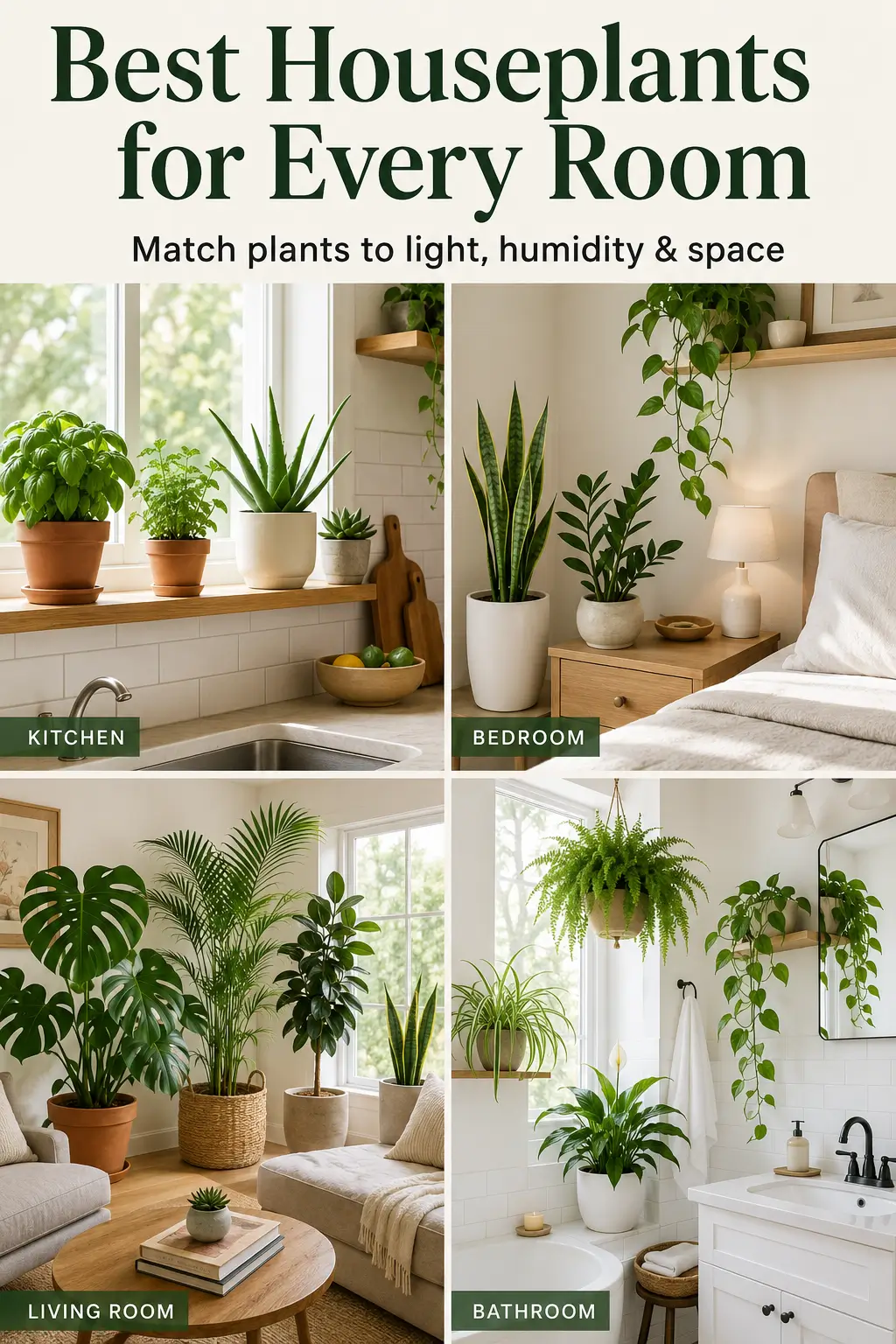
Kitchens can be great for herbs and compact plants. Bedrooms often work well for easy, low-maintenance plants. Living rooms can hold larger statement plants if the light is strong enough. Bathrooms can be excellent for humidity-loving plants if they have a window or grow light.
Room choice is a helpful starting point, but it is not a rule. Before choosing a plant, always check the actual light, temperature, airflow, and moisture conditions in that room.
Why Room Placement Matters for Houseplants
Every room in the home has a different growing environment. Some rooms are bright and warm. Others are dim and cool. Some rooms are dry because of heating or air conditioning, while others have extra humidity from cooking, showers, or sinks.
Houseplants respond to these conditions. If the plant is in the wrong room, it may grow slowly, drop leaves, become leggy, turn yellow, dry out too fast, or develop root problems from staying too wet.
The right placement helps plants grow with less stress. It also makes care easier for you. A basil plant in a sunny kitchen window is easier to use and monitor. A large monstera in a bright living room has space to grow. A fern in a humid bathroom may stay happier than it would in a dry hallway.
The goal is not to follow a perfect chart. The goal is to match each plant’s needs with the real conditions in your home.
What to Check Before Choosing a Plant for Any Room
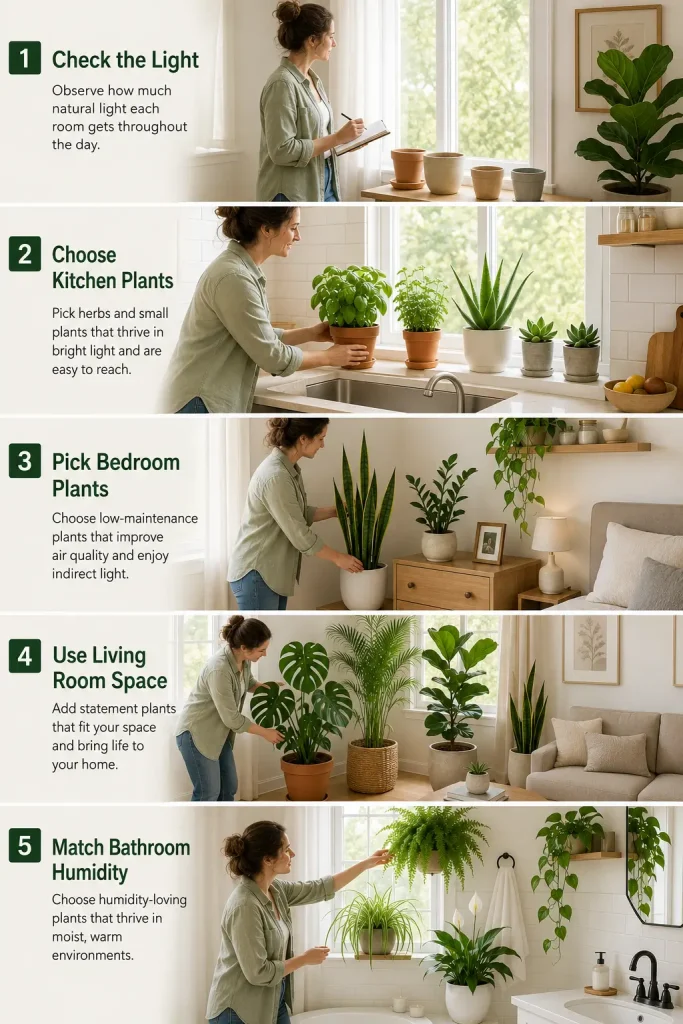
Before picking plants for the kitchen, bedroom, living room, or bathroom, look closely at the room itself.
Light
Light is the most important factor for indoor plants. A room may look bright to your eyes but still be too dim for plant growth.
Check where the windows are and how much light they receive during the day. South-facing and west-facing windows often give stronger light. East-facing windows usually give gentler morning light. North-facing windows are usually lower light in many homes.
If the room has no window, most houseplants will not grow well without a grow light.
Humidity
Some plants like extra humidity, especially ferns, calatheas, pothos, peace lilies, and many tropical plants.
Bathrooms and kitchens may offer more humidity, but only if they have enough light and airflow. A dark bathroom is not automatically a good plant room.
Temperature
Most common houseplants prefer comfortable indoor temperatures. Avoid placing plants directly beside cold drafts, heating vents, fireplaces, air conditioners, or exterior doors that open often.
Sudden temperature changes can stress plants.
Space
Some plants stay compact. Others become large and wide. A small kitchen counter may work for basil or succulents, but a monstera or palm needs more space.
Think about the mature size before bringing a plant home.
Daily Use
Some rooms are busy. Kitchens have cooking heat and grease. Bathrooms have moisture changes. Living rooms may have pets, children, and high traffic.
Choose plants that fit the way the room is used.
Best Houseplants for the Kitchen
The kitchen is a useful place for plants because it often has warmth, activity, and sometimes good window light. It is also the best room for edible herbs if the window is bright enough.
Good kitchen plants include basil, mint, succulents, aloe vera, pothos, spider plant, and small bromeliads.
Basil
Basil is one of the best herbs for a bright kitchen window. It needs strong light, warmth, and regular watering.
Place basil near the sunniest kitchen window you have. If the kitchen is dim, basil will become weak, leggy, and short-lived.
Harvest leaves regularly to keep the plant bushy. Do not let basil sit in soggy soil.
Mint
Mint can grow well in a kitchen if it gets bright light. It likes more moisture than many Mediterranean herbs, so do not let it dry out completely for too long.
Grow mint in its own pot because it spreads aggressively. Indoors, it is easier to control in a container.
Place it where you can easily trim leaves for tea, drinks, salads, and cooking.
Succulents
Succulents can work in kitchens with bright windows. They need strong light and fast-draining soil.
A sunny windowsill is best. Avoid keeping succulents far from the window or in dark corners.
Water only when the soil has dried well.
Aloe Vera
Aloe vera is useful in the kitchen because it stays compact and likes bright light. Place it near a sunny window where it receives strong indirect light or some direct sun.
Use a pot with drainage holes and avoid overwatering. Aloe stores water in its leaves and does not like wet soil.
Bromeliad
Bromeliads can add color to a kitchen if the room has bright indirect light. They do not need the same intense sun as herbs or succulents.
Place a bromeliad away from harsh heat, stove steam, and greasy cooking areas. Good airflow helps prevent the plant from staying too wet.
Best Houseplants for the Bedroom
Bedrooms often need low-maintenance plants that do not require constant attention. Many bedrooms have softer light than kitchens or living rooms, so it is important to choose plants that tolerate medium or lower light.
Good bedroom plants include snake plant, pothos, ZZ plant, aloe vera, peace lily, and some philodendrons.
Snake Plant
Snake plant is one of the easiest bedroom plants. It tolerates lower light, dry indoor air, and missed waterings better than many houseplants.
It grows best in bright indirect light, but it can survive in lower light. In dim rooms, water less often because the soil dries more slowly.
Snake plant is a good choice for nightstands, corners with natural light, or bedroom plant stands.
ZZ Plant
ZZ plant is another excellent low-maintenance bedroom plant. It has glossy leaves and tolerates lower light well.
It stores water in thick underground rhizomes, so it should not be watered too often. Let the soil dry between waterings.
Place it where it gets some natural light, not in a completely dark corner.
Pothos
Pothos works well in bedrooms because it is adaptable and easy to grow. It can trail from shelves, dressers, or hanging baskets.
It grows best in bright indirect light, but it tolerates medium and lower light. Variegated pothos may lose some color if kept too dim.
Trim long vines to keep the plant full.
Aloe Vera
Aloe vera can work in a bedroom if the room has a bright window. It is not a true low-light plant, so avoid placing it in a dark bedroom.
A sunny windowsill or bright plant stand is best.
Jasmine
Jasmine can be grown indoors, but it needs bright light and more attention than many beginner plants. It is best for a bright bedroom window, not a dim corner.
Some jasmine varieties need cooler nighttime temperatures to bloom well. If your bedroom is bright and not too hot, jasmine may be a lovely fragrant choice.
English Ivy
English ivy can grow indoors in bright indirect light or medium light, but it can be fussy in hot, dry rooms. It prefers cooler conditions and good humidity.
It is also important to know that English ivy can be toxic to pets if eaten, so place it safely if you have cats or dogs.
Best Houseplants for the Living Room
Living rooms are often the best place for larger statement plants because they usually have more floor space, bigger windows, and room for decorative pots.
Good living room plants include monstera, areca palm, ficus, snake plant, rubber plant, dracaena, pothos, philodendron, and peace lily.
Monstera
Monstera is a popular living room plant because its large split leaves make a strong statement. It grows best in bright indirect light.
Place it near a bright window but protect it from harsh direct afternoon sun. Give it space to spread, and add a moss pole or support as it grows.
Rotate the pot every few weeks so it grows evenly.
Areca Palm
Areca palm adds a soft tropical look to living rooms. It prefers bright indirect light and steady moisture.
Avoid placing it directly beside heating vents or cold drafts. Dry air can cause brown tips.
Use a pot with drainage and water when the top layer of soil begins to dry.
Ficus
Ficus plants can look beautiful in living rooms, but they can react strongly to changes in light, temperature, and watering.
Place ficus in bright indirect light and avoid moving it too often. Sudden changes can cause leaf drop.
Keep it away from drafts and heating vents.
Snake Plant
Snake plant is also excellent for living rooms because it is upright, architectural, and low-maintenance.
It works well in corners, beside sofas, near entryways, or on plant stands. It grows best with bright indirect light but can tolerate lower light.
Philodendron
Philodendrons are easy living room plants if the room has medium to bright indirect light. They can trail, climb, or grow upright depending on the variety.
Avoid harsh direct sun, which may scorch the leaves.
Best Houseplants for the Bathroom
Bathrooms can be great for plants that enjoy humidity, but only if the bathroom has enough light. Humidity alone is not enough. A bathroom with no window will usually need a grow light.
Good bathroom plants include Boston fern, pothos, spider plant, ZZ plant, peace lily, calathea, and some orchids.
Boston Fern
Boston fern is a classic bathroom plant because it loves humidity. It needs bright indirect light and evenly moist soil.
A bathroom with a bright window can be a good spot. A dark bathroom will not work well without a grow light.
Keep the soil lightly moist, but do not let the pot sit in standing water.
Pothos
Pothos is one of the easiest bathroom plants. It tolerates humidity and can grow in medium to lower light.
Place it on a shelf, windowsill, or hanging planter. If the vines become too long, trim them to keep the plant full.
Spider Plant
Spider plant is a good bathroom choice if there is bright indirect light. It handles normal home humidity but often appreciates the extra moisture in bathrooms.
It also produces baby plantlets when mature and happy.
Avoid overwatering, especially if the bathroom stays cool.
ZZ Plant
ZZ plant can tolerate lower light bathrooms better than many plants, but it still needs some natural or grow light.
Because bathrooms can be humid and cooler, water ZZ plant carefully. Let the soil dry well before watering again.
Peace Lily
Peace lily can grow well in bathrooms with filtered light and humidity. It prefers bright indirect light but can tolerate lower light.
It may bloom better with more brightness. Keep the soil lightly moist, not soggy.
Calathea
Calatheas like humidity and bright indirect light, making them possible bathroom plants if the room is bright enough.
They dislike direct sun, dry air, cold drafts, and inconsistent watering.
Room-by-Room Plant Matching Guide
Kitchen
Best for herbs and compact plants.
Try:
- Basil
- Mint
- Aloe vera
- Succulents
- Pothos
- Spider plant
- Bromeliad
Best conditions: bright window, warm room, easy access for watering and harvesting herbs.
Bedroom
Best for calm, low-maintenance plants.
Try:
- Snake plant
- ZZ plant
- Pothos
- Aloe vera near a bright window
- Peace lily
- Philodendron
- Jasmine in bright light
Best conditions: medium to bright indirect light, stable temperature, low daily disturbance.
Living Room
Best for larger statement plants.
Try:
- Monstera
- Areca palm
- Ficus
- Rubber plant
- Snake plant
- Dracaena
- Philodendron
- Pothos
Best conditions: enough floor space, bright indirect light, room to rotate and maintain plants.
Bathroom
Best for humidity-loving plants.
Try:
- Boston fern
- Pothos
- Spider plant
- Peace lily
- Calathea
- ZZ plant
- Orchid in bright indirect light
Best conditions: humidity plus a window or grow light, good airflow, no constant cold drafts.
Important Plant Safety Note
Some common houseplants can be toxic to pets or children if eaten. This includes plants like pothos, peace lily, snake plant, aloe vera, philodendron, monstera, English ivy, and ZZ plant.
If you have pets or young children, place plants out of reach and check plant safety before buying. Choose pet-safe options when needed, such as spider plants, some palms, and many ferns, depending on the specific type.
Common Mistakes to Avoid
Choosing Plants by Room Name Only
A bathroom is not automatically good for ferns if it has no window. A kitchen is not good for basil if it is dark. Always check the actual light.
Putting Sun-Loving Plants in Dark Corners
Herbs, succulents, aloe, and many flowering plants need bright light. They will not thrive in low light just because they look nice there.
Overwatering Low-Light Plants
Plants in lower light use water more slowly. Always check the soil before watering.
Ignoring Drafts and Vents
Heating vents, air conditioners, fireplaces, and cold windows can stress plants.
Choosing Plants That Outgrow the Room
Monsteras, palms, and ficus plants can become large. Make sure you have space for the mature plant.
Forgetting Seasonal Light Changes
A plant that gets enough light in summer may need to move closer to a window in winter. A window that is gentle in winter may become too hot in summer.
Care Tips for Room-Based Plant Placement
Rotate plants every few weeks so they grow evenly toward the light.
Dust leaves regularly, especially in kitchens and living rooms. Dust blocks light and can make plants look dull.
Check soil moisture before watering instead of watering on a strict schedule.
Move plants slightly if they show stress. Yellow leaves, crispy tips, stretching stems, or faded color can be signs that the placement needs adjusting.
Use grow lights in rooms without enough natural light.
Keep plants away from direct heat, cold drafts, and constantly wet surfaces.
FAQ
What houseplants are best for kitchens?
Basil, mint, aloe vera, succulents, pothos, spider plants, and bromeliads can work well in kitchens if the light is suitable. Herbs need the brightest window.
What plants are best for bedrooms?
Snake plant, ZZ plant, pothos, peace lily, philodendron, and aloe vera near a bright window can work well in bedrooms.
What plants are best for living rooms?
Monstera, areca palm, ficus, snake plant, rubber plant, dracaena, pothos, and philodendron are good living room choices if there is enough light.
What plants are best for bathrooms?
Boston fern, pothos, spider plant, peace lily, calathea, ZZ plant, and orchids can work in bathrooms with enough light and humidity.
Can plants grow in a bathroom with no window?
Most plants will not grow well in a windowless bathroom without a grow light. Humidity helps, but plants still need light.
Can I put succulents in the kitchen?
Yes, if the kitchen has a bright sunny window. Succulents need strong light and should not be kept in a dim kitchen.
Is a bedroom too dark for plants?
It depends on the window and light level. Some bedrooms are bright enough for many plants, while others may only support low-light tolerant plants or need grow lights.
Should I move plants by season?
Yes. Indoor light changes through the year. Plants may need to move closer to windows in winter or farther from hot direct sun in summer.
Conclusion
Matching houseplants to the right room is a simple way to help them grow healthier. Kitchens can be great for herbs and compact plants, bedrooms are ideal for low-maintenance choices, living rooms can hold larger statement plants, and bathrooms can support humidity-loving plants when there is enough light.
But the room name is only the starting point. Always check the actual light, humidity, temperature, and space before choosing a plant.
When you match the plant to the real conditions in your home, your houseplants will be easier to care for and much more likely to thrive.