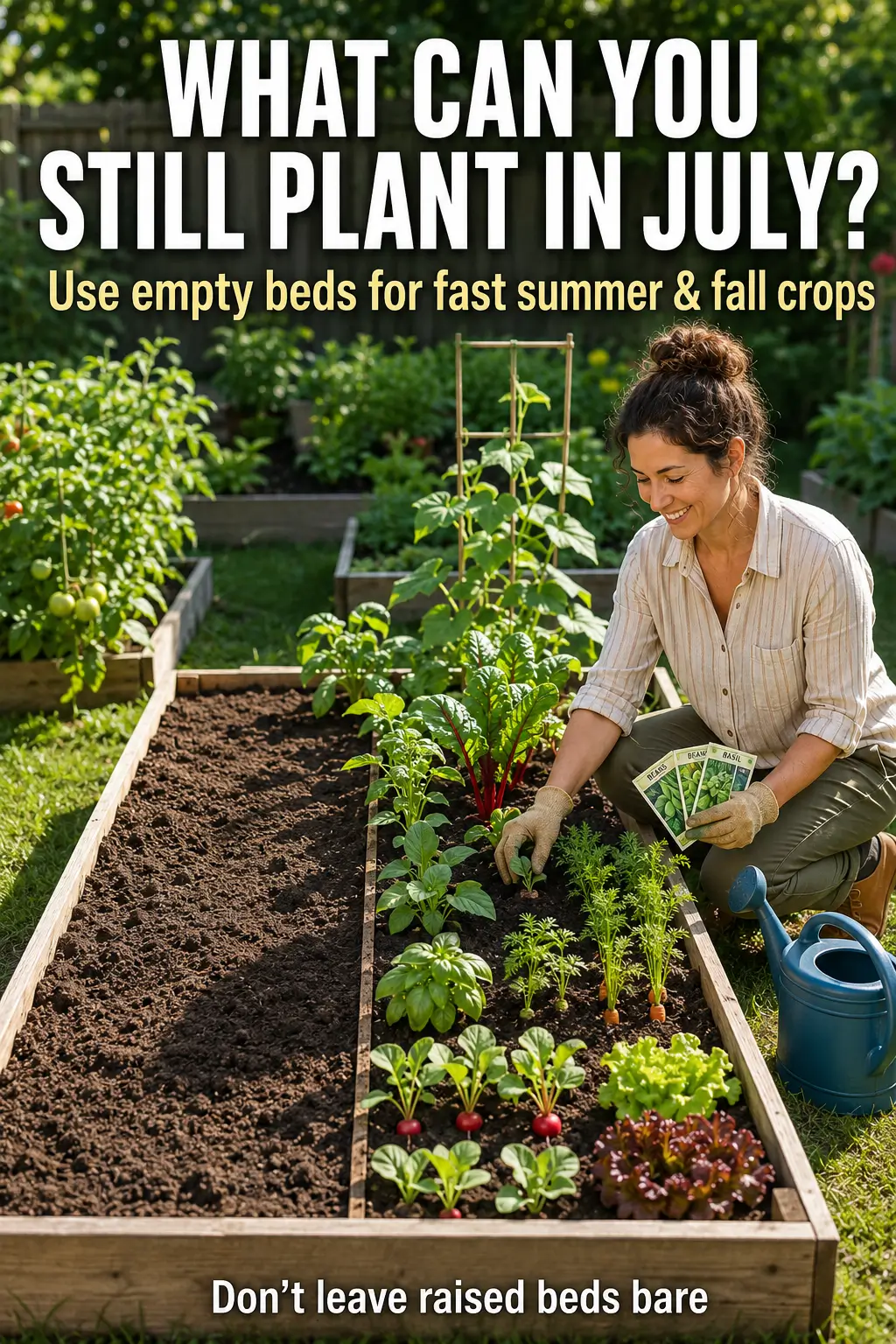
July can make gardeners feel like the planting season is already over, but many empty garden beds still have plenty of potential. If an early crop has finished, a spring planting failed, or part of your raised bed is sitting bare, you do not have to leave that soil unused for the rest of summer.
In many areas, July is still a good time to plant fast-growing crops, heat-tolerant vegetables, herbs, and fall harvest plants. The key is choosing crops based on your climate, your remaining growing season, and the number of days each crop needs to mature.
You may not be planting the same way you would in spring. July planting often means paying closer attention to heat, watering, shade, and fast harvest windows. But with the right choices, empty beds can still produce bush beans, cucumbers, summer squash, Swiss chard, radishes, beets, carrots, lettuce in partial shade, and herbs like basil.
Why July Planting Works
July planting works because many crops grow quickly in warm soil. Seeds often germinate faster in summer than they do in cool spring soil, especially warm-season crops like beans, cucumbers, squash, and basil.
July is also useful for succession planting. Once spring crops like peas, lettuce, spinach, radishes, or early potatoes are finished, you can use that same space again instead of letting it sit bare.
In some climates, July planting gives you a quick summer harvest. In other areas, it starts crops that will mature in early fall when temperatures become cooler. This is especially useful for beets, carrots, Swiss chard, and leafy greens.
The most important part is timing. Always check your average first frost date and compare it with the crop’s days to maturity. If a crop needs 60 days and your first frost is less than 45 days away, it may not mature unless you use protection or choose a faster variety.
What to Check Before Planting in July
Before you plant, look at your conditions carefully. July planting can work well, but summer heat can also stress young seedlings.
Days to Maturity
Days to maturity tells you how long a crop usually takes from planting to harvest. For July planting, choose fast or medium-fast varieties whenever possible.
Bush beans may mature in around 50 to 60 days. Radishes can be ready much faster, often in about 25 to 35 days. Some baby lettuce and greens can be harvested young in a few weeks.
The shorter the time to maturity, the safer the crop is for a late summer planting.
Your Climate
July means different things depending on where you garden.
In cooler northern areas, July may still give you enough time for beans, cucumbers, summer squash, carrots, beets, chard, and herbs.
In very hot southern areas, July may be too intense for some crops unless you use shade cloth and careful watering. Some gardeners in hot climates use July to prepare for late summer or early fall planting instead.
Heat Tolerance
Some plants handle July heat better than others. Basil, beans, cucumbers, squash, and Swiss chard usually handle warm weather better than lettuce.
Lettuce can still be grown in July in some areas, but it often needs partial shade, consistent moisture, or shade cloth to keep it from bolting quickly.
Watering Needs
New seeds and seedlings need consistent moisture. In July heat, soil can dry out quickly, especially in raised beds.
Check the soil daily during hot weather. Water gently and deeply so seeds do not dry out before germinating.
Empty Bed Condition
If a previous crop was removed, refresh the soil before replanting. Add compost, remove weeds, and loosen the top few inches of soil.
Do not plant into dry, compacted, exhausted soil and expect strong results.
Best Crops to Plant in July
Bush Beans
Bush beans are one of the best July crops for many gardens. They grow quickly, like warm soil, and do not need a large trellis.
Plant seeds directly into the garden bed. Space them about 4 to 6 inches apart in rows, or follow the seed packet instructions.
Bush beans usually produce faster than pole beans, making them a better choice for July planting. Keep the soil evenly moist until seeds germinate.
They are a good option for a quick late summer harvest.
Cucumbers
Cucumbers can still be planted in July in many areas if your growing season is long enough. Choose fast-maturing varieties and provide support to save space.
Cucumber seeds germinate quickly in warm soil. You can direct sow them or transplant young seedlings.
Give cucumbers consistent water because dry stress can lead to bitter or misshapen fruit. A small trellis, arch, or string support keeps vines off the ground and makes harvesting easier.
In very hot climates, young cucumber seedlings may need light afternoon shade until established.
Summer Squash
Summer squash, including zucchini and yellow squash, grows quickly in warm weather. If you have enough time before frost, July can still work for a late planting.
Choose compact or bush varieties for raised beds and small gardens.
Plant seeds directly in warm soil or use healthy transplants. Give each plant plenty of space because squash leaves get large.
Watch for squash bugs and vine borers, especially if these pests are common in your area. A July planting can sometimes avoid early pest pressure, but not always.
Swiss Chard
Swiss chard is one of the most reliable greens for summer planting. It tolerates heat better than many leafy crops and can continue producing into fall.
Plant seeds directly or transplant seedlings. Keep the soil moist while seeds germinate.
Swiss chard is useful because you can harvest outer leaves as needed while the plant keeps growing. It works well in raised beds, containers, and mixed vegetable gardens.
Radishes
Radishes are one of the fastest crops you can plant in July, but they can struggle in extreme heat. In cooler summer climates or partial shade, they can be a quick and useful crop.
Choose fast varieties and keep the soil evenly moist. Dry or hot conditions can make radishes tough, spicy, or woody.
For best results in hot areas, plant radishes where they get morning sun and afternoon shade, or wait until late July or early August for slightly cooler conditions.
Beets
Beets are a good choice for late summer and fall harvests. They can be planted in July if you have enough time for roots to size up.
Beet seeds can be direct sown into the bed. Thin seedlings after they sprout so roots have room to grow.
You can also harvest beet greens while the roots develop. Keep the soil evenly moist for better root quality.
In very hot areas, beets may germinate better with shade cloth or more frequent watering.
Carrots
Carrots can be planted in July for a fall harvest in many areas. They take longer than radishes, so timing matters.
Carrot seeds need steady moisture to germinate. The top layer of soil must not dry out. A light board, burlap, or shade cloth can help keep the seedbed moist until germination, but remove coverings once seedlings appear.
Choose shorter or faster varieties if your season is limited.
Loose, stone-free soil is important so carrots can grow straight.
Lettuce in Partial Shade
Lettuce is not always easy in July, but it can work if you protect it from extreme heat. Instead of planting it in full hot sun, choose partial shade or use shade cloth.
Leaf lettuce is usually better than head lettuce for summer planting because it can be harvested young.
Keep lettuce consistently moist. Heat stress can cause bitter leaves and quick bolting.
In hot climates, July may be better for starting lettuce indoors or waiting for a cooler late-summer planting window.
Basil
Basil loves warm weather and is one of the easiest herbs to plant in July. It grows quickly and can be harvested often.
Plant basil in full sun, or give it light afternoon shade in very hot areas. Keep it watered consistently, but do not leave it in soggy soil.
Pinch the top growth regularly to encourage a bushy plant. Remove flower buds if you want more leaf production.
Basil is perfect for filling small gaps in raised beds or containers.
Other Herbs to Try in July
Besides basil, some gardeners can still plant parsley, cilantro in cooler areas or partial shade, dill for a quick crop, chives from transplants, oregano, thyme, and rosemary from nursery plants.
For July planting, transplants are often better than seeds for slower-growing herbs. This gives you a head start.
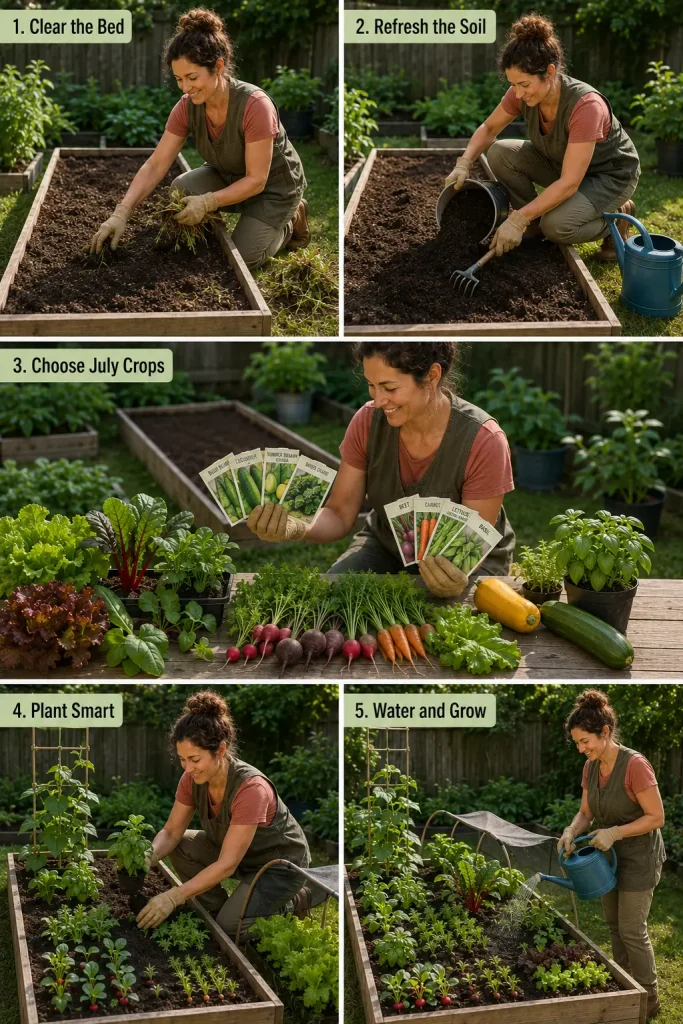
How to Prepare an Empty Bed for July Planting
Start by removing old plants, weeds, roots, and debris. If the previous crop had disease problems, do not leave diseased leaves in the bed.
Loosen the top few inches of soil with a hand fork or rake. Avoid deep digging if the soil structure is already good.
Add compost or aged organic matter to refresh the bed. Summer crops need nutrients, especially if the bed already produced earlier in the season.
Water the bed before planting if the soil is dry. Seeds germinate better in evenly moist soil.
After planting, add a light mulch layer once seedlings are established. Mulch helps hold moisture and keeps the soil cooler.
How to Choose Between Quick Summer Crops and Fall Crops
July planting can have two different goals.
A quick summer harvest means planting crops that grow fast and produce before the end of warm weather. Bush beans, cucumbers, summer squash, basil, and radishes can fit this goal in many areas.
A fall harvest means planting crops that will grow through late summer and mature as the weather cools. Beets, carrots, Swiss chard, lettuce, and some herbs can fit this goal.
If your summers are very hot, focus more on fall crops and use shade cloth for seedlings. If your summers are mild and your frost date is late, you may have more options.
July Planting Tips for Hot Weather
Plant in the evening or on a cloudy day when possible. This reduces transplant stress.
Water before and after planting. Dry soil can make it hard for seeds and seedlings to establish.
Use shade cloth for tender greens, lettuce, beets, carrots, and new transplants during heat waves.
Mulch after seedlings are established to help reduce moisture loss.
Check raised beds more often than in-ground beds because they can dry out faster.
Avoid heavy fertilizing during extreme heat. Stressed plants may not use nutrients well.
Keep seeds moist until they germinate. Even one hot dry day can ruin tiny seedlings.
Sample July Raised Bed Layout
For a 4×8 raised bed, you could plant:
Back section: cucumbers on a small trellis
Middle section: Swiss chard and bush beans
Front section: radishes, beets, and carrots
Corner spaces: basil plants
Shadier edge: leaf lettuce under light shade cloth
This layout keeps taller crops toward the back, fast crops near the front, and heat-sensitive lettuce in the most protected area.
Do not overcrowd the bed. Summer crops need airflow, and crowded beds dry unevenly.
Common Mistakes to Avoid
Planting Without Checking Days to Maturity
Always check whether the crop has time to grow before frost or extreme weather.
Letting Seeds Dry Out
July heat can dry the soil quickly. Keep seedbeds evenly moist until germination.
Planting Lettuce in Full Hot Sun
Lettuce can bolt or turn bitter in heat. Use partial shade or shade cloth.
Overcrowding the Bed
Trying to fit too many crops into one bed can create poor airflow, weak growth, and pest problems.
Forgetting to Refresh the Soil
A bed that already grew one crop may need compost before planting again.
Choosing Cool-Season Crops Too Early in Hot Climates
In very hot regions, some crops are better planted later for fall rather than in the hottest part of July.
Ignoring Watering
Consistent watering is essential for July planting. New seeds and seedlings are especially vulnerable.
FAQ
Is July too late to plant vegetables?
No, July is not too late in many areas. You can still plant fast-growing crops, heat-tolerant vegetables, herbs, and fall harvest crops if you choose varieties with enough time to mature.
What vegetables can I plant in July?
Good July options can include bush beans, cucumbers, summer squash, Swiss chard, radishes, beets, carrots, lettuce in partial shade, and basil.
Can I plant beans in July?
Yes, bush beans are a good July crop in many gardens because they grow quickly and like warm soil.
Can I plant cucumbers in July?
Yes, if your growing season is long enough. Choose fast-maturing cucumber varieties and keep them watered consistently.
Can I plant lettuce in July?
Lettuce can be difficult in July heat, but it can work in partial shade, under shade cloth, or in cooler climates. Leaf lettuce is usually easier than head lettuce.
Can I plant carrots in July?
Yes, carrots can be planted in July for a fall harvest in many areas. Keep the seedbed evenly moist until germination.
How do I protect July seedlings from heat?
Use shade cloth, mulch after seedlings establish, water consistently, and plant in the evening or during cooler weather.
Should I fertilize before planting in July?
Add compost or balanced fertilizer based on the crop’s needs and your soil condition. Avoid overfertilizing, especially during extreme heat.
Conclusion
July does not have to mean empty garden beds. With the right crop choices and careful summer care, you can turn bare soil into a productive planting space again.
Bush beans, cucumbers, summer squash, Swiss chard, radishes, beets, carrots, lettuce in partial shade, and basil can all be useful options depending on your climate and remaining season.
The key is to check days to maturity, refresh the soil, water consistently, and protect young plants from extreme heat. Whether you want a quick summer harvest or a fall crop, July can still be a productive month in the vegetable garden.
You May Also Like
 8 Companion Plants That Help Roses Grow Healthier and Look More Beautiful
 What Herbs Can Be Planted Together? A Practical Companion Planting Guide
 Why Master Gardeners Are Propagating Cuttings in a Raw Potato and Honey
 Why Master Gardeners Are Using Vinegar to Unlock Eggshell Fertilizer
 Where to Place Indoor Plants for Healthy Growth
 Companion Plants That May Help Reduce Garden Pests Naturally