Growing herbs together can make your garden easier to manage, especially when you group plants by what they actually need. The biggest mistake many gardeners make is planting herbs together just because they look pretty, without thinking about sunlight, water needs, root space, and how aggressively each herb grows.
A good herb companion planting plan does not mean every herb “helps” every other herb. It simply means the herbs share similar growing conditions and will not compete too aggressively. This is especially important in containers, balcony gardens, raised beds, and small backyard spaces where every inch matters.
Why This Idea Works
Herbs grow best when their neighbors want similar conditions. Rosemary and basil, for example, are both popular kitchen herbs, but they do not love the same setup. Rosemary usually prefers full sun, excellent drainage, and soil that dries slightly between waterings. Basil usually prefers warmer weather, richer soil, and more consistent moisture.
When herbs with different needs are planted in the same pot, one usually suffers. If you water enough for basil, rosemary may stay too wet. If you keep the soil dry enough for rosemary, basil may wilt quickly.
The easiest way to plant herbs successfully is to group them into three basic categories:
Mediterranean herbs that like sun and drier soil, softer leafy herbs that like more consistent moisture, and aggressive spreaders that need their own container.
What You Need
For a simple herb companion planting setup, you may need:
A raised bed, window box, patio planter, or individual pots
Good-quality potting mix or garden soil improved with compost
Containers with drainage holes
Small herb plants or seeds
Plant labels
Watering can or hose with gentle spray
Optional gravel, pot feet, or saucers for better drainage control
For containers, drainage is very important. Most herbs dislike sitting in soggy soil, even the ones that prefer steady moisture.
Best Placement or Setup
Most herbs grow best with at least 6 hours of sunlight per day, but not all herbs enjoy the same level of heat and dryness.
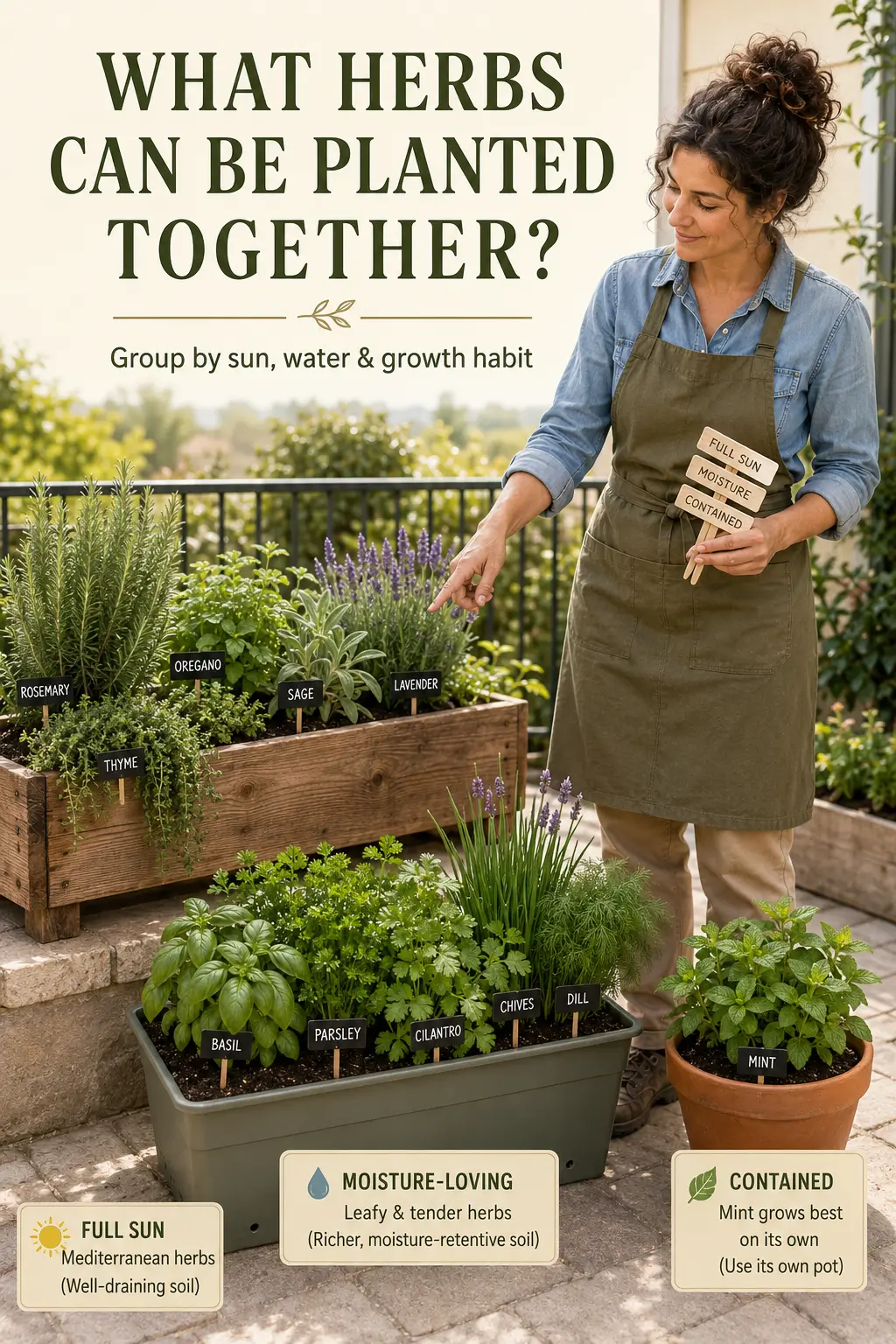
Mediterranean herbs such as rosemary, thyme, oregano, sage, and lavender usually do best in full sun with well-draining soil. These herbs are often good choices for sunny patios, balcony railing planters, raised beds, and dry garden edges.
Softer leafy herbs such as basil, parsley, cilantro, chives, and dill usually prefer more consistent moisture. Basil likes warmth and sun, while parsley and cilantro often appreciate some afternoon shade in hot climates. These herbs are better grouped in a separate container or bed where you can water more often.
Mint, lemon balm, and many mint-family spreaders should usually be planted alone in pots. They can spread quickly and crowd out smaller herbs if planted directly into garden beds.
Step-by-Step Instructions
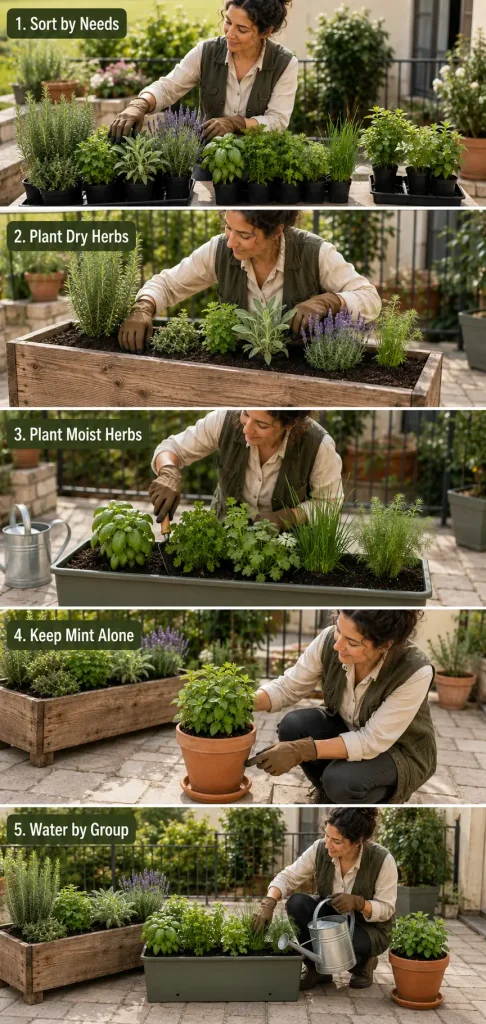
Start by choosing your herb group. Do not begin with the container first. Begin by deciding which herbs have similar needs.
For a sunny, dry herb planter, combine rosemary, thyme, oregano, sage, and lavender. Use a planter with drainage holes and a well-draining potting mix. Place taller herbs like rosemary toward the back or center, and lower herbs like thyme and oregano near the front or edges.
For a moisture-loving herb planter, combine basil, parsley, cilantro, chives, and dill. These herbs usually appreciate soil that stays lightly moist but not soaked. In hot areas, place this planter where it gets morning sun and some afternoon protection.
For a mint container, plant mint by itself or with another mint variety only if the pot is large enough. Peppermint, spearmint, and lemon balm can all become aggressive. A separate pot helps keep them useful without letting them take over the garden.
Next, check spacing. Small herb starts may look tiny at first, but many herbs fill out quickly. Leave about 8 to 12 inches between compact herbs and 18 to 24 inches for larger herbs like rosemary, sage, and lavender when space allows.
After planting, water gently to settle the soil. For Mediterranean herbs, let the top layer of soil dry before watering again. For leafy herbs, keep the soil evenly moist, especially during warm weather.
Finally, harvest lightly and often. Pinching basil, parsley, oregano, thyme, and mint can encourage fuller growth. Avoid cutting woody herbs like rosemary and lavender too hard into old bare stems, because they may not regrow well from woody sections.
Good Herb Pairing Examples
Rosemary, thyme, oregano, sage, and lavender work well together because they usually prefer full sun, leaner soil, and good drainage.
Basil, parsley, cilantro, chives, and dill can work well together when watered consistently and protected from extreme heat.
Basil and parsley are a good container pairing because both prefer richer soil and steady moisture.
Chives and parsley are useful together in small kitchen herb pots because they stay fairly manageable and do not need dry soil.
Thyme and oregano make a good low-growing herb combination for sunny containers or raised bed edges.
Mint and lemon balm can be grown near each other only if they are contained, but they are usually best kept in separate pots to avoid crowding.
What Not to Plant Together
Avoid planting rosemary with basil in a small pot because rosemary prefers drier soil while basil needs more moisture.
Avoid planting mint with smaller herbs in open garden beds. Mint can spread quickly through underground runners and crowd out nearby plants.
Avoid planting fennel with most herbs and vegetables. Fennel can be competitive and is often best grown separately.
Avoid planting dill too close to fennel because they are related and may cross-pollinate if allowed to flower. They can also compete for space.
Avoid pairing lavender with moisture-loving herbs like cilantro or parsley in the same container. Lavender needs better drainage and drier conditions than most leafy herbs.
Avoid placing tall herbs where they shade smaller herbs. Rosemary, dill, fennel, and mature sage can block light if planted in the wrong position.
Container Tips for Balconies, Patios, and Small Gardens
For a balcony herb garden, use separate containers instead of forcing all herbs into one large pot. One dry herb planter, one leafy herb planter, and one mint pot is often the easiest setup.
Use a long rectangular planter for Mediterranean herbs. Place rosemary or sage at the back, thyme and oregano near the front, and lavender at one end where it has space and airflow.
Use a deeper round pot for basil, parsley, and chives. These herbs like steady moisture, so avoid tiny pots that dry out too quickly in summer.
Keep mint in its own pot with drainage holes. Do not place the mint pot directly on open soil if roots can escape through the drainage holes.
On hot patios, containers dry out faster than garden beds. Check soil moisture often by touching the top inch of soil. Water needs can change depending on heat, wind, pot size, and sunlight.
Care Tips
Harvest herbs regularly, but never remove more than about one-third of the plant at a time.
Water based on the herb group, not on a fixed schedule. Mediterranean herbs prefer to dry slightly between waterings, while leafy herbs usually need more consistent moisture.
Give herbs good airflow. Crowded containers can stay damp too long and may develop fungal problems.
Remove flowers from basil, cilantro, and dill if you want to keep harvesting leaves longer. Once some herbs flower, the leaves may become smaller or more bitter.
Refresh container soil each season or add compost lightly around the plants. Potted herbs use up nutrients faster than herbs grown in the ground.
Move containers when needed. In very hot climates, basil, parsley, and cilantro may benefit from afternoon shade even if they like bright light.
Common Mistakes to Avoid
The biggest mistake is planting all herbs in one pot. A mixed herb planter looks convenient, but it often fails when dry-soil herbs and moisture-loving herbs are watered the same way.
Another mistake is planting mint directly into a raised bed. Mint can escape its space and become difficult to remove later.
Many gardeners also overwater rosemary, thyme, lavender, and sage. These herbs need drainage more than constant moisture.
Do not forget mature size. Rosemary and sage can become much larger than small nursery plants suggest.
Avoid using containers without drainage holes. Decorative pots are fine only if the herb is planted in a nursery pot inside them and excess water can be emptied.
FAQ
Can rosemary and basil be planted together?
They can be planted near each other in the garden, but they are not ideal in the same small container. Rosemary prefers drier, well-draining soil, while basil usually needs richer soil and more consistent moisture.
What herbs grow best together in one pot?
Herbs with similar water and light needs grow best together. Rosemary, thyme, oregano, sage, and lavender make a good sunny dry-soil group. Basil, parsley, cilantro, chives, and dill work better in a more consistently moist planter.
Should mint be planted with other herbs?
Mint is usually best planted alone in its own container. It spreads aggressively and can crowd out smaller herbs, especially in garden beds or large shared planters.
Can lavender grow with other herbs?
Yes, lavender can grow with herbs that like full sun and well-draining soil, such as rosemary, thyme, oregano, and sage. Avoid pairing lavender with herbs that need frequent watering.
What herbs should not be planted together?
Avoid mixing herbs with very different water needs, such as rosemary and cilantro in the same pot. Also avoid planting mint with delicate herbs, and keep fennel separate from most herbs and vegetables.
Can I grow herbs together on a balcony?
Yes. Balcony herb gardens work very well when herbs are grouped correctly. Use separate containers for dry Mediterranean herbs, leafy moisture-loving herbs, and aggressive spreaders like mint.
Do herbs need full sun?
Many herbs prefer full sun, but some leafy herbs can benefit from afternoon shade in hot climates. Basil likes warmth and sun, while parsley and cilantro often perform better with protection from intense heat.
Conclusion
The best herb companion planting strategy is simple: group herbs by sunlight, water needs, growth habit, and competitiveness. Mediterranean herbs like rosemary, thyme, oregano, sage, and lavender usually belong together in sunny, well-draining soil. Leafy herbs like basil, parsley, cilantro, chives, and dill usually do better with more consistent moisture. Mint, lemon balm, and other aggressive spreaders should be kept in their own containers.
When you plant herbs according to their real growing needs, your garden becomes easier to water, easier to harvest, and more likely to stay healthy through the season.
You May Also Like
 Why Master Gardeners Are Using Vinegar to Unlock Eggshell Fertilizer
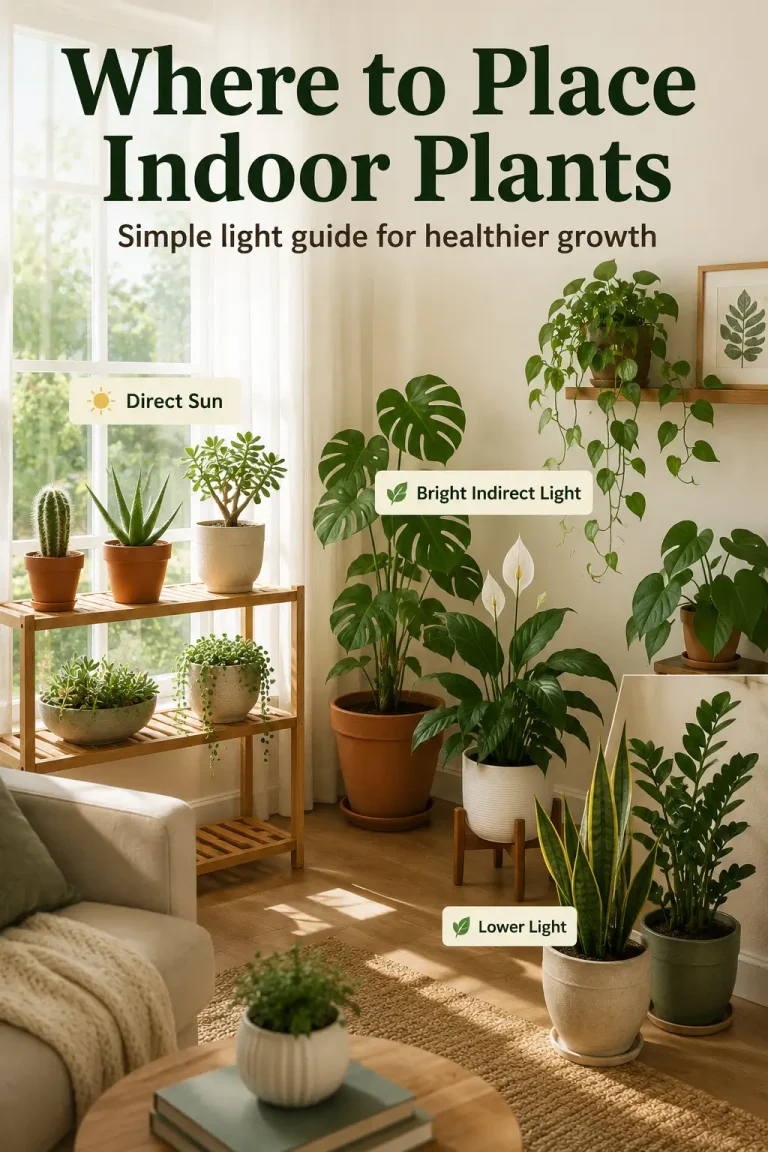 Where to Place Indoor Plants for Healthy Growth
 Why Master Gardeners Are Propagating Cuttings in a Raw Potato and Honey
 Why Master Gardeners Are Using Aspirin to Explode Root Growth
 The Truth About Epsom Salt for Peppers, Tomatoes, and Roses
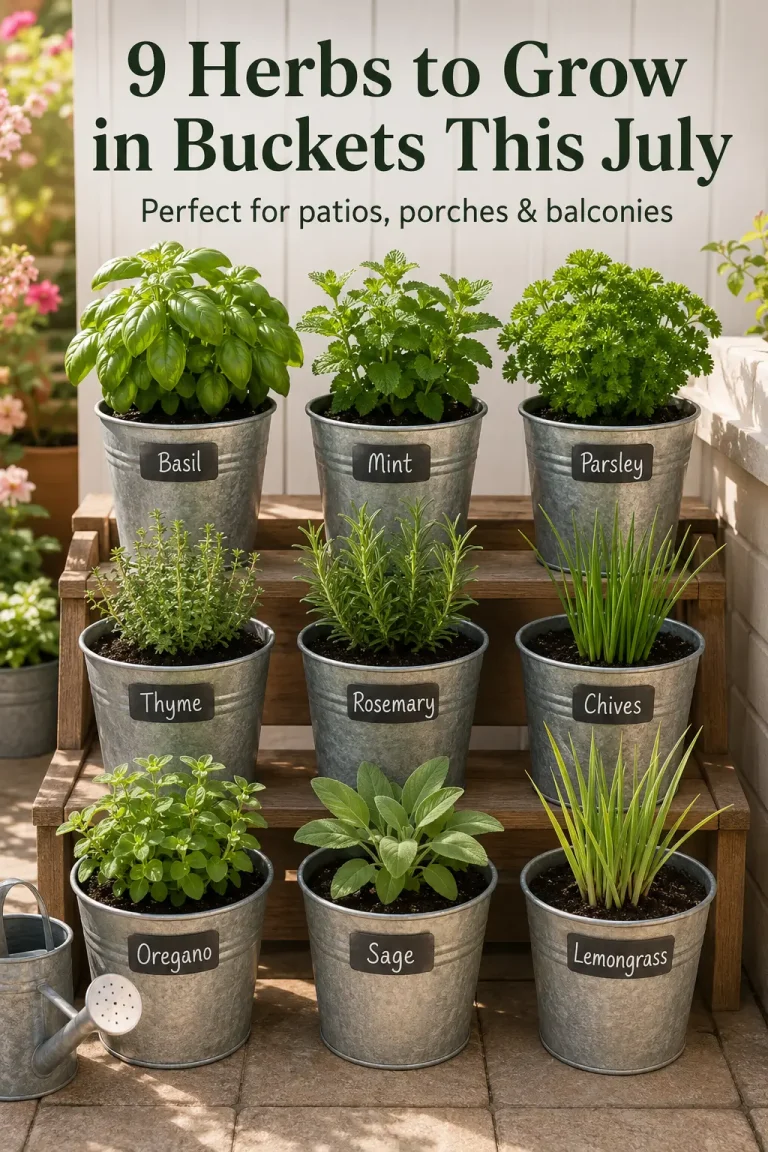 9 Herbs to Grow in Buckets This July for a Small-Space Summer Garden