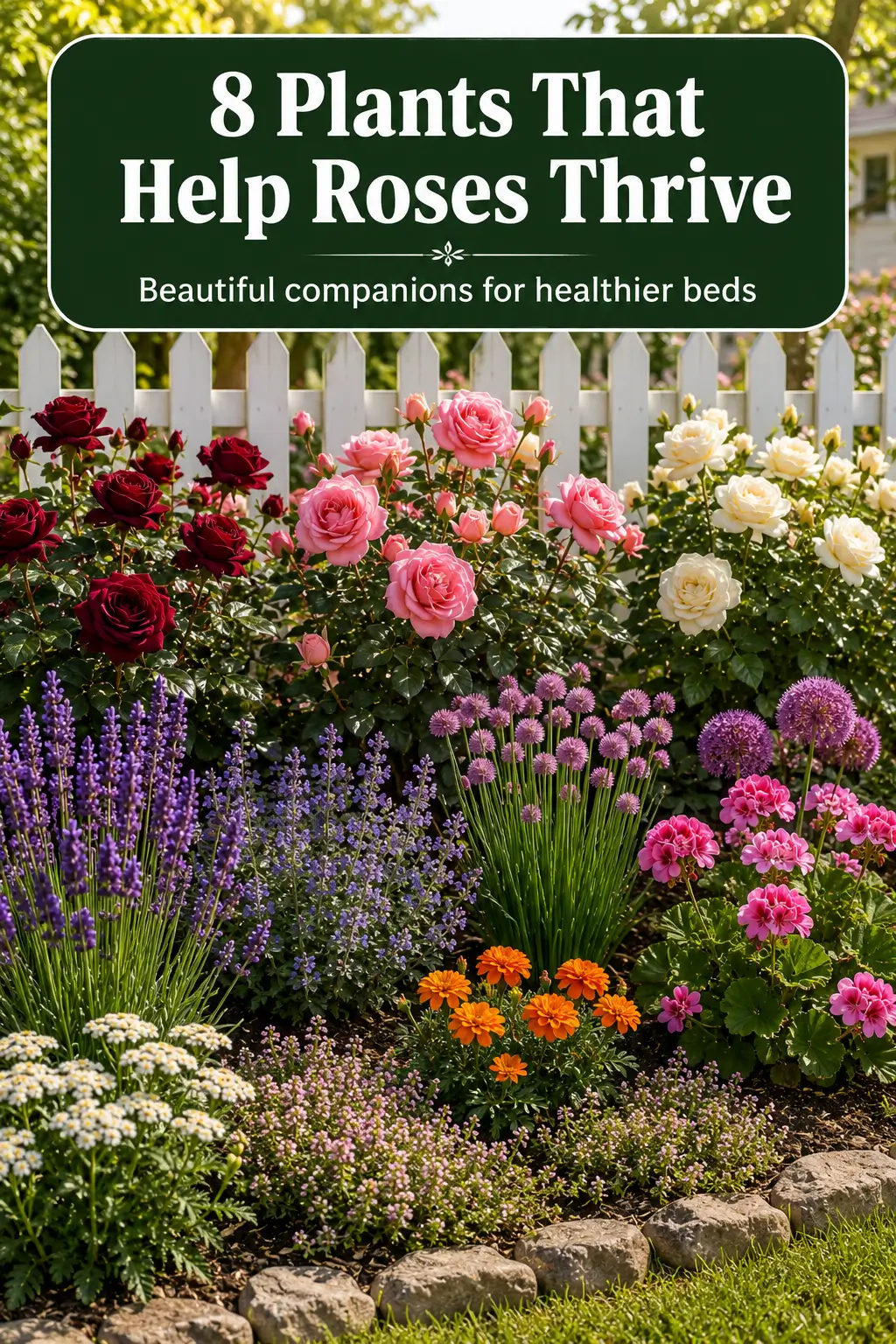
Roses are one of the most loved flowers in the garden, but the space underneath them is often left bare. While bare soil can look tidy for a short time, it can also make the rose bed look unfinished and may leave room for weeds, drying soil, and splash-back from rain or watering.
A thoughtful layer of companion plants can make a rose bed more beautiful and more useful. Plants like lavender, catmint, chives, alliums, marigolds, thyme, yarrow, and hardy geraniums can help cover soil, attract pollinators and beneficial insects, add fragrance, and bring more color around the base of your roses.
The key is balance. Roses still need sunlight, airflow, good drainage, and regular care. Companion plants should support the rose bed, not crowd or smother it.
Why Companion Plants Work Well With Roses
Companion planting works well with roses because it adds useful layers to the garden. Instead of having tall rose shrubs with empty soil below, you can create a living border of herbs, flowers, and low-growing plants.
Many rose shrubs have bare lower stems, especially as they mature. Companion plants help soften that look by filling the front and lower parts of the bed with texture and color.
They can also make the garden more active. Flowering plants may attract bees, butterflies, ladybugs, lacewings, and other helpful insects. Fragrant herbs can make the rose bed more enjoyable near a patio, walkway, fence, or front yard border.
Low-growing plants can also help reduce exposed soil. This may help limit weeds and keep the bed looking fuller during the growing season.
However, companion plants do not replace rose care. They will not guarantee pest-free or disease-free roses. Roses still need pruning, watering, feeding, and regular checks for common problems.
Best Companion Plants for Roses
Lavender
Lavender is one of the most popular plants to grow near roses. It has silver-green foliage, purple flower spikes, and a strong fragrance that pairs beautifully with rose blooms.
Lavender works best in full sun and well-drained soil. It does not like wet, heavy ground, so it is best for rose beds that drain well.
Plant lavender near the front or side of the rose bed, not directly against the rose stems. Give it enough space because mature lavender plants can become woody and wide.
Catmint
Catmint is a soft, mounding perennial with blue-purple flowers and gray-green leaves. It looks beautiful spilling along the front edge of a rose bed.
It is a good choice for gardeners who want a cottage-garden look. Catmint can bloom for a long period, and if you trim it back after flowering, it often grows fresh and neat again.
Plant catmint at least 18 inches away from rose stems. It can spread into a wide mound, so do not place it too close to the rose crown.
Chives
Chives are compact, edible, and easy to grow. Their upright green leaves and small purple flowers look lovely around roses without taking up too much space.
Chives are especially useful in smaller rose beds because they stay relatively neat compared with larger perennials. They can be planted in small groups near the middle or front of the bed.
They prefer sun and average garden soil. Keep them trimmed if they start to look messy after flowering.
Alliums
Alliums add tall, round flower heads that rise above lower companion plants. Their purple globe-shaped blooms look especially pretty with pink, burgundy, white, or peach roses.
Alliums are usually planted as bulbs in fall for spring or early summer flowers, depending on the variety. They work well between rose shrubs or toward the back of the companion planting layer.
Because the foliage can fade after flowering, plant lower companions like catmint, thyme, or hardy geraniums nearby to help hide the aging leaves.
Marigolds
Marigolds are bright, cheerful annuals that bring orange, yellow, or gold color to rose beds. They are easy to grow and work well as seasonal fillers around the front of the bed.
Marigolds are especially useful if you want quick color while perennials are still filling in. They like sun and regular watering but should not be planted so tightly that they block airflow around roses.
Deadhead the faded flowers to keep them blooming longer.
Thyme
Thyme is a low-growing herb that can work like a living mulch in sunny, well-drained rose beds. It is best used near the front edge or between stepping stones, where it can spread gently without covering the rose crown.
Thyme is drought-tolerant once established and does not like soggy soil. It is a good choice for gardeners who want a neat, low companion plant with fragrance.
Do not plant thyme where the soil stays wet or where it will be shaded by dense rose growth.
Yarrow
Yarrow is a tough flowering perennial that produces flat clusters of blooms. It can attract beneficial insects and adds a natural meadow-style look to rose beds.
Yarrow grows best in sun and well-drained soil. Some varieties can spread or become floppy, so it is important to choose compact types if your rose bed is small.
Place yarrow toward the back or side of the bed where it has room to grow without leaning into the roses.
Hardy Geraniums
Hardy geraniums are not the same as the bright annual geraniums often grown in pots. Hardy geraniums are perennial plants with soft leaves and delicate flowers.
They form leafy mounds that can help fill the front or sides of a rose bed. Many varieties bloom in shades of pink, purple, blue, or white.
Hardy geraniums are useful for softening the lower stems of roses, but they should still be trimmed if they start growing too close to the rose base.
How to Plant Companion Plants Under Roses
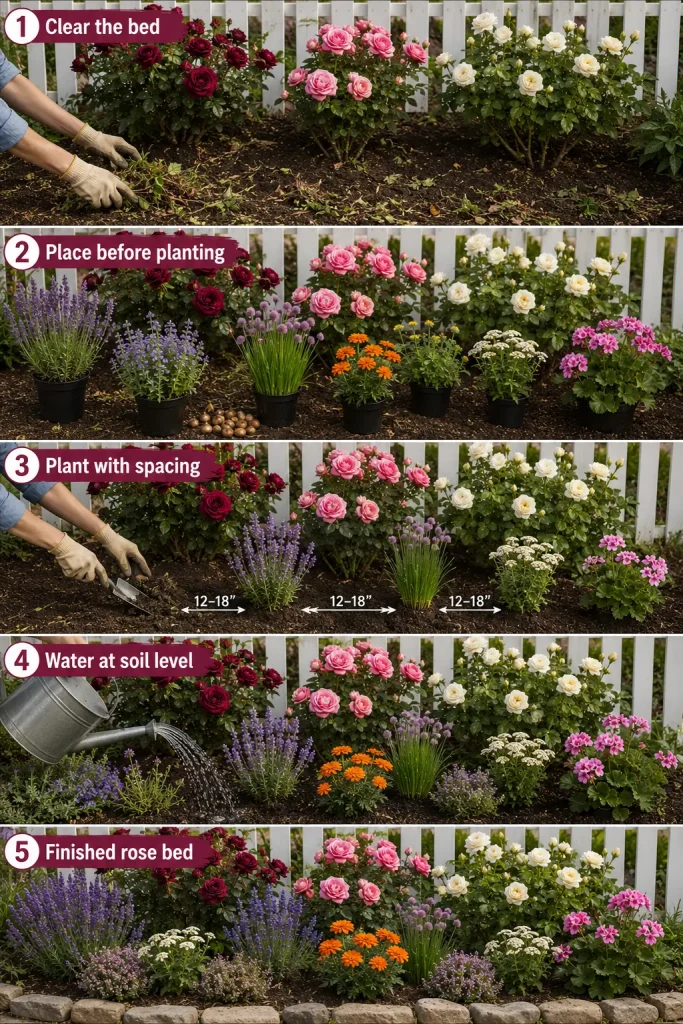
Before planting anything under roses, look carefully at the bed. Roses usually need at least 6 hours of direct sun per day, good drainage, and open airflow.
Start by removing weeds, dead leaves, and old plant debris from the soil. This gives the new plants a clean start and helps reduce places where pests and disease can hide.
Next, loosen the top few inches of soil where the companion plants will go. Be gentle near established roses because their roots may be close to the surface. Avoid deep digging around the rose base.
Add a light amount of compost or aged organic matter if the soil needs improvement. Do not overdo it, especially if you are planting lavender or thyme, because these herbs prefer soil that drains well and is not too rich.
Before digging holes, place the plants in their pots around the rose bed. This helps you check spacing and design. Keep taller plants toward the back and lower plants near the front.
A good layout could be:
Back layer: rose shrubs, alliums, taller yarrow
Middle layer: lavender, chives, hardy geraniums
Front layer: catmint, thyme, marigolds
Keep at least 12 to 18 inches of open space around the base of each rose shrub. Larger roses may need even more room. This open space helps air move through the plant and makes pruning, watering, and feeding easier.
Plant each companion at the same depth it was growing in its nursery pot. Firm the soil gently around the roots and water well after planting.
When watering, aim at the soil instead of spraying the rose leaves. Wet rose foliage can increase disease pressure, especially in humid weather.
Finish with a light mulch layer if needed, but do not pile mulch against rose stems or plant crowns.
Spacing Guide for Rose Companion Plants
Good spacing is important because crowded planting can create damp, still air around roses.
Use this general spacing guide:
Lavender: 18 to 24 inches apart
Catmint: 18 to 24 inches apart
Chives: 8 to 12 inches apart
Marigolds: 8 to 12 inches apart
Thyme: 8 to 12 inches apart
Hardy geraniums: about 18 inches apart
Yarrow: 18 to 24 inches apart
Allium bulbs: 4 to 8 inches apart, depending on variety
These are general guidelines. Always check the mature size of the exact variety you choose.
If your rose bed is small, do not try to fit every plant into one area. Choose 3 or 4 companion plants and repeat them in small groups for a cleaner, more professional look.
Best Rose Bed Design Tips
A beautiful rose companion bed should look full but not crowded. The goal is to cover soil and add beauty while still giving roses room to breathe.
Repeat plants instead of using one of everything. For example, plant three catmint mounds along the front edge, several marigolds in small groups, and a few chives tucked between them.
Use color carefully. Purple lavender, blue catmint, orange marigolds, white yarrow, and pink geraniums can all look beautiful together, but too many colors in a small bed may look messy.
Think about bloom time too. Alliums often bloom earlier, marigolds bloom through warm weather, and catmint can bloom for a long season with trimming. Mixing bloom times keeps the bed interesting for longer.
For a soft cottage-garden style, let plants overlap slightly at the edges while keeping the rose stems open. This gives a natural look without creating a crowded mess.
Care Tips for Roses With Companion Plants
Water roses deeply when the soil begins to dry, especially during hot weather. Avoid shallow daily watering because it can encourage weak roots.
Remember that different plants have different water needs. Roses like consistent moisture, but lavender, thyme, and catmint prefer soil that drains well and does not stay constantly wet.
Trim companion plants when they grow too close to the roses. Catmint can be cut back after flowering. Yarrow can be trimmed if it becomes floppy. Hardy geraniums can be shaped if they start spreading too far.
Remove fallen rose leaves from the bed, especially if they show signs of disease. Do not let diseased leaves sit under the plants.
Continue normal rose care, including pruning, feeding, deadheading, and checking for pests.
Companion plants can make the rose bed more balanced and beautiful, but they are not a substitute for healthy rose care.
Common Mistakes to Avoid
Planting Too Close to Rose Stems
This is the biggest mistake. Companion plants should not touch or cover the base of the rose shrubs. Keep the rose crown open and airy.
Choosing Plants That Need Wet Soil
Lavender, thyme, and catmint do not like soggy soil. If your rose bed stays wet, improve drainage or choose different companions.
Using Too Many Plants
A crowded rose bed can trap moisture and make maintenance difficult. Start with a few plants and add more only if there is enough space.
Ignoring Mature Size
Small nursery plants can grow much larger. Always check the mature height and width before planting.
Forgetting About Airflow
Roses need airflow to help reduce disease pressure. If companion plants become too dense, trim them back.
Expecting Companion Plants to Stop Every Pest
Companion planting may help attract beneficial insects, but it does not guarantee that aphids, beetles, or diseases will disappear. Check your roses regularly.
FAQ
What are the best plants to grow under roses?
Good plants to grow near roses include lavender, catmint, chives, alliums, marigolds, thyme, yarrow, and hardy geraniums. Choose plants that enjoy sun and do not crowd the rose stems.
Should roses have bare soil around them?
Roses do not need completely bare soil, but they do need open space around the base. You can plant companions nearby as long as the rose stems still have airflow.
How close can I plant companion plants to roses?
Leave about 12 to 18 inches of open space around the base of each rose shrub. Large roses or spreading companion plants may need more space.
Is lavender a good companion plant for roses?
Yes, lavender can be a good companion for roses in full sun and well-drained soil. It may struggle in heavy, wet soil.
Is catmint good with roses?
Catmint is a popular rose companion because it forms soft mounds, blooms for a long time, and looks beautiful at the front of rose beds. Trim it back if it grows too close to the roses.
Are marigolds good for roses?
Marigolds can add bright seasonal color around roses. They are easy annuals for sunny beds and work well near the front edge.
Can thyme be used as living mulch under roses?
Yes, thyme can work as a low-growing living mulch in sunny, well-drained areas. Keep it away from the rose crown and do not plant it in soggy soil.
Do companion plants prevent rose pests?
Companion plants may help attract beneficial insects and support a more diverse garden, but they do not guarantee pest-free roses. Regular rose checks are still important.
Conclusion
Planting companion plants under roses is a simple way to make a rose bed look fuller, healthier, and more beautiful. Instead of leaving bare soil, you can create a useful living layer with lavender, catmint, chives, alliums, marigolds, thyme, yarrow, and hardy geraniums.
The most important rule is to give roses room. Keep the base open, avoid crowding, and choose plants that match the sunny, well-drained conditions roses prefer.
With the right spacing and care, companion plants can turn a plain rose bed into a colorful, fragrant, cottage-style garden that looks beautiful through the growing season.
You May Also Like
 Do Matchsticks Kill Fungus Gnats? What Actually Works for Houseplants
 What Can You Still Plant in July? Smart Crops for Empty Garden Beds
 Where to Place Indoor Plants for Healthy Growth
 How to Deadhead Coneflowers the Right Way for Tidier Plants and More Blooms
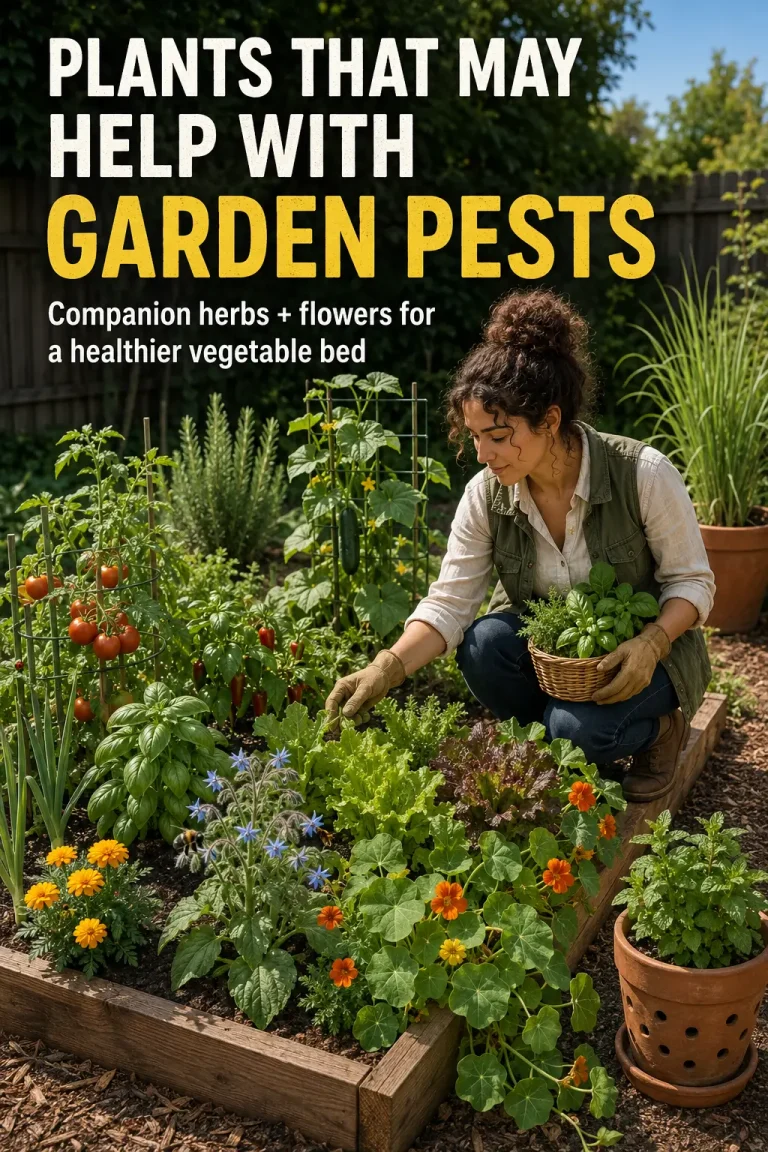 Companion Plants That May Help Reduce Garden Pests Naturally
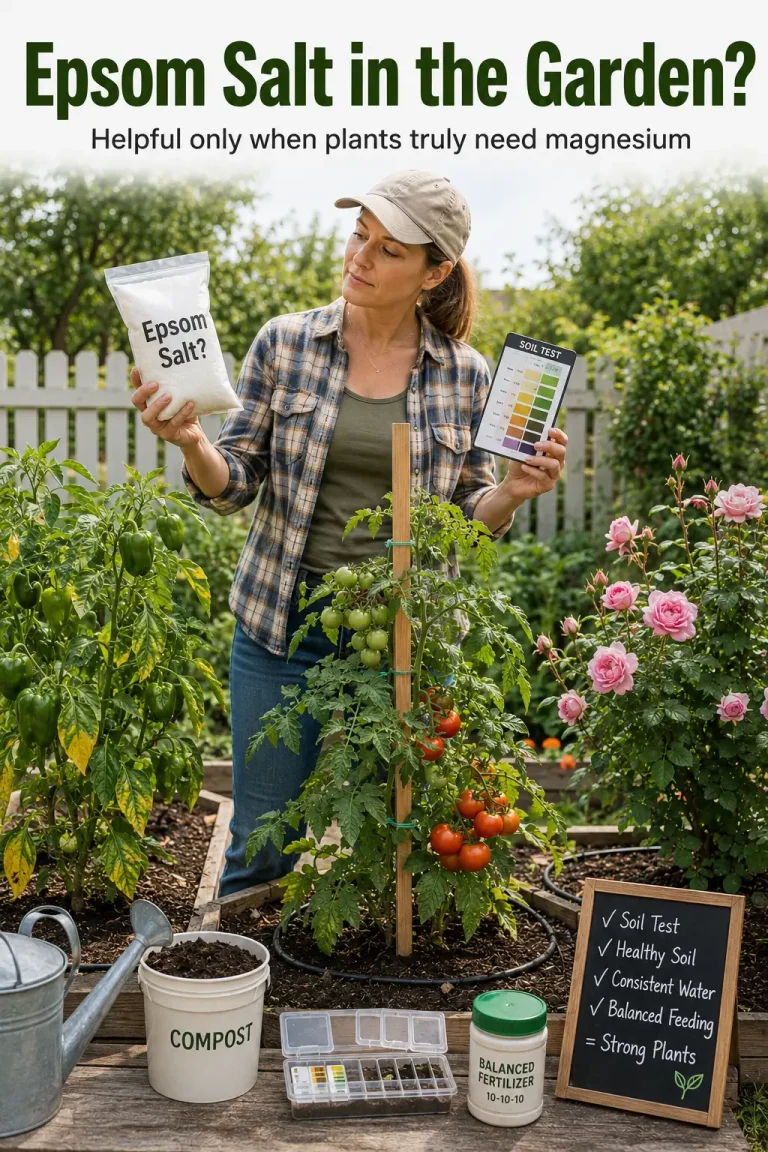 The Truth About Epsom Salt for Peppers, Tomatoes, and Roses