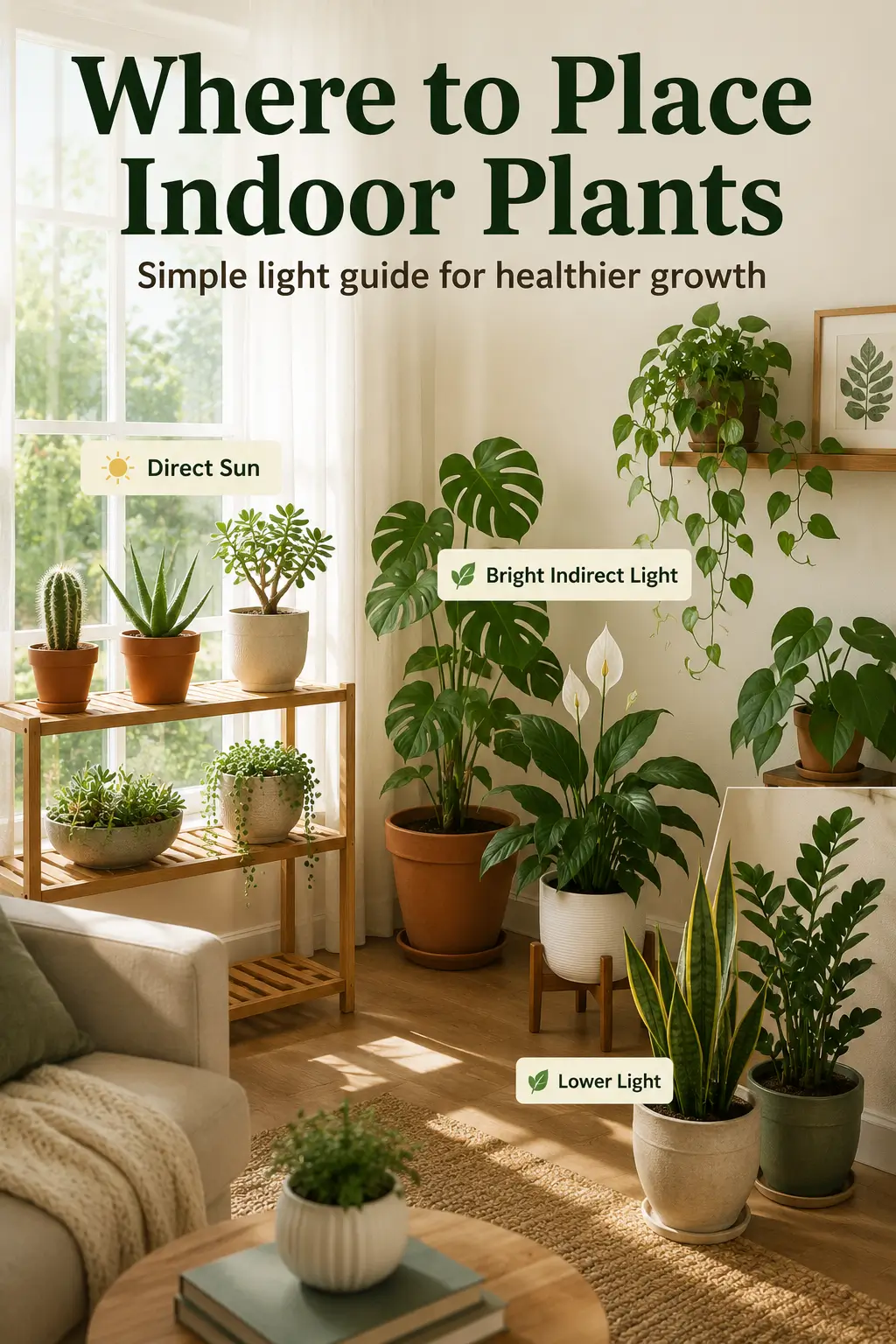
Indoor plants can make a home feel fresh, calm, and alive, but many houseplant problems start with one simple mistake: placing the plant in the wrong light.
Some plants need bright direct sun to stay strong. Others prefer filtered light and can burn if they sit too close to a hot window. Shade-tolerant plants can survive in lower light, but even they still need some natural or grow-light support to keep growing well.
The best way to grow healthier indoor plants is to match each plant with the right light level. Once you understand direct sunlight, partial sun, bright indirect light, and lower-light areas, it becomes much easier to decide where each plant should go.
Why Plant Placement Matters
Light is one of the most important parts of indoor plant care. Plants use light to make energy, grow new leaves, produce flowers, and stay healthy.
When a plant gets too little light, it may grow slowly, stretch toward the window, lose color, drop leaves, or stop flowering. When a plant gets too much direct sun, its leaves may scorch, turn crispy, fade, or develop brown patches.
Correct placement helps your plants use the light in your home more naturally. A cactus on a bright windowsill makes sense. A peace lily a few feet away from a bright window may also do well. But switching those two plants can quickly lead to problems.
Good placement also changes with the seasons. A window that is gentle in winter may become too hot in summer. A bright room in June may be much dimmer in December. That is why it helps to check your plants regularly and move them when needed.
Understanding Indoor Light Levels
Before choosing where to place each plant, it helps to understand the main types of indoor light.
Direct Sunlight
Direct sunlight means the sun’s rays touch the plant leaves directly for part of the day. This usually happens near sunny south-facing or west-facing windows in many homes.
This light is strong and best for plants that naturally grow in open, sunny places.
Good plants for direct sunlight include:
- Cactus
- Succulents
- Aloe vera
- Some herbs
- Some citrus plants
- Jade plant, if gradually adjusted
- Lavender, if given very bright light
- Miniature roses, if given enough sun
Even sun-loving plants can burn if they are moved suddenly from shade into harsh direct sun. Always adjust plants gradually.
Partial Sun
Partial sun means the plant gets a few hours of sun, often in the morning or late afternoon, but not intense direct sunlight all day.
This is helpful for plants that like bright conditions but may struggle in strong afternoon heat.
Good plants for partial sun include:
- Croton
- Jade plant
- Snake plant
- Ponytail palm
- Some ferns, if the sun is gentle
- Dracaena, if protected from harsh rays
- Many flowering houseplants
Partial sun is often found near east-facing windows or a few feet back from south or west-facing windows.
Bright Indirect Light
Bright indirect light means the room is bright, but the sun does not hit the leaves directly for long periods. This is one of the best light levels for many popular houseplants.
A bright room with sheer curtains, a plant stand near a window, or a spot a few feet away from strong direct sun can provide this type of light.
Good plants for bright indirect light include:
- Peace lily
- Calathea
- Philodendron
- Monstera
- Anthurium
- Pothos
- Dracaena
- Peperomia
- Many orchids
- Ferns
This is the safest light level for many leafy tropical plants because it gives them enough brightness without burning their leaves.
Low Light or Shade
Low light does not mean no light. It means the plant is farther from the window, in a dimmer room, or receiving mostly reflected light.
Some plants tolerate lower light better than others, but almost no plant thrives in complete darkness.
Good plants for lower-light areas include:
- Snake plant
- Pothos
- ZZ plant
- Peace lily
- Philodendron
- Cast iron plant
- Some peperomia varieties
Plants in low light usually grow more slowly and need less water. Overwatering is one of the biggest problems in low-light spots.
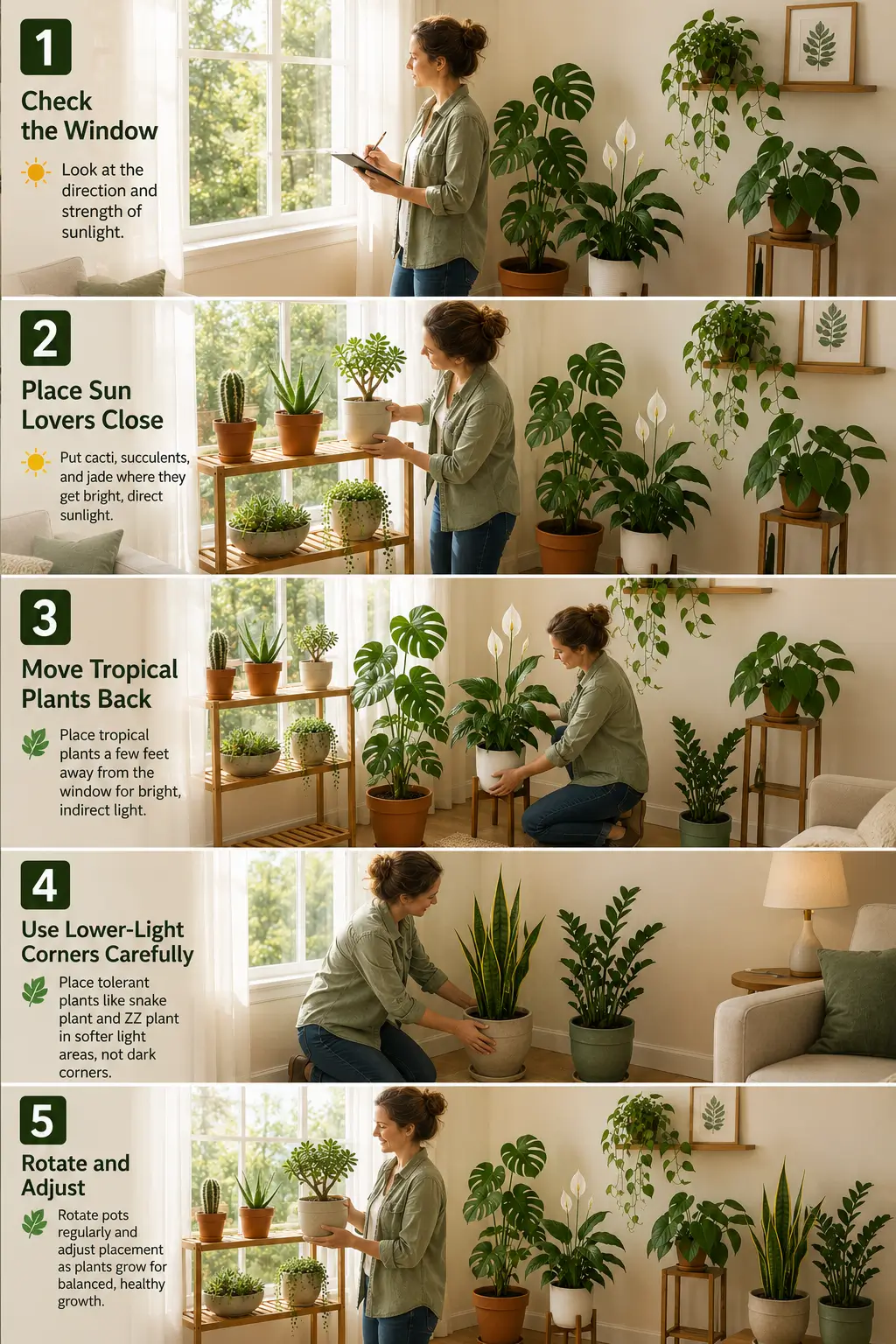
Best Indoor Plant Placement by Plant Type
Succulents
Succulents need bright light to stay compact and healthy. Place them near a sunny south-facing or west-facing window if possible.
If they do not get enough light, they may stretch, lean, or become pale. Rotate the pot every few weeks so the plant grows evenly.
Avoid keeping succulents in dark corners or bathrooms with little natural light. They may survive for a while, but they usually decline over time.
Cactus
Cactus plants need some of the brightest light indoors. A sunny windowsill is usually the best place.
South-facing windows are often ideal, especially in winter. In hot summer climates, some cactus plants may need a little protection from harsh afternoon sun through glass.
Use a pot with drainage and avoid overwatering. Cactus plants in bright light still need dry periods between watering.
Aloe Vera
Aloe vera likes bright light and can handle some direct sun, especially morning sun. Place it near a bright window where it receives several hours of light.
If aloe leaves become thin, floppy, or stretched, the plant likely needs more light. If leaves turn brown or sunburned, move it slightly back from the glass.
Aloe vera also needs well-draining soil and a pot with drainage holes.
Lavender
Lavender is not always easy indoors because it prefers strong sun, good airflow, and well-drained soil. If you grow lavender inside, place it in the brightest window you have.
A south-facing window is usually best. Without enough light, lavender may become weak, leggy, and short-lived indoors.
Avoid humid, dark rooms. Lavender does best in a dry, bright spot with excellent drainage.
Indoor Roses
Miniature roses can be grown indoors for a short time, but they usually need very bright light to stay healthy. Place them near the brightest sunny window available.
They often perform better outdoors long-term because they need strong sun and airflow. Indoors, watch for spider mites, powdery mildew, and leaf drop.
If you keep a rose indoors, give it bright sun, good air circulation, and careful watering.
Croton
Croton plants need bright light to keep their colorful leaves. A spot with bright indirect light or gentle morning sun is usually best.
Too little light can cause the leaves to lose their strong red, orange, and yellow color. Too much harsh sun may scorch the leaves.
Place croton near an east-facing window or a bright room with filtered light.
Ferns
Many ferns prefer bright indirect light and higher humidity. They usually do not like harsh direct sun, which can dry and burn their delicate fronds.
Place ferns near a bright window with filtered light, in a bathroom with good natural light, or in a humid room.
Keep the soil lightly moist, but not soggy. Ferns in darker rooms need less water than ferns in bright rooms.
Palms
Many indoor palms prefer bright indirect light. Some can handle gentle morning sun, but strong afternoon sun may burn the leaves.
Place palms near a bright window, but avoid pressing the leaves directly against hot glass.
Palms also appreciate steady moisture and good drainage. Brown leaf tips can come from dry air, inconsistent watering, or salt buildup in the soil.
Jade Plant
Jade plants need bright light to grow well indoors. They can handle some direct sun, especially if they are gradually introduced to it.
A sunny windowsill or bright room is ideal. If a jade plant becomes stretched with weak stems, it likely needs more light.
Water only when the soil has dried well. Jade plants are succulents and dislike soggy soil.
Snake Plant
Snake plant is one of the most flexible houseplants. It can tolerate low light, but it grows better in bright indirect light or partial sun.
Place it in bedrooms, offices, living rooms, or entryways with at least some natural light.
Because snake plants grow slowly in low light, be careful not to overwater. Let the soil dry between waterings.
Peace Lily
Peace lilies prefer bright indirect light but can tolerate lower light. They may survive in dim rooms, but they bloom better when given more brightness.
Place peace lilies a few feet from a bright window or near a window with filtered light.
Avoid harsh direct sun, which can burn the leaves. Keep the soil lightly moist, but do not let the plant sit in water.
Calathea
Calatheas prefer bright indirect light and dislike harsh direct sun. Their patterned leaves can fade or burn if placed in strong sunlight.
Place calathea near an east-facing window or in a bright room with filtered light.
They also prefer higher humidity and consistent moisture. Avoid cold drafts and dry heating vents.
Dracaena
Dracaena plants do well in bright indirect light and can tolerate medium light. They should be protected from hot direct sun.
Place them near a window with filtered light or a few feet back from a bright window.
Dracaenas are sensitive to overwatering, so let the top part of the soil dry before watering again.
Philodendron
Philodendrons are easygoing plants that grow best in bright indirect light. Many types can tolerate medium or lower light, but growth will be slower.
Place them on shelves, plant stands, or near windows where they receive soft brightness.
Avoid strong direct sun, which can scorch the leaves.
Anthurium
Anthuriums need bright indirect light to bloom well. If they are placed in too much shade, they may grow leaves but produce fewer flowers.
Place anthuriums near a bright window with filtered light. Avoid harsh direct sun, which can damage the leaves and flowers.
They like consistent moisture but should never sit in soggy soil.
Orchid
Most common indoor orchids, such as moth orchids, prefer bright indirect light. A spot near an east-facing window often works well.
Too much direct sun can burn orchid leaves, while too little light can prevent reblooming.
Healthy orchid leaves should usually look medium green, not very dark green or yellow.
Pothos
Pothos is one of the easiest plants for many indoor spaces. It grows best in bright indirect light but can tolerate lower-light areas.
Variegated pothos varieties may lose some color if kept too dark. If the leaves become mostly green, move the plant to a brighter spot.
Avoid harsh direct sun, which can burn the leaves.
Monstera
Monstera plants prefer bright indirect light. They can tolerate medium light, but they grow larger leaves and more splits when they receive enough brightness.
Place monstera near a bright window but out of strong direct sun.
As the plant grows, rotate it regularly and provide a moss pole or support if needed.
Bromeliad
Bromeliads usually prefer bright indirect light. Some types can handle more light than others, but harsh direct sun may scorch the leaves.
Place them in a bright room near a window with filtered light.
Many bromeliads hold water in their central cup, but they still need good airflow and should not be kept constantly soggy.
Peperomia
Peperomias generally do well in medium to bright indirect light. They are compact plants that work well on desks, shelves, and windowsills with filtered light.
Avoid strong direct sun, especially for softer-leaved varieties. Too much sun can fade or burn the leaves.
Let the soil dry slightly between waterings because peperomias do not like sitting in wet soil.
How to Choose the Best Window for Indoor Plants
Window direction matters because it affects how much light your plants receive.
A south-facing window usually gives the brightest light in many U.S. homes. This is useful for cactus, succulents, aloe, lavender, and other sun-loving plants.
A west-facing window often gives strong afternoon sun. This can be good for sun-loving plants but too harsh for delicate tropical plants.
An east-facing window gives gentle morning light. This is great for many houseplants, including orchids, calatheas, ferns, peace lilies, and philodendrons.
A north-facing window usually gives the lowest light. This can work for tolerant plants like pothos, snake plant, ZZ plant, and some philodendrons, but growth may be slower.
Signs Your Plant Needs More Light
Your plant may need more light if you notice:
- Long, stretched stems
- Small new leaves
- Leaning strongly toward the window
- Pale or faded growth
- Slow growth during the growing season
- Variegated leaves turning more green
- Flowering plants not blooming
- Soil staying wet for too long
Move the plant gradually to a brighter spot instead of suddenly placing it in intense sun.
Signs Your Plant Is Getting Too Much Sun
Your plant may be getting too much direct sun if you notice:
- Brown crispy patches on leaves
- Yellow or bleached leaves
- Curling leaves
- Dry leaf edges
- Wilting during hot afternoon sun
- Faded leaf patterns
Move the plant a few feet back from the window or use a sheer curtain to soften the light.
Should You Rotate Indoor Plants?
Yes, rotating indoor plants helps them grow evenly. Most plants lean toward the light source over time.
Turn pots every 1 to 3 weeks so all sides of the plant receive light. This is especially helpful for succulents, monsteras, rubber plants, dracaenas, and palms.
Avoid rotating plants too aggressively if they are flowering or sensitive to change. Small adjustments are usually enough.
Seasonal Placement Tips
Indoor light changes throughout the year.
In winter, the sun is lower and days are shorter. Many plants may need to move closer to windows during this time.
In summer, direct sunlight through glass can become much hotter. Plants that were comfortable in spring may need to be moved back or protected with a sheer curtain.
Check plants every few weeks. Healthy placement is not always permanent. Moving a plant slightly can make a big difference.
What About Grow Lights?
Grow lights can help if your home does not have enough natural light. They are especially useful for succulents, herbs, seedlings, and plants in dark rooms.
Choose a full-spectrum grow light and place it close enough to be useful, but not so close that it overheats the leaves.
Grow lights are not always needed, but they can make indoor gardening much easier in apartments, shaded homes, and winter months.
Common Mistakes to Avoid
Placing Every Plant on the Same Windowsill
Different plants need different light levels. A cactus and a calathea should not always be treated the same.
Thinking Low Light Means No Light
Low-light plants still need some light. A dark corner with no window may not support healthy plant growth.
Moving Plants Suddenly Into Strong Sun
Even sun-loving plants can burn if they are not adjusted gradually. Increase light exposure slowly.
Ignoring Seasonal Sun Changes
A safe winter window may become too hot in summer. Watch for leaf burn when seasons change.
Overwatering Plants in Low Light
Plants in lower light use water more slowly. Always check soil before watering.
Keeping Flowering Plants Too Far From Light
Plants like anthurium, orchids, miniature roses, and some bromeliads need enough brightness to bloom well.
Best Indoor Plant Placement Ideas by Room
In the living room, place large plants like monstera, dracaena, palms, and philodendrons near bright windows with filtered light.
In the kitchen, place herbs, aloe, or succulents near sunny windows if the light is strong enough.
In the bathroom, place ferns, calatheas, peace lilies, or pothos if the room has a window. Humidity can help these plants, but they still need light.
In the bedroom, snake plants, pothos, ZZ plants, and peace lilies can work well if the room has some natural light.
In the office, choose low-maintenance plants like snake plant, pothos, peperomia, or philodendron near a window or under a grow light.
FAQ
What is the best place to put indoor plants?
The best place depends on the plant’s light needs. Sun-loving plants should be near bright windows, while tropical leafy plants often prefer bright indirect light away from harsh direct sun.
Which indoor plants need direct sunlight?
Cactus, succulents, aloe vera, lavender, jade plant, and some herbs need very bright light and can handle direct sun if adjusted gradually.
What plants are best for bright indirect light?
Peace lily, calathea, philodendron, monstera, anthurium, pothos, orchids, dracaena, peperomia, and many ferns do well in bright indirect light.
Can indoor plants grow in shade?
Some plants tolerate lower light, including snake plant, pothos, ZZ plant, peace lily, and philodendron. However, they still need some natural light or grow-light support.
How do I know if my plant is getting enough light?
Healthy signs include steady growth, good leaf color, strong stems, and normal watering needs. If the plant is stretching, leaning, fading, or not blooming, it may need more light.
Should I move plants closer to the window in winter?
Many indoor plants benefit from moving closer to the window in winter because days are shorter and light is weaker. Just keep them away from cold drafts.
Can direct sun burn indoor plants?
Yes. Some plants, especially calatheas, ferns, peace lilies, and philodendrons, can burn in harsh direct sun. Use filtered light or move them back from the window.
How often should I rotate indoor plants?
Most indoor plants can be rotated every 1 to 3 weeks to keep growth even. Turn the pot slightly each time so all sides receive light.
Conclusion
Healthy indoor plants start with the right placement. A plant that loves direct sun will struggle in a dark corner, while a shade-tolerant tropical plant may burn on a hot sunny windowsill.
Match each plant to its light needs, watch how it responds, and adjust placement as the seasons change. Direct-sun plants like cactus, succulents, aloe, and lavender need the brightest spots. Leafy tropical plants like peace lily, calathea, philodendron, pothos, monstera, and anthurium usually prefer bright indirect light.
With the right spot, regular rotation, and careful watering, your indoor plants can grow stronger, look healthier, and bring more life into every room of your home.
You May Also Like
 Why Master Gardeners Are Propagating Cuttings in a Raw Potato and Honey
 How to Deadhead Coneflowers the Right Way for Tidier Plants and More Blooms
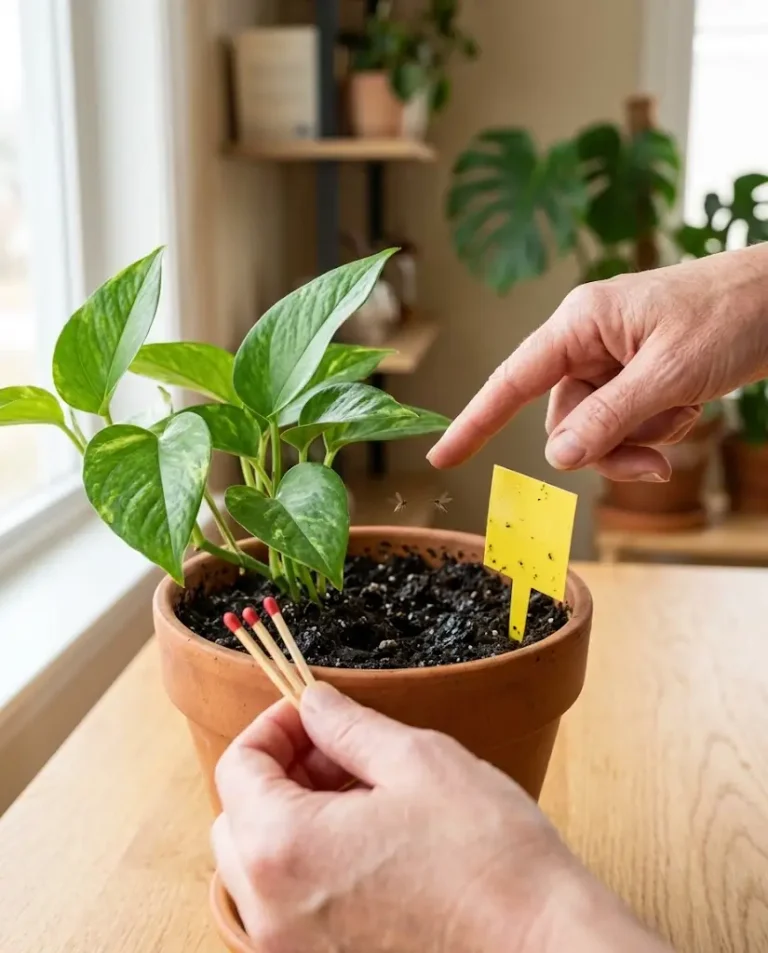 Do Matchsticks Kill Fungus Gnats? What Actually Works for Houseplants
 What Can You Still Plant in July? Smart Crops for Empty Garden Beds
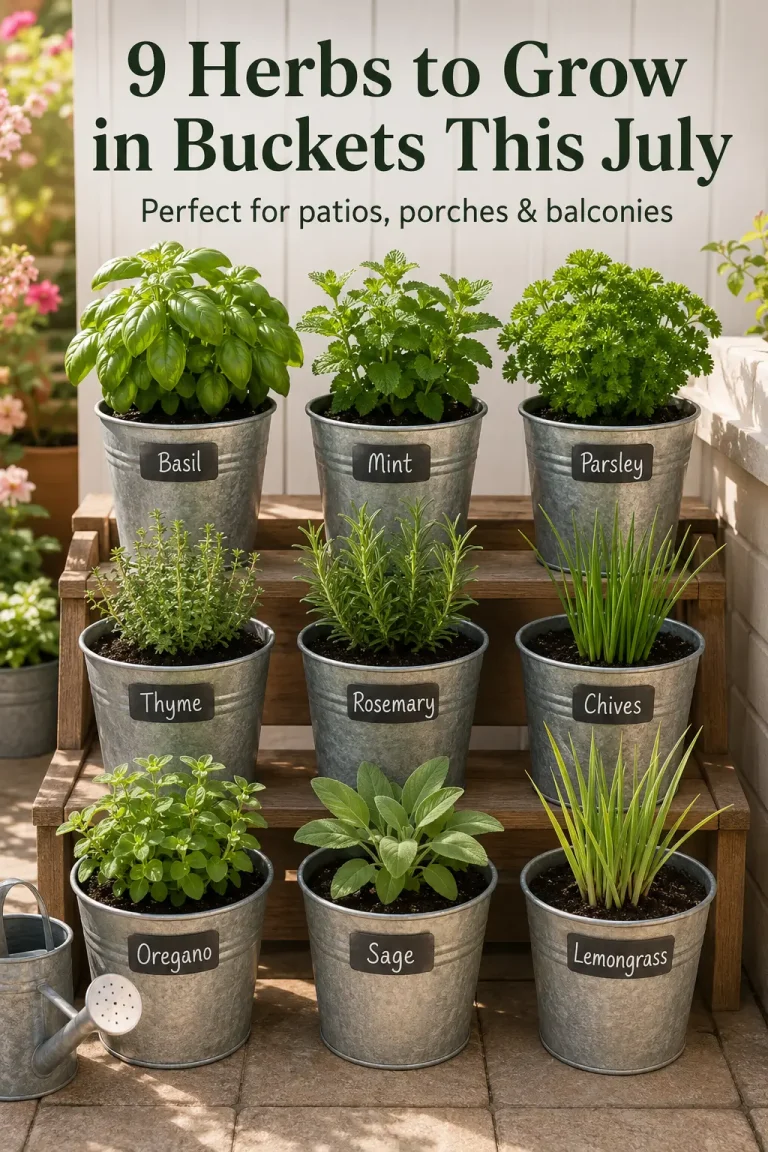 9 Herbs to Grow in Buckets This July for a Small-Space Summer Garden
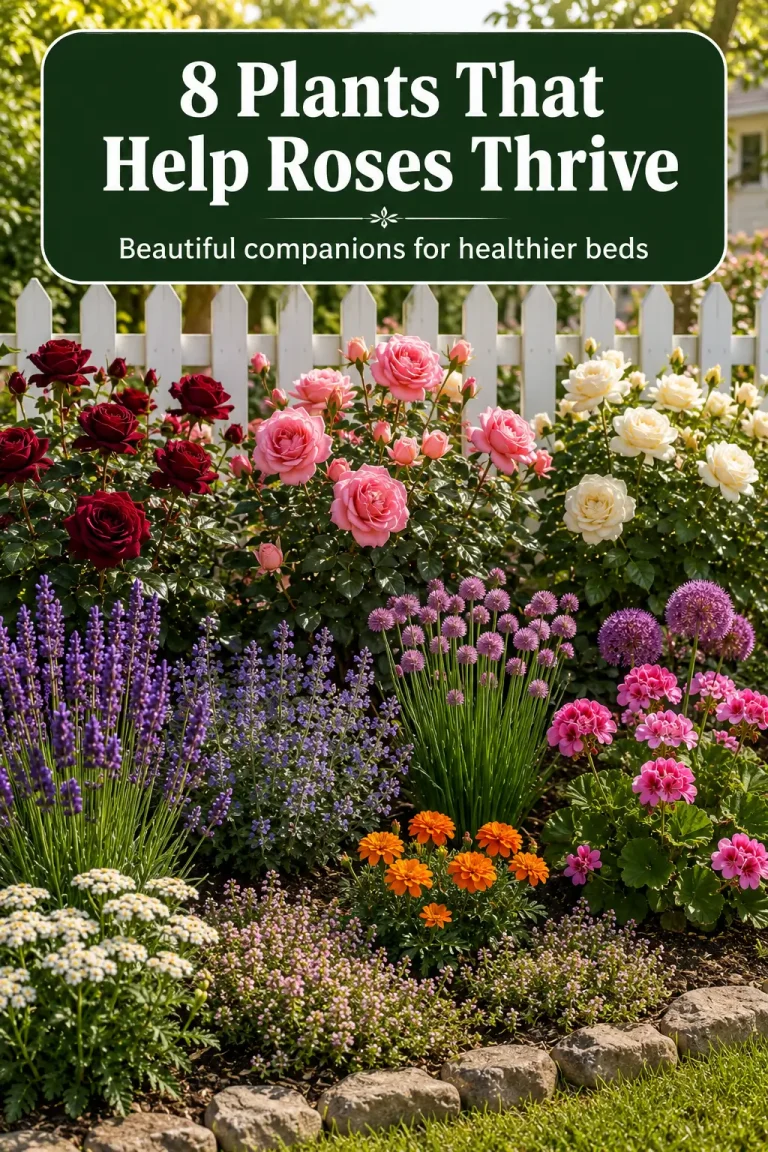 8 Companion Plants That Help Roses Grow Healthier and Look More Beautiful